Story Highlights
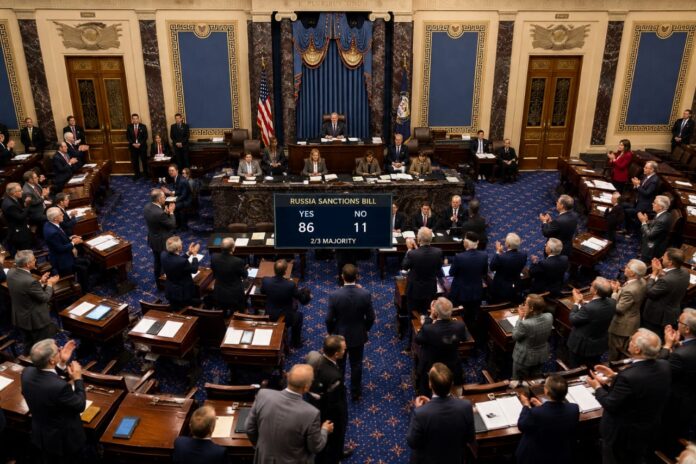
- The Senate passed comprehensive Russia sanctions legislation with an 86-11 vote, representing strong bipartisan support
- The bill authorizes presidential tariffs on the world’s five largest purchasers of Russian oil and natural gas, including China and India
- The legislation expands sanctions on Russian leaders, financial institutions, and energy projects while targeting reflagged oil tankers used to evade existing restrictions
- The package reflects a year-long legislative effort and carries the name of the late Senator Lindsey Graham, who championed the measure before his death
What Happened
The Senate voted overwhelmingly to approve sweeping sanctions legislation targeting Russia on Friday, with the measure receiving 86 affirmative votes and 11 opposing votes. The bipartisan package emerged after extensive negotiations and represents a significant legislative action designed to reinforce American support for Ukraine while imposing economic pressure on nations continuing to purchase Russian exports.
The bill, formally renamed the Lindsey O. Graham Sanctioning Russia and Iran Act of 2026, serves as a tribute to the late South Carolina senator who championed the legislation throughout a year-long campaign before his unexpected death. Ukrainian President Volodymyr Zelenskyy attended proceedings at the Capitol, visiting hours after Senator Graham’s funeral and observing the Senate’s procedural votes from the gallery. The timing of these events underscored the international significance of the legislative action and its connection to ongoing efforts supporting Ukraine.
- Senate vote: 86-11 in favor of the sanctions package
- The bill was renamed in honor of the late Senator Lindsey Graham, who died following extended advocacy for the measure
- Ukrainian President Zelenskyy attended Capitol proceedings and observed Senate votes from the gallery
- The legislation comprises 61 pages and includes provisions addressing both Russia and Iran
Why It Matters
The sanctions package represents the most substantial legislative action taken during the current administration to shift the dynamics of the ongoing conflict in Ukraine, which has now persisted longer than World War I. By authorizing tariffs on major purchasers of Russian energy resources, the legislation seeks to deprive the Russian government of revenues fueling military operations. The measure addresses a critical gap in existing U.S. policy by targeting countries such as China and India that continue purchasing Russian oil and gas despite previous sanctions regimes.
The bill includes provisions allowing the president to impose tariffs on products from the five largest importers of Russian energy, with exceptions for countries importing less than 15 percent of their natural gas from Russia and actively working to reduce those imports. Additionally, the legislation expands sanctions targeting Russian political and military leadership, financial institutions, and energy infrastructure. The measure specifically addresses sophisticated evasion techniques, including sanctions on reflagged oil tankers that Russia uses to circumvent existing restrictions on maritime energy transport.
- The legislation aims to deprive Russia of revenues needed to sustain military operations in Ukraine
- Sanctions target major global energy importers, creating pressure for countries to reduce Russian energy purchases
- The measure includes expanded restrictions on Russian financial institutions, leadership, and infrastructure projects
- Americans concerned about inflation may be affected by potential tariffs on imported goods from sanctioned countries
Political and Public Context
The Senate’s overwhelming bipartisan vote reflects broad agreement among lawmakers that increased economic pressure on Russia remains necessary to support Ukrainian resistance. However, the legislation generated some opposition, with progressive Democrats comprising most of the 11 dissenting votes. These senators expressed concerns about granting broad presidential tariff authority, particularly given recent inflation and elevated costs of living affecting American households.
Senator Lindsey Graham and Senator Richard Blumenthal of Connecticut had worked extensively together on the package, announcing a tentative agreement with the White House on July 10 following more than a year of negotiations. Graham died suddenly the following day, likely from complications involving an aortic tear. The subsequent swift passage of the legislation bearing his name demonstrated bipartisan recognition of his long-term advocacy for stronger measures supporting Ukraine. The bill includes waiver authority allowing the president to suspend sanctions or restrictions upon certifying to Congress that such action serves national interests, a compromise designed to address concerns about executive flexibility.
- Senate Majority Leader John Thune indicated the bill would help protect Ukraine against Russian aggression
- The legislation emerged after extended negotiations between congressional leadership and White House officials
- Progressive Democrats expressed concerns about broad tariff authority and potential domestic inflation impacts
- The bill includes presidential waiver authority for sanctions in cases deemed to serve national interests
US Senate passes sweeping Russia sanctions Bill targeting Putin’s energy war chest https://t.co/K4pWGHzraI
— The Straits Times (@straits_times) August 7, 2026
What Happens Next
The House of Representatives must now consider the legislation before it can proceed to the White House for signature. The president has indicated general support for the sanctions package, though the House must navigate its own procedural requirements and potential amendments. Representatives will need to achieve sufficient votes to pass the measure in substantially its current form or reconcile any significant changes with Senate-approved language.
Once enacted, the administration must determine implementation strategies for the tariff authority granted by the legislation. The measure requires presidential determinations regarding which countries constitute major purchasers of Russian energy and which qualify for exceptions based on their import percentages and reduction efforts. The president will also need to establish processes for considering waiver requests and certifying national interest justifications to Congress. Ongoing developments in the Ukraine conflict will likely influence how aggressively the administration deploys these new sanctions authorities.
- The House of Representatives must vote on the legislation before it can advance to the White House
- The president must establish implementation procedures for tariff authority targeting major Russian energy importers
- Administration officials must develop criteria for waiver requests and national interest certifications
- Future battlefield developments in Ukraine may influence the intensity of sanctions application