Story Highlights
- Rep. Maria Elvira Salazar praises President Trump’s distinct approach to media interactions.
- Salazar argues that Trump’s accessibility to the press is unmatched compared to previous administrations.
- The recent ban on certain media outlets has sparked debate about press freedom and presidential transparency.
- Concerns arise over the implications of Trump’s media strategy for future administrations.
What Happened
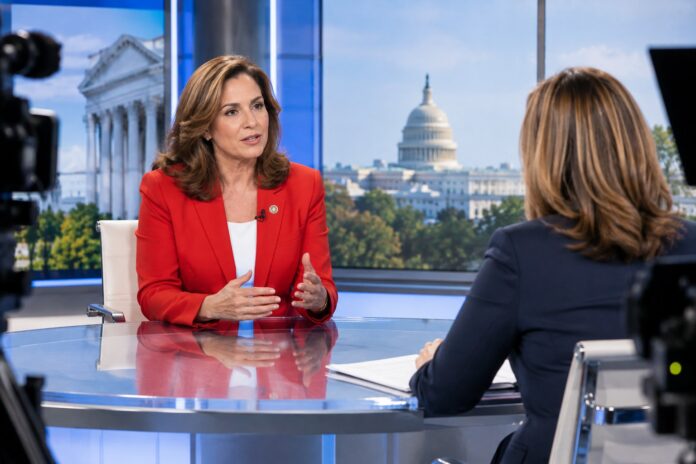
On a recent episode of CBS News’s ‘Face the Nation’, Rep. Maria Elvira Salazar, a Republican from Florida, defended President Trump’s unique style of engaging with the media. This defense comes in light of the decision to ban reporters from CNN, Politico, and MS NOW from accessing the White House. Salazar emphasized that the president has the right to choose who he interacts with, stating, ‘I think that he has his own style and that he will determine who he wants to talk to.’ She pointed out that in today’s media landscape, with the rise of social media and various news outlets, the public can still receive information from multiple sources, regardless of the president’s preferences.
Salazar’s comments reflect a broader sentiment among many Republicans who view this approach as a refreshing departure from traditional media relations. She noted that Trump is ‘the most accessible president in [recent] years that has been talking to the media,’ contrasting his style with that of President Biden, who she implied is less forthcoming. The Florida congresswoman’s remarks highlight a growing divide in perceptions of presidential communication strategies, particularly in how they relate to media access and transparency.
- The media ban was announced on Friday via Truth Social.
- Salazar has a background in journalism, having worked for Telemundo, CNN Español, and Univision.
- Weijia Jiang, a senior White House correspondent, expressed concerns about the implications of the actions taken.
- CNN and MS NOW have indicated potential legal action regarding the ban.
Why It Matters
The implications of this media strategy extend beyond the current presidency and raise significant questions about the future of press relations in the United States. By asserting control over which journalists can access the White House, the administration is challenging the traditional norms of transparency that have characterized previous administrations. Salazar’s defense of this approach suggests a shift in how some Republicans view the role of the press in a democratic society. The notion that a president can selectively engage with the media reflects a broader trend of skepticism towards mainstream news outlets, which many conservatives believe have been biased against them.
Moreover, the ban on specific media outlets has sparked a debate about the balance between a president’s right to communicate with the public and the press’s role in holding power accountable. Critics, including Weijia Jiang, have voiced concerns that such actions could set a dangerous precedent for future administrations, potentially leading to a more adversarial relationship between the White House and the press. This tension could undermine the public’s trust in the media and the government’s commitment to transparency.
- The media ban could lead to increased scrutiny of future administrations’ media policies.
- Salazar’s comments may embolden other Republicans to adopt similar stances on media relations.
- Public perception of the press may shift further towards skepticism and distrust.
- Future administrations may face challenges in maintaining open lines of communication with the media.
Political and Public Context
Understanding the context of this media strategy requires examining the historical relationship between the presidency and the press. Traditionally, presidents have maintained a somewhat adversarial but ultimately cooperative relationship with journalists. However, the current presidency has been marked by a significant departure from this norm. The frequent use of social media to communicate directly with the public has diminished the traditional gatekeeping role of the press, allowing the administration to bypass what is often referred to as ‘fake news.’
Salazar’s background in journalism adds an interesting layer to her defense of this approach. Having worked in various media outlets, she is acutely aware of the challenges journalists face in covering the White House. Her perspective suggests that there is a growing recognition among some in the Republican Party that the media landscape is changing, and with it, the expectations of presidential communication. This shift could lead to a reevaluation of how future presidents engage with the press and the public.
- The use of social media has transformed the landscape of presidential communication.
- Historical precedents show that previous presidents have navigated complex relationships with the media.
- Salazar’s experience in journalism may influence her views on media access and transparency.
- The ongoing debate about press freedom reflects broader societal divisions regarding trust in media institutions.
White House launches ‘Trump TV’ as Rubio defends restrictions on CNN, MS NOW and Politico@SecRubio: "They can cover the White House. They just can’t have a desk there.” pic.twitter.com/ATcp0YN4iU
— Florida’s Voice (@FLVoiceNews) September 22, 2026
What Happens Next
The future of media relations under the current administration remains uncertain, particularly in light of the recent ban on specific outlets. As the president continues to assert control over media access, questions arise about how this will affect the flow of information to the public. Will other media outlets face similar bans, or will there be an expansion of engagement with a broader range of journalists? The answers to these questions could shape the landscape of political communication for years to come.
Moreover, the potential for legal action from CNN and MS NOW raises important questions about the boundaries of press freedom and the rights of journalists to report on the president. As these developments unfold, it will be crucial to monitor how both the administration and the media respond to this evolving situation. The implications of these actions could resonate far beyond the current administration, influencing how future leaders interact with the press and the public.
- Watch for potential legal developments regarding the media ban.
- Monitor how other media outlets respond to the communication strategy.
- Observe shifts in public opinion regarding the press and presidential transparency.
- Consider how future administrations may adapt their media strategies in response to this approach.