Story Highlights
- Senator Mitch McConnell’s recent public appearances have raised significant health concerns.
- Medical professionals question his ability to fulfill his Senate duties effectively.
- Observers noted signs of lethargy and confusion during his latest outings.
- McConnell’s prolonged absence from the Senate has sparked discussions about his fitness for office.
What Happened
Senator Mitch McConnell, the long-serving Republican leader in the Senate, has recently returned to work after a 92-day absence due to health issues. His return, however, has not been without controversy. Observers have expressed alarm over his apparent lethargy and confusion during public appearances, raising questions about his capacity to serve effectively in one of the highest offices in the land. Video footage captured by reporters has shown McConnell struggling to respond to questions and appearing disoriented, leading many to wonder if he is fit to continue his role as a senator.
On a recent Tuesday, McConnell was seen being transported to Capitol Hill, where he was visibly slow to react and seemed to struggle with basic interactions. This incident has prompted a wave of concern from both the public and medical professionals, who have begun to voice their doubts about his ability to perform the demanding tasks required of a senator.
- McConnell was wheeled out of his home in Washington, D.C. on a Tuesday afternoon.
- He appeared confused and did not verbally respond to questions from reporters.
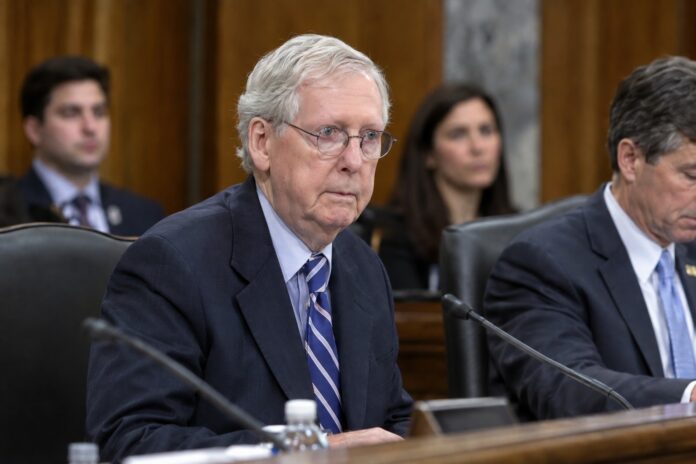
- During a Senate Agriculture Committee meeting, he required assistance to vote on the Farm Bill.
- Medical experts have publicly stated he is not in a condition to fulfill his duties effectively.
Why It Matters
The implications of McConnell’s health are significant, not only for him personally but also for the Republican Party and the Senate as a whole. As the Senate Minority Leader, McConnell plays a crucial role in shaping legislation and guiding party strategy. His ability to engage in debates, make decisions, and lead effectively is paramount, especially as the nation faces numerous pressing issues. If he is unable to perform these duties, it could have far-reaching consequences for the legislative process and the Republican agenda.
Moreover, McConnell’s health raises questions about the future leadership of the Senate. Should he be unable to continue serving, the party would need to consider succession plans and how to maintain its influence in a divided Congress. This situation could lead to a power vacuum, potentially destabilizing the party’s position and strategy moving forward.
- McConnell’s inability to perform could hinder the Republican Party’s legislative agenda.
- His health issues may prompt discussions about succession and leadership within the Senate.
- Concerns about his fitness for office could affect public perception of the Republican Party.
- Potential instability in the Senate could arise if McConnell cannot fulfill his duties.
Political and Public Context
McConnell’s recent health struggles are not isolated incidents. The senator has faced a series of health challenges over the past few months, including a fall in mid-June that resulted in hospitalization and subsequent pneumonia. These events have raised alarms about the physical demands of his role and whether he can continue to meet them. The senator’s age, at 84, also plays a significant role in the conversation surrounding his health and capacity to serve.
In the broader context, McConnell’s situation reflects a growing concern about the health of aging politicians in Washington. As the average age of lawmakers increases, questions about their ability to serve effectively become more pressing. This trend has led to discussions about the need for younger leadership and the importance of ensuring that elected officials can meet the demands of their roles.
- McConnell’s fall in June and subsequent pneumonia have contributed to his health concerns.
- The average age of lawmakers in Congress is rising, prompting discussions about leadership and fitness for office.
- Similar health issues have been observed among other aging politicians, raising questions about their ability to serve.
- Public sentiment may shift towards favoring younger candidates for political office.
What Happens Next
The future of Mitch McConnell’s political career remains uncertain. As he continues to navigate his health challenges, observers will be closely monitoring his public appearances and participation in Senate activities. The Republican Party will need to consider its options moving forward, including potential leadership changes if McConnell is unable to fulfill his duties effectively.
Additionally, there are open questions regarding how McConnell’s health will impact upcoming legislative sessions and the party’s ability to rally support for key initiatives. The situation may also prompt discussions about the need for more comprehensive health assessments for lawmakers, ensuring that they are fit to serve the public effectively.
- McConnell’s future participation in Senate activities will be closely monitored.
- The Republican Party may need to consider leadership changes if his health does not improve.
- Upcoming legislative sessions could be affected by McConnell’s ability to engage and lead.
- Discussions about health assessments for lawmakers may gain traction in light of McConnell’s situation.