Story Highlights
- Ukraine is poised to enhance its defense capabilities through a significant drone deal with the U.S.
- The deal may be finalized during the United Nations General Assembly in New York City.
- Ukraine’s defense industry is rapidly expanding, with partnerships forming across the Middle East.
- Experts emphasize the importance of operational knowledge alongside technological advancements.
What Happened
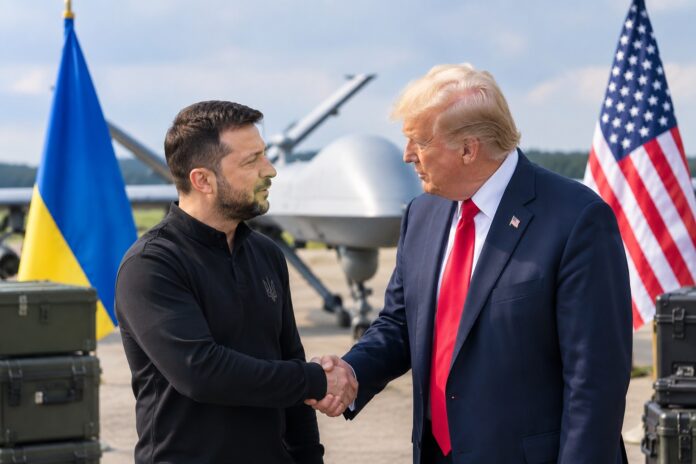
In a significant development for international defense partnerships, Ukraine is on the verge of signing a landmark drone defense deal with the United States. This agreement is expected to bolster Ukraine’s military capabilities amid ongoing conflicts, particularly in light of the recent war involving Iran. Ukrainian President Volodymyr Zelenskyy is reportedly prepared to finalize the deal during the United Nations General Assembly this week in New York City. However, sources indicate that the actual signing may occur at a later date, contingent upon the readiness of U.S. officials.
Over the past year, the U.S. Department of Defense and its Ukrainian counterpart have been working diligently to establish a framework that would facilitate the testing and production of Ukrainian defense technology within the United States. This collaborative effort underscores the growing recognition of the importance of Ukraine’s defense industry, especially as the nation faces increasing threats from adversaries utilizing advanced drone technology.
- Ukrainian President Volodymyr Zelenskyy is set to sign the deal.
- The agreement may be finalized during the UN General Assembly in New York City.
- The U.S. Department of Defense has been collaborating with Ukraine for over a year.
- The deal aims to enhance testing and production of Ukrainian defense technology in the U.S.
Why It Matters
The implications of this drone defense deal extend far beyond the immediate military enhancements it promises for Ukraine. As the conflict with Russia continues, the need for effective defense mechanisms has become paramount. The U.S. and its allies have recognized that the war with Iran has highlighted vulnerabilities in their own defense systems, particularly regarding drone warfare. The Iranian military has been employing Shahed one-way attack drones, which have been used to target American military installations across the Middle East. These same drones have also been deployed by Russia in its attacks on Ukrainian cities, demonstrating a troubling convergence of tactics among adversaries.
Experts assert that the most critical lesson learned from these conflicts is that possessing advanced technology is not sufficient on its own. The effectiveness of drone systems relies heavily on the operational knowledge and adaptability of the personnel who operate them. Deborah Fairlamb, a founding partner of Green Flag Ventures, emphasizes that the West must understand that technology alone does not guarantee success. It is the integration of technology with skilled operators and adaptive strategies that will determine the effectiveness of these defense systems.
- The deal enhances Ukraine’s military capabilities amid ongoing conflicts.
- It reflects the vulnerabilities exposed by the Iranian conflict.
- Possessing advanced technology is not enough; operational knowledge is crucial.
- Ukraine’s defense industry is rapidly evolving and expanding.
Political and Public Context
The backdrop of this drone defense deal is marked by a series of significant developments in Ukraine’s defense landscape. Over the past year, Ukraine has successfully signed defense agreements with several countries in the Middle East, including Saudi Arabia, Qatar, and the United Arab Emirates. These agreements have facilitated foreign financing for Ukraine’s burgeoning defense manufacturing industry, allowing the nation to ramp up production capabilities. President Zelenskyy has set ambitious goals, aiming to produce 10 million drones within the year, a stark contrast to the U.S. Army’s acquisition of approximately 50,000 drones in 2025.
Moreover, the collaboration between the U.S. and Ukraine is not merely a transactional relationship; it represents a strategic partnership aimed at countering common threats. The U.S. has recognized the importance of Ukraine’s defense technology, particularly in the context of the ongoing war with Iran. The lessons learned from this conflict are likely to shape future defense strategies for both nations.
- Ukraine has signed defense agreements with several Middle Eastern countries.
- President Zelenskyy aims to produce 10 million drones this year.
- The U.S. Army’s drone acquisition figures contrast sharply with Ukraine’s production goals.
- The partnership reflects a strategic alignment against common threats.
Ukraine ready to sign landmark drone defense deal with U.S., sources say, amid new details on Kyiv's role in Iran war https://t.co/ZmhPaBL5nd
— CBS News (@CBSNews) September 23, 2026
What Happens Next
Looking ahead, the finalization of the drone defense deal between Ukraine and the U.S. is expected to set the stage for a new era of military collaboration. As both nations navigate the complexities of modern warfare, the emphasis will likely shift toward integrating advanced technologies with effective operational strategies. The U.S. will need to ensure that the necessary support systems are in place to facilitate the successful implementation of these defense technologies within Ukraine.
Furthermore, the deal raises several open questions regarding the future of drone warfare and international defense partnerships. How will the U.S. and Ukraine adapt their strategies in response to evolving threats? What measures will be taken to ensure that the operational knowledge gained from this partnership is effectively transmitted to Ukrainian forces? As these questions linger, the international community will be closely monitoring the developments surrounding this landmark agreement.
- The finalization of the deal will enhance military collaboration.
- Focus will shift toward integrating technology with operational strategies.
- Open questions remain regarding future adaptations to evolving threats.
- The international community will monitor developments closely.