Story Highlights
- Will Scharf, a conservative attorney and current White House staff secretary, has been named the new White House counsel, assuming the role on September 1
- Scharf replaces David Warrington, who departs for the private sector after serving since the president’s inauguration
- The appointee brings extensive experience defending presidential interests, including work on Supreme Court criminal immunity arguments and appellate defense in civil litigation
- His appointment positions him centrally in judicial confirmation processes and major legal decisions ahead
What Happened
President Trump announced a significant change in his legal leadership structure by naming Will Scharf as the new White House counsel. The announcement came through Truth Social, with the attorney set to begin the role on September 1. Scharf assumes responsibility for one of the most consequential legal positions within the executive branch, taking over from David Warrington, whose tenure began at the president’s inauguration and concludes as he transitions to private sector work.
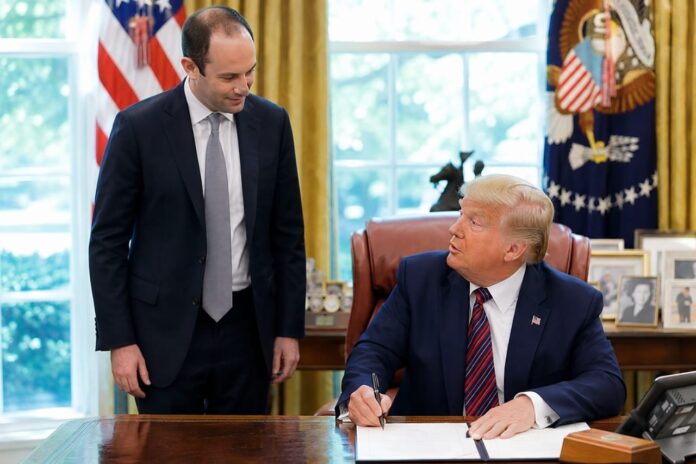
Scharf currently serves as White House staff secretary, a position that has given him visible prominence within the administration through his responsibility for managing document flow to the president’s desk and his frequent appearance in the Oval Office overseeing executive order signings. This background demonstrates his operational familiarity with White House procedures and his trusted standing within the administration’s inner circles.
- Will Scharf assumes White House counsel role on September 1, 2025
- David Warrington departs after service since presidential inauguration
- Scharf currently serves as White House staff secretary with responsibility for presidential paperwork management
- Announcement made via Truth Social by the president
Why It Matters
The White House counsel position stands as one of the most influential legal roles in any administration, carrying responsibility for navigating complex constitutional questions, judicial nominations, and the executive branch’s legal strategy across numerous domains. Scharf’s appointment reflects a deliberate choice to strengthen the legal apparatus with an attorney who has demonstrated deep familiarity with the president’s priorities and proven capability in high-stakes legal defense.
His background demonstrates particular strength in areas likely to occupy significant portions of his counsel tenure. His work convincing the Supreme Court regarding broad criminal immunity protections for former presidents showcases appellate mastery on matters directly relevant to presidential authority. His successful defense against civil litigation involving prominent public figures indicates capability in defending executive interests under intense public scrutiny. His involvement in Supreme Court confirmation processes for justices Brett Kavanaugh and Amy Coney Barrett positions him with institutional knowledge of judicial nominations—knowledge that becomes immediately relevant if vacancies emerge on the high court.
Beyond litigation and confirmations, Scharf’s chairmanship of a planning commission overseeing presidential real estate projects around the nation’s capital demonstrates his broader role in advancing the administration’s agenda across multiple governmental domains. This multifaceted experience suggests a counsel capable of operating across the full spectrum of executive legal responsibilities.
- White House counsel influences Supreme Court nominations and judicial strategy across federal system
- Position central to executive authority questions and constitutional interpretation
- Counsel’s office manages litigation defense for presidential and executive branch interests
- Scharf’s appointment strengthens legal continuity for ongoing administrative priorities
Political and Public Context
The appointment occurs within a political environment where executive legal defense remains prominently important. The administration faces ongoing litigation across multiple jurisdictions and legal theories, making robust counsel leadership essential for coordinating defensive strategy and ensuring legal consistency across government. Scharf’s credentials as a conservative attorney with prior service as a personal appellate counsel to the president indicate ideological alignment with the administration’s constitutional and judicial philosophy.
His professional pedigree reflects the elite legal preparation increasingly expected in major government roles. Graduation from Princeton University and Harvard Law School positions him within the nation’s premier educational institutions, credentials that carry weight in both political and legal circles. His prior primary challenge in Missouri politics, though unsuccessful, demonstrates willingness to engage directly in partisan processes while maintaining professional legal standing.
Warrington’s departure, while described positively by the president as involving outstanding service, follows the common pattern of executive branch turnover where trusted advisors transition to private sector opportunities. This succession represents continuity of administration priorities through a carefully selected successor rather than a forced transition.
- Conservative attorney appointment reflects ideological alignment with administration judicial philosophy
- Scharf’s appellate experience addresses ongoing litigation across multiple jurisdictions
- Supreme Court confirmation experience becomes relevant if high court vacancies emerge
- Transition represents planned succession maintaining legal strategy continuity
Trump Names Will Scharf as White House Counselhttps://t.co/qZVSQ0FOAq
— The Epoch Times (@EpochTimes) August 10, 2026
What Happens Next
Scharf’s assumption of the counsel role on September 1 begins a tenure that will likely involve immediate engagement with pressing legal matters across the executive branch. His first priorities will include full briefing on active litigation, pending judicial nominations, and constitutional questions requiring counsel guidance. The transition period between announcement and assumption allows current office operations to continue under Warrington’s leadership while enabling knowledge transfer and briefing preparation.
The coming months will reveal how Scharf approaches the counsel role’s unique demands, particularly regarding Supreme Court vacancies should they occur. His involvement in prior confirmation processes, combined with his appellate mastery demonstrated in previous constitutional litigation, suggests he will approach judicial nominations with strategic sophistication. Additionally, his demonstrated capability in appellate defense may extend the office’s litigation strategy into higher courts where his expertise concentrates.
- Scharf begins counsel duties September 1 with full briefing on active litigation and pending matters
- Potential Supreme Court vacancy would place Scharf at center of confirmation process
- Office transition period allows knowledge transfer and operational continuity preparation
- New counsel expected to maintain administration’s legal strategy across federal litigation