Story Highlights
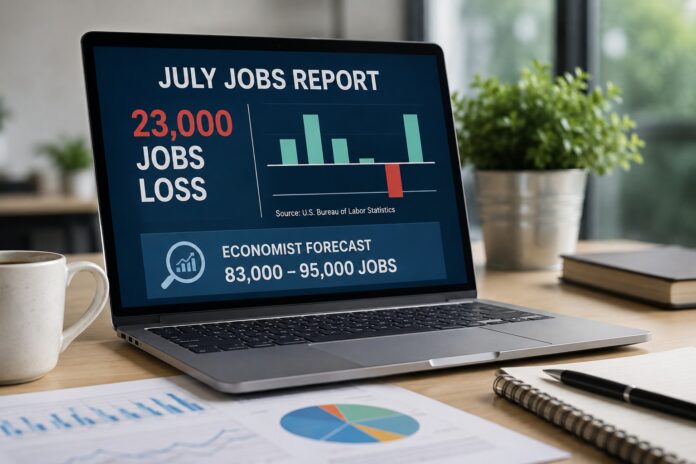
- The U.S. economy shed 23,000 jobs in July, falling significantly short of economist projections for 83,000 new positions
- Manufacturing and factory construction sectors demonstrated resilience with continued job growth despite broader economic headwinds
- Unemployment claims remain at historically low levels, indicating underlying strength in labor market foundations
- Hospitality and local government sectors experienced the most significant employment declines during the period
What Happened
Recent employment data revealed a complex economic picture, with the nation experiencing a net loss of 23,000 jobs in July according to the Bureau of Labor Statistics. This outcome represented a substantial miss against economist consensus forecasts, which had anticipated gains of between 83,000 and 95,000 positions. The disparity between expectations and results highlighted volatility in labor market conditions and raised questions about economic momentum heading into the latter half of the year.
Despite the overall contraction, specific sectors demonstrated noteworthy strength. Manufacturing and factory construction employment continued to expand, providing evidence of resilience in segments that have been central to the administration’s economic agenda. The White House emphasized this manufacturing resurgence while pointing to record-low unemployment claims as indicators of underlying labor market health. Conversely, hospitality and leisure industries shed positions at a particularly steep rate, a development that proved especially notable given that the nation was hosting major international events expected to drive tourism-related demand.
- 23,000 job losses in July versus economist projections of 83,000-95,000 gains
- Manufacturing and factory construction sectors continued expanding employment
- Unemployment claims remained at record low levels
- Hospitality and local government sectors experienced significant job declines
Why It Matters
The employment data carries significant implications for economic policy evaluation and the political landscape. The divergence between manufacturing sector strength and broader labor market weakness suggests that targeted policies aimed at specific industries may be producing measurable results, even as aggregate employment figures paint a less optimistic picture. This distinction matters for understanding which economic strategies are generating positive outcomes in particular areas of the economy.
The manufacturing resurgence takes on particular importance given its role in long-term economic strategy and competitiveness considerations. Factory construction and manufacturing employment growth demonstrates that investment and policy focus in these sectors can yield tangible job creation, supporting the case for continued emphasis on industrial development. However, the challenges in hospitality and leisure sectors, traditionally significant employment generators, suggest that external pressures including tariff impacts, energy costs, and geopolitical factors are creating headwinds in other areas of the economy that require attention and potential adjustment.
- Manufacturing policy focus appears to be generating employment gains in targeted sectors
- Broader labor market weakness contrasts with specific sectoral strength, complicating overall economic narrative
- Record-low unemployment claims suggest labor force remains engaged despite headline job losses
- Tariffs and energy costs are identified as contributing factors to employment challenges in certain industries
Political and Public Context
The employment figures arrive at a strategically important moment in the political calendar. The administration and Republican leadership have positioned economic performance, particularly job creation, as a central element of their campaign messaging. This makes the divergence between expectations and actual results particularly noteworthy from a communications standpoint. The data demonstrates both areas of success worthy of emphasis and challenges that require forthright discussion.
Public perception of economic conditions has shifted measurably according to available polling metrics. Sentiment regarding job market quality and employment prospects has declined compared to earlier periods, with fewer Americans expressing confidence that this represents an optimal time to seek quality employment. This shift in consumer and worker sentiment, regardless of underlying economic statistics, influences both political dynamics and consumer behavior patterns. The manufacturing sector’s demonstrated strength provides a counter-narrative to broader economic pessimism, offering evidence that specific policy approaches are functioning as intended even when aggregate numbers disappoint.
- Economic performance positioned as central campaign message in political cycle
- Public sentiment on job market quality has declined compared to January 2025 baseline
- Manufacturing job growth provides counter-evidence to broader labor market weakness
- External factors including tariffs and global conditions complicate economic management environment
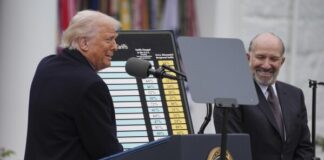
NEC Director Kevin Hassett: "If you look at the overall economy, then things are really, really booming. As an example, there are 83,000 construction workers building factories right now. That's a number that we've never seen before. Initial claims for unemployment insurance are… pic.twitter.com/rdenYuVu5V
— Breaking911 (@Breaking911) August 9, 2026
What Happens Next
The administration faces the challenge of sustaining manufacturing sector momentum while addressing employment challenges in hospitality, leisure, and government sectors. Future policy decisions will likely focus on evaluating whether tariff strategies and other economic interventions are producing net positive effects or whether adjustments are warranted to mitigate negative impacts on broader employment. The monthly employment reports will continue to receive intense scrutiny as key indicators of economic health and policy effectiveness.
Upcoming economic data releases will provide opportunities to assess whether July’s weak performance represents a temporary anomaly or signals emerging trends requiring policy response. Manufacturing employment trends will receive particular attention as a proving ground for the industrial policy approach. Additionally, the relationship between unemployment claims remaining at record lows and headline job losses creates an analytical puzzle that economists and policymakers will work to understand, as these metrics typically move in tandem. Policymakers will need to assess whether current economic conditions warrant adjustments or whether patience with the strategy remains warranted as data continues to accumulate.
- Next monthly employment report will indicate whether July weakness represents trend or anomaly
- Manufacturing employment growth will serve as key metric for evaluating sector-specific policies
- Potential policy adjustments may be considered based on tariff and energy cost impacts on employment
- Consumer sentiment and unemployment claims data will require close monitoring for consistency with headline employment figures