Story Highlights
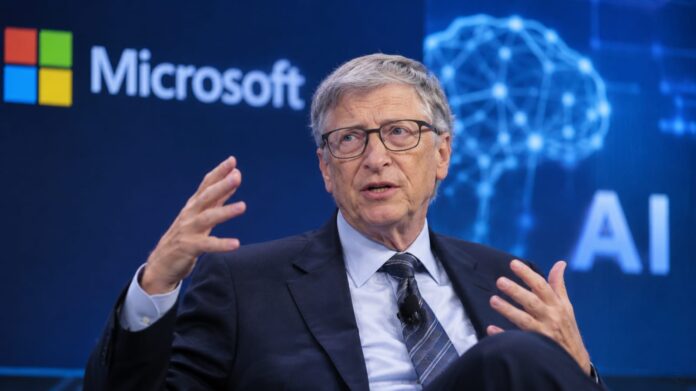
- Microsoft co-founder Bill Gates presented a dual-outcome scenario for artificial intelligence, characterizing it as either humanity’s greatest equalizer or worst source of injustice
- Gates emphasized that the transition to an AI-driven economy represents one of the most turbulent periods in human history and requires immediate policy action
- Labor market disruption poses significant risks, with AI expected to displace workers across multiple industries faster than previous technological transitions
- Gates advocated for comprehensive policy responses including domestic and international frameworks, job protections, and new taxation mechanisms on AI systems
What Happened
Microsoft co-founder Bill Gates presented his assessment of artificial intelligence’s trajectory through an essay published on his Gates Notes platform, outlining both transformative opportunities and substantial risks facing society. Gates framed AI as a technology with divergent potential outcomes, depending on how leaders and institutions prepare for its implementation and manage its consequences across economic and social systems.
Gates emphasized that current leadership and policymaking structures are not adequately addressing the challenges that artificial intelligence will create. He characterized the upcoming period as potentially one of the most turbulent eras in human history, particularly given the technology’s unprecedented speed of deployment and its broad applicability across economic sectors. According to Gates, the lack of comprehensive planning represents a critical gap in preparation efforts.
- Gates published his assessment through Gates Notes, his personal platform
- He described AI as having potential to be either an equalizer or source of major injustice
- He emphasized lack of structured planning to manage AI’s economic transition
- He noted AI will disrupt labor markets faster than previous technological shifts
Why It Matters
The employment implications of artificial intelligence represent a structural challenge to how modern economies organize labor and distribute prosperity. Gates highlighted that job displacement from AI will differ fundamentally from previous technological revolutions, moving through industries at accelerated speeds and affecting workers across skill levels simultaneously. Without proactive measures, significant portions of the workforce could face displacement or underemployment, potentially exacerbating existing economic inequality.
Gates argued that the timing of policy intervention is crucial. He stressed that waiting until workers are already displaced would be insufficient, as the economic damage and social disruption would already be entrenched. The challenge extends beyond employment, encompassing cybersecurity vulnerabilities, threats to human relationships, and questions about equitable access to AI’s benefits. Simultaneously, Gates recognized substantial positive potential, including accelerated healthcare advancement and agricultural improvements for lower-income regions globally.
Gates advocated for balancing risk mitigation with benefit maximization. He suggested that demonstrating how AI improves daily life could build necessary public trust for navigating difficult transition periods. Public perception remains skeptical, with recent research indicating that approximately 52 percent of survey respondents expressed greater concern than excitement about artificial intelligence technology.
- Job displacement could occur across multiple sectors simultaneously at accelerated pace
- Public skepticism about AI requires demonstrable benefits to build support for policy changes
- Healthcare advancement and agricultural productivity gains could improve global welfare
- Without early intervention, economic inequality could substantially increase
Political and Public Context
Artificial intelligence has emerged as a central policy concern for governments and international organizations as deployment accelerates across commercial and institutional sectors. The technology’s rapid development has outpaced regulatory frameworks, creating gaps between technological capability and governance capacity. Multiple jurisdictions are simultaneously developing AI governance approaches, ranging from strict regulatory models to more permissive innovation-focused strategies.
Public sentiment regarding artificial intelligence remains mixed and increasingly skeptical. Survey data indicates that fewer than one in ten respondents expressed greater excitement than concern about the technology, while the majority reported concern about its impacts. This skepticism reflects broader anxieties about technological unemployment, data privacy, algorithmic decision-making in critical sectors, and questions about equitable distribution of AI’s economic benefits.
Gates called for unprecedented global coordination on AI policy, arguing that the technology’s scale and impact demand responses exceeding traditional governance mechanisms. His recommendations included establishing both domestic and international frameworks, preserving certain occupations for human workers, and implementing new taxation structures on AI systems and automated machinery. This framing echoes broader policy discussions about ensuring technological progress aligns with social welfare objectives.
- Multiple nations developing divergent AI governance approaches simultaneously
- Public concern about AI exceeds excitement by significant margin in survey research
- Policy discussions increasingly focus on job protection and equitable benefit distribution
- International coordination efforts remain nascent despite calls for comprehensive frameworks
Bill Gates sounds alarm on AI-fueled mass unemployment, bioterrorism: 'Most dangerous tool ever invented' https://t.co/J9NVwaZzDG pic.twitter.com/bvbtNoDxC5
— New York Post (@nypost) August 26, 2026
What Happens Next
Gates’ intervention into AI policy discussions suggests ongoing efforts by technology sector leaders to shape governmental approaches to artificial intelligence regulation and deployment. His emphasis on immediate action indicates pressure mounting within business and philanthropic communities for accelerated policy development. The coming period will likely see intensified debate about specific policy mechanisms, including taxation models for AI systems, job transition support programs, and international governance structures.
Implementation challenges will test whether policymakers can develop coherent responses balancing innovation incentives with worker protection. Questions remain about how to effectively tax AI systems, which jurisdictions will lead regulatory efforts, and whether international coordination can achieve meaningful agreement. The timing and design of policy responses will substantially influence whether AI’s benefits distribute broadly or concentrate among existing wealth holders and technology companies.
Public perception of artificial intelligence will likely evolve based on both actual economic impacts and how effectively institutions demonstrate AI’s benefits in daily life. If early implementations reduce employment opportunities without offsetting gains in living standards or opportunity, public skepticism could intensify into active opposition to deployment. Conversely, successful demonstration of AI improving healthcare, education, and economic productivity could shift public sentiment toward greater acceptance of managed technological transition.
- Policymakers expected to develop specific taxation and job protection mechanisms
- International negotiations on AI governance frameworks anticipated to intensify
- Public sentiment regarding AI will shift based on actual employment and living standard impacts
- Technology sector engagement with policy development expected to continue and expand