Story Highlights
- A versatile kielbasa recipe offers busy cooks a practical solution for meal preparation and freezer storage
- The dish combines affordable kielbasa with peppers and onions as a flexible base for multiple meal variations
- Freezer-friendly preparation allows home cooks to plan ahead and simplify weeknight dinner decisions
- The recipe accommodates various serving styles, from pasta dishes to rice bowls and bread-based meals
What Happened
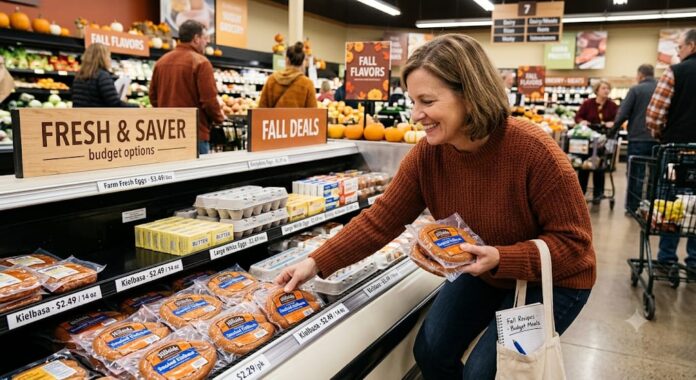
A food writer discovered an economical opportunity while shopping at a local grocery store, where kielbasa was consistently priced at under $2.50 per package throughout the fall season. Rather than featuring prominently in the premium meat section, the kielbasa was located in a lower refrigerated case near the eggs alongside other everyday proteins. This accessibility and affordability prompted exploration of how to incorporate the ingredient into regular meal planning.
After purchasing multiple packages and experimenting with various preparation methods, a pattern emerged in the kitchen. The combination of kielbasa with peppers and onions became a recurring base ingredient that could be adapted into numerous finished dishes. This discovery led to developing a freezer-friendly approach where the basic components could be prepared in advance and stored for later use, eliminating the need to decide on final preparation methods until cooking time.
- Kielbasa price point consistently under $2.50 per package at retail locations
- Product stocked in lower refrigerated case rather than premium butcher section
- Peppers and onions identified as versatile companion ingredients for multiple preparation styles
- Recipe adaptable for pasta, rice bowls, bread-based meals, beans, and soups
Why It Matters
For home cooks managing busy schedules and meal planning constraints, having a reliable freezer-friendly base ingredient addresses common kitchen challenges. The ability to prepare components in advance and store them removes the pressure of deciding on final meal presentation during actual cooking time. This approach to meal preparation reduces daily decision fatigue while maintaining flexibility in how the finished dish will be served.
The affordability of kielbasa as a protein source makes this recipe particularly practical for budget-conscious households. Unlike premium cuts of meat that may require specific cooking methods and careful presentation, kielbasa thrives in simple, straightforward preparations. The ingredient’s compatibility with common vegetables means that grocery shopping becomes more efficient, as peppers and onions serve multiple purposes across different meals throughout the week.
From a practical standpoint, this freezer-friendly methodology extends the usability window of purchased ingredients. Rather than rushing to use fresh produce within days of purchase, having a prepared freezer base allows cooks to work at their own pace. This flexibility reduces food waste while simultaneously creating a safety net of prepared ingredients available for quick meal assembly on nights when cooking motivation is low.
- Reduces daily meal planning decisions and cooking time during busy weeknights
- Provides affordable protein option suitable for household budgets
- Minimizes food waste through extended ingredient storage and planning flexibility
- Creates multiple meal variations from single prepared base component
Political and Public Context
Home cooking and meal preparation have experienced renewed attention in recent years as more people seek alternatives to restaurant dining and processed foods. The trend toward freezer-based meal prep aligns with broader consumer interest in managing household expenses and reducing reliance on convenient but costly prepared meals. Grocery stores have responded to this demand by offering various proteins at competitive prices, sometimes creating surplus situations that benefit savvy shoppers willing to plan ahead.
The approach of building versatile recipe bases reflects evolving attitudes toward cooking efficiency and sustainability. Rather than viewing recipes as fixed formulas requiring specific ingredients and presentations, contemporary home cooks increasingly adopt modular approaches where core components serve multiple purposes. This methodology reduces pressure on home cooks to perfectly execute complex recipes while maintaining room for creativity and adaptation based on available ingredients and time constraints.
The economics of budget-conscious cooking remain relevant across diverse household income levels. People across the economic spectrum appreciate opportunities to stretch purchasing power while maintaining quality and nutrition. The discovery of consistently discounted proteins at local grocery stores represents the kind of practical knowledge that home cooks share through conversation and recipe development, creating informal networks of culinary problem-solving.
- Growing consumer interest in home cooking as alternative to restaurant dining and processed foods
- Retail strategies sometimes create surplus situations offering price advantages to prepared shoppers
- Contemporary cooking approaches favor modular, adaptable recipes over fixed formulas
- Budget-friendly cooking strategies remain relevant across multiple income demographics
What Happens Next
For home cooks interested in adopting this freezer-friendly approach, the next step involves identifying local grocery stores where proteins are consistently priced at accessible levels. Building relationships with stores through regular shopping allows customers to recognize patterns in pricing and inventory management. Once baseline ingredients are secured and prepared, the actual freezer storage and future meal assembly becomes a matter of personal schedule and preference.
The versatility of this recipe format suggests that experimentation with different vegetables and seasonings could yield variations suited to individual taste preferences. Cooks might explore how the prepared kielbasa base functions across different cuisine styles or with alternative serving vessels. Additionally, sharing results with other home cooks creates opportunities for refinement and discovery of unexpected applications that the original recipe developer may not have considered.
As consumer interest in meal preparation continues evolving, understanding how to work with affordable proteins and simple vegetables becomes increasingly valuable kitchen knowledge. This recipe format provides a foundation that home cooks can modify, expand, or simplify based on their specific circumstances. The approach demonstrates that practical, budget-friendly cooking need not sacrifice either flavor or flexibility in meal planning.
- Identifying local grocery stores with consistent pricing patterns on proteins
- Experimenting with vegetable varieties and seasonings for customized versions
- Testing prepared base across different cuisine styles and serving methods
- Sharing results and variations with home cooking communities for collective refinement