Story Highlights
- Louisiana Governor Jeff Landry stated he is not concerned about environmental impacts from SpaceX’s planned $100 billion Gulf Coast launch facility
- The new spaceport will be constructed on a former Exxon property in Vermilion Parish and serve as SpaceX’s fourth and largest launch site
- State economic development officials project the facility will generate over 11,000 job opportunities, including 3,000 direct jobs and 8,000 indirect jobs
- Construction is anticipated to begin next year with the first launch expected as soon as 2029
What Happened
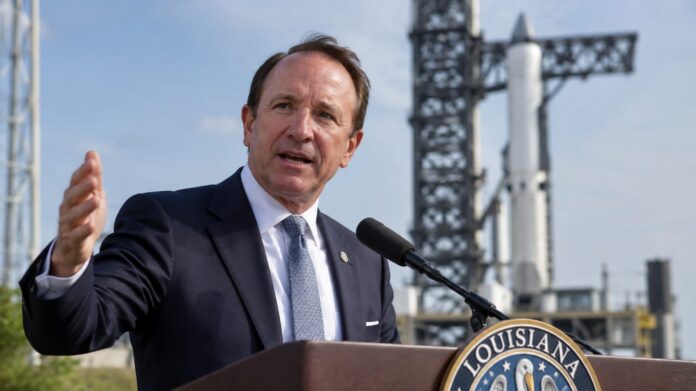
Louisiana Governor Jeff Landry addressed environmental concerns regarding SpaceX’s planned launch facility during an interview with media outlets on Wednesday morning. The governor emphasized his focus on economic development opportunities rather than environmental worries, characterizing the state partnership with the aerospace company as highly significant. Landry indicated that economic considerations and coastal rebuilding initiatives take priority in state decision-making regarding the project.
The proposed spaceport represents a major industrial development for the Gulf Coast region, with the facility to be situated along Louisiana’s coastline on property formerly owned by an oil and gas company. SpaceX plans to utilize the location as the primary hub for operations involving its Starship reusable rocket system, which remains under development. State officials have provided timelines indicating that construction could commence in the coming year, with operational launches potentially beginning within the next several years.
- Governor Landry dismissed environmental impact concerns during Wednesday media engagement
- Facility will be constructed on Gulf Coast in Vermilion Parish on former industrial property
- Spaceport designated as SpaceX’s fourth location and largest launch facility
- Economic projections estimate 11,000+ jobs with anticipated construction start in 2025
Why It Matters
The establishment of this facility carries significant implications for regional economic development, workforce opportunities, and industrial positioning along the Gulf Coast. The project represents a substantial capital investment in Louisiana infrastructure and could reshape the economic landscape of coastal communities. For state policymakers, the initiative reflects a strategic decision to prioritize aerospace industry development as part of broader economic diversification efforts in regions historically dependent on energy sector employment.
The governor’s dismissal of environmental concerns signals state-level confidence in the project’s viability despite historical regulatory issues at other aerospace facilities. The scale of projected employment opportunities suggests potential transformation of local labor markets and tax revenue streams for affected parishes. Additionally, the partnership reflects broader competitive dynamics among states seeking to attract high-profile technology and aerospace investments, with significant competitive advantages accruing to jurisdictions that facilitate such development.
- Project positioned to create over 11,000 employment opportunities across direct and indirect sectors
- State leadership prioritizing aerospace industry development as economic diversification strategy
- Coastal communities may experience significant demographic and economic shifts from facility operations
- Regional tax revenue and infrastructure development likely to receive substantial stimulus from project investment
Political and Public Context
The decision by Louisiana leadership to advance the SpaceX facility reflects broader national trends regarding state competition for aerospace and technology sector investments. Multiple states have pursued similar industrial development strategies, viewing space industry expansion as critical to future economic competitiveness. The governor’s emphasis on economic opportunity over environmental considerations aligns with policy approaches adopted by various state administrations seeking to attract major corporations and capital investments.
Historical context from operations at other aerospace facilities provides relevant background for current discussions. Regulatory agencies in Texas documented instances of environmental violations at an existing SpaceX launch site, specifically regarding compliance with water quality standards and Clean Water Act provisions. These precedents inform ongoing debates about regulatory oversight and environmental protection in aerospace industry development. The company has indicated commitment to environmental stewardship in Louisiana, pledging collaboration with state and federal agencies on coastal protection and wetland restoration initiatives.
- State competition for aerospace industry investments increasingly shapes regional economic policy decisions
- Texas regulatory findings documented environmental compliance violations at existing SpaceX facility in 2024
- Federal and state environmental agencies maintain oversight authority over operational facilities
- Company statements indicate commitment to environmental protection protocols for Louisiana operations
Louisiana governor ‘not concerned’ about environmental impact of Gulf Coast SpaceX facilityhttps://t.co/RI3CCHkIj6
— The Hill (@thehill) August 26, 2026
What Happens Next
Regulatory processes will likely proceed as the project advances toward the anticipated construction timeline. State and federal agencies responsible for environmental oversight will conduct reviews and establish operational parameters for the facility. The coming months will involve coordination among state economic development officials, environmental regulators, and company representatives regarding permits, compliance frameworks, and operational standards.
Implementation of the project depends on successful completion of necessary regulatory approvals and permitting procedures. State officials will need to address any outstanding environmental review requirements and establish ongoing monitoring mechanisms for facility operations. Community engagement initiatives may expand as construction timelines become more concrete and local stakeholders gain greater visibility into project specifics. The success of initial development phases will likely influence public discourse surrounding the facility and potentially shape future state policies regarding large-scale industrial projects in sensitive coastal environments.
- Construction anticipated to commence in 2025 pending regulatory approval completion
- First operational launches projected for 2029 or later pending development timelines
- Regulatory agencies to establish environmental monitoring and compliance frameworks for operations
- Ongoing coordination required among state, federal, and company entities regarding project implementation