Story Highlights
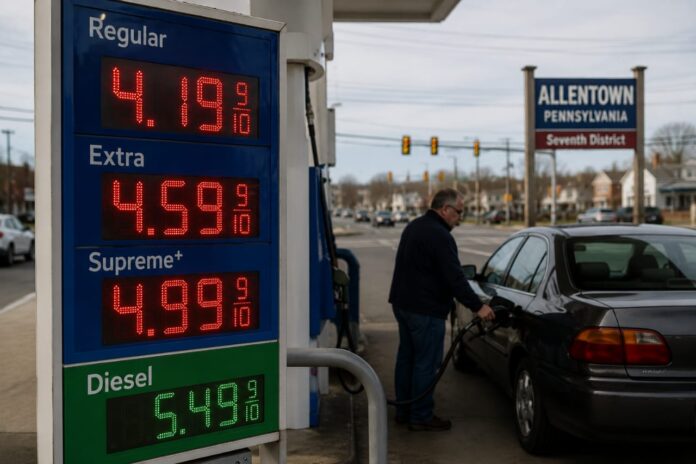
- Gas prices approaching $4.20 per gallon in Pennsylvania and across the nation are emerging as a significant political headwind
- Voters in bellwether districts cite economic concerns and fuel costs as top-of-mind issues heading into the 2026 midterm elections
- Historical precedent shows energy crises have substantially impacted presidential approval and electoral outcomes since the 1970s
- The White House faces a complex political landscape where multiple cost-of-living pressures compound voter anxiety about gas prices
What Happened
As the 2026 midterm elections loom, elevated gas prices are creating measurable political pressure for the Trump administration. Recent field reporting from Allentown, Pennsylvania—a bellwether Seventh District community—reveals that voters are acutely aware of fuel costs and increasingly attributing responsibility to the sitting president. The average price of gasoline in Pennsylvania has climbed to nearly $4.20 per gallon, a figure that resonates painfully in household budgets across the state and nation.
Residents surveyed in these key electoral districts place the economy and prices at the forefront of their political concerns. While fuel costs alone represent a substantial burden, voters report feeling simultaneous pressure from elevated grocery prices, housing expenses, and electricity costs. The convergence of these economic headwinds creates an environment in which a single commodity price—gasoline—becomes emblematic of broader dissatisfaction with economic conditions.
- Pennsylvania gasoline prices near $4.20 per gallon
- Bellwether Seventh District voters cite economy and prices as primary concerns
- Voters attribute blame for high prices to Trump administration
- Multiple cost-of-living pressures compounding fuel cost anxiety
Why It Matters
Energy prices have demonstrated remarkable staying power as a political fulcrum throughout American electoral history. The salience of gasoline costs extends beyond simple economics—it touches psychology, daily inconvenience, and voter perception of presidential competence. When Americans face higher fuel prices at the pump, they experience a direct, repeated reminder of economic pressure every time they refuel their vehicles. This tangible, unavoidable experience translates into political vulnerability for sitting administrations.
The political weight of gas prices became particularly evident during energy crises of the 1970s. Following the OPEC embargo of 1973 and the Iranian Revolution crisis of 1979, Americans confronted not merely price increases but also the specter of shortages and rationing. These experiences fundamentally altered the political landscape, contributing to broader perceptions of presidential weakness and national decline. Scholars of this era note that Jimmy Carter’s presidency suffered substantial damage from the combination of high prices and the psychological trauma of waiting in line for fuel. The precedent suggests that fuel costs function as a proxy for presidential effectiveness and national strength in the minds of voters.
- Gas prices serve as tangible, daily reminder of economic pressure to voters
- Historical energy crises contributed to presidential electoral defeats and loss of public confidence
- Voters perceive fuel costs as indicator of presidential competence and economic management
- Multiple cost pressures amplify political sensitivity to gasoline prices specifically
Political and Public Context
The political context surrounding energy prices has evolved considerably since the 1970s, yet the fundamental dynamic remains remarkably durable. Despite decades of renewable energy development, technological advancement, and shifting energy portfolios, gasoline prices continue to occupy a central position in American political discourse. This persistence reflects both the practical reality of American dependence on petroleum-based transportation and the deeper psychological connection Americans maintain with the price of fuel.
The 1973 OPEC embargo emerged from Middle East geopolitical tensions, specifically the Yom Kippur War, demonstrating how international events can rapidly translate into domestic economic pressure. The subsequent 1979 Iranian Revolution created another supply shock that Americans experienced as both price escalation and physical scarcity—the combination proved particularly damaging to presidential standing. Modern political observers recognize that while the global energy landscape has diversified, the fundamental political arithmetic of gas prices has changed less than might be expected. Voters continue to hold sitting administrations accountable for fuel costs, regardless of the complex international factors that influence petroleum markets.
- 1973 OPEC embargo and 1979 Iranian Revolution established gas prices as major political issue
- Energy crises of 1970s contributed to perception of national decline and presidential weakness
- Modern political discourse still centers on gasoline prices despite renewable energy growth
- Voters attribute fuel costs to presidential competence despite global market factors
What Happens Next
The trajectory of gas prices through 2026 will likely prove decisive in shaping the midterm electoral landscape. If fuel costs decline from current levels, the administration may experience improved political positioning heading into the election. Conversely, sustained or rising prices could amplify existing voter frustration and translate into meaningful electoral consequences. The White House will need to address not only fuel costs themselves but also the broader constellation of cost-of-living concerns that amplify voter sensitivity to gas prices.
Political operatives will monitor bellwether districts like Pennsylvania’s Seventh with particular intensity, as voting patterns in these communities often foreshadow national electoral trends. The integration of gas prices into broader economic messaging will prove crucial—voters who perceive themselves as struggling on multiple fronts tend to view fuel costs as symptomatic of systemic economic mismanagement. Additionally, international developments affecting oil markets, particularly any escalation in Middle East tensions, could either exacerbate or alleviate the political pressure currently building.
- Gas price trajectory through 2026 will influence midterm electoral outcomes
- Bellwether districts like Pennsylvania’s Seventh District signal national voting trends
- International developments affecting oil supply could shift political dynamics
- Voter perception of broader economic competence shapes response to fuel costs