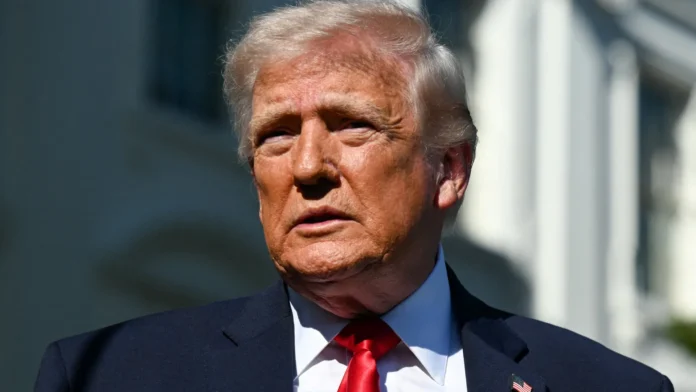
President Trump intensified his rhetoric against Iran over the weekend, warning that there will be “nothing left” of the country if its leadership does not quickly advance toward a deal to end the ongoing conflict. The warnings came after Trump met with his national security team and spoke directly with Israeli Prime Minister Benjamin Netanyahu, signaling a possible resumption of military operations. The standoff, centered on a fragile ceasefire and a blocked Strait of Hormuz, is rattling global oil markets and testing the limits of diplomatic patience.
Story Highlights
- Trump posted on Truth Social that “for Iran, the Clock is Ticking,” and confirmed in a call with Axios that Iran would be “hit much harder” without a better offer.
- Iran’s foreign minister stated that Tehran “cannot trust the Americans at all,” while Iran sent a new response to U.S. diplomatic demands on Monday.
- The U.S. presented Iran with a five-point proposal including a demand to reduce active nuclear sites to one and transfer enriched uranium stockpiles to the United States.
What Happened
President Donald Trump met with top members of his national security team over the weekend to discuss the path forward on the Iran war and is expected to meet again with the team early this week. A day after the weekend meeting, Trump issued a new warning to Iran, writing on social media: “For Iran, the Clock is Ticking, and they better get moving, FAST, or there won’t be anything left of them. TIME IS OF THE ESSENCE!” Trump has grown increasingly impatient with how Tehran has been handling diplomatic negotiations and remains frustrated with the continued closure of the Strait of Hormuz and its impact on global oil prices.
Trump told Axios in a phone call that “the clock is ticking” for Iran and warned that if the Iranian regime does not come with a better offer for a deal, “they are going to get hit much harder.” He said the United States will hit Iran “much harder than before” if they don’t come up with a better proposal. Trump added, “We want to make a deal. They are not where we want them to be. They will have to get there, or they will be hit badly, and they don’t want that.”
Qatari Prime Minister Mohammed bin Abdulrahman Al Thani, who is also mediating, spoke on Sunday with his Pakistani counterpart and with the Iranian foreign minister. Trump told Axios he still thinks Iran wants a deal and said he is waiting for an updated Iranian proposal. Trump declined to give a specific deadline for the negotiations with Iran.
Iran’s Fars news agency reported that Washington had presented a five-point list, which included a demand for Iran to keep only one nuclear site in operation and transfer its stockpile of highly enriched uranium to the United States.
Iran’s foreign minister, Abbas Araghchi, said on Friday that Tehran “cannot trust the Americans at all” and that Iran is “trying to maintain” the “shaky” ceasefire “to give diplomacy a chance.”
Why It Matters
The escalating rhetoric between Washington and Tehran carries profound consequences for U.S. foreign policy and global stability. The United States and Iran reached a ceasefire that has remained technically in place, but both sides have accused each other of violations. Trump’s warnings now signal that military options are actively back on the table, with consequences extending far beyond the two countries directly involved.
Trump had previously threatened to attack Iran’s civilian infrastructure, including its power plants and bridges — actions legal experts warn could amount to violations of the Geneva Convention. In a separate Fox News interview, Trump said Iranian officials will “be blown off the face of the earth” if they attack U.S. vessels. Iran has denounced such rhetoric and rejected Trump’s demands as excessive.
The status of the Strait of Hormuz is central to the impasse. Iran’s continued closure of the strategic waterway — through which a significant portion of the world’s oil supply passes — is the Trump administration’s stated reason for keeping its own blockade in place as a precondition for further talks. This has created a deadlock in which both sides insist the other must act first, leaving global energy markets in prolonged uncertainty.
For U.S. national security policy, the situation represents a high-stakes test of maximum-pressure diplomacy. The Trump administration entered negotiations with sweeping demands, including limits on Iran’s nuclear program that Tehran has characterized as national humiliation. Whether aggressive rhetoric accelerates a deal or pushes Iran toward hardened resistance is a question that will define the legacy of this diplomatic chapter.
Economic and Global Context
As of May 16, 78 commercial ships had been redirected and 4 disabled to ensure compliance with blockade conditions imposed by U.S. Central Command. The naval blockade has been one of the main obstacles in the negotiations between the U.S. and Iran over a lasting ceasefire. Trump has said the blockade will remain in place as a condition for further talks, while Iran insists the blockade itself is a violation of the ceasefire agreement.
The Strait of Hormuz’s closure continues to ripple through global energy markets. The waterway is a critical chokepoint through which roughly 20 percent of the world’s oil supply passes. Disruption of shipping through this route has contributed to elevated oil prices, placing additional pressure on American consumers already facing cost-of-living strains and raising the geopolitical stakes of every diplomatic exchange.
Middle East allies and European partners are watching the situation with growing unease. Gulf states that depend on open shipping lanes for their own economic survival have been quietly urging both Washington and Tehran toward a durable resolution. Qatar’s active mediation role signals that regional actors are not merely spectators — they have significant economic interests in a swift return to navigational freedom in the Persian Gulf.
Implications
Trump is expected to convene his top national security team in the Situation Room this week to discuss military options, two U.S. officials confirmed. Trump spoke with Israeli Prime Minister Benjamin Netanyahu on Sunday about the situation in Iran. This indicates that the diplomatic and military tracks are running simultaneously, and that any breakdown in talks could swiftly transition to action.
For Congress, the Iran situation presents a delicate balancing act. Lawmakers have not yet been asked to authorize new military force against Iran, and any resumption of hostilities would reignite debate over presidential war powers. Members of both parties who supported the original military action will face renewed pressure to define the scope and objectives of any escalation.
For American businesses and consumers, prolonged conflict and an unresolved Hormuz closure means elevated energy costs are likely to persist into the summer and beyond. Fuel prices influence inflation across virtually every sector of the economy, from transportation to food production, and a return to open-conflict conditions in the Persian Gulf would send prices sharply higher.
Iran’s diplomatic posture — issuing a formal response to U.S. demands while publicly declaring a lack of trust — suggests Tehran is attempting to keep talks alive without making the substantive concessions Washington demands. Whether that strategy holds under Trump’s escalating pressure, or whether the next national security meeting in the Situation Room triggers another round of military escalation, remains the most consequential open question in American foreign policy right now.
Source
Trump says ‘Clock is Ticking’ for Iran as shaky ceasefire continues