A massive prayer festival on Washington’s National Mall on Sunday drew tens of thousands of attendees and featured video appearances from President Trump, Vice President JD Vance, and other top administration officials. Dubbed “Rededicate 250: A National Jubilee of Prayer, Praise & Thanksgiving,” the event was partially funded by taxpayer dollars and timed to America’s 250th anniversary. It has immediately reignited a national debate over the boundary between government and religion.
Story Highlights
- The event featured video messages from President Trump reading Bible verses, Vice President Vance, Defense Secretary Pete Hegseth, and House Speaker Mike Johnson delivering prayers from the stage.
- Critics, including constitutional law professors and religious freedom organizations, argued the White House-backed event blurs the constitutional separation of church and state.
- Protests took place nearby, including a large golden calf balloon designed to evoke the biblical warning against idolatry.
What Happened
An all-day prayer event on the National Mall on Sunday — backed by the White House through a mix of taxpayer funds and private donations — marked the latest flashpoint in the Trump administration blurring the separation of church and state. The event, dubbed “Rededicate 250: A National Jubilee of Prayer, Praise & Thanksgiving,” is part of a series of celebrations commemorating America’s 250th birthday and featured video messages from President Trump and other members of his Cabinet. The event brought together faith leaders, public officials, and musicians to reflect and worship ahead of the anniversary of the nation’s founding. Crowds of people flocked to the National Mall throughout the day despite warm temperatures, many dressed in red, white and blue.
House Speaker Mike Johnson delivered a prayer of “rededication,” thanking God for guiding the nation since its founding. Defense Secretary Pete Hegseth referenced George Washington’s faith, while Senator Tim Scott spoke about Christianity’s role in shaping the nation and argued prayer was central to the Civil Rights Movement. Alveda King, niece of Martin Luther King Jr., praised Trump for encouraging Americans to “rededicate America to God.”
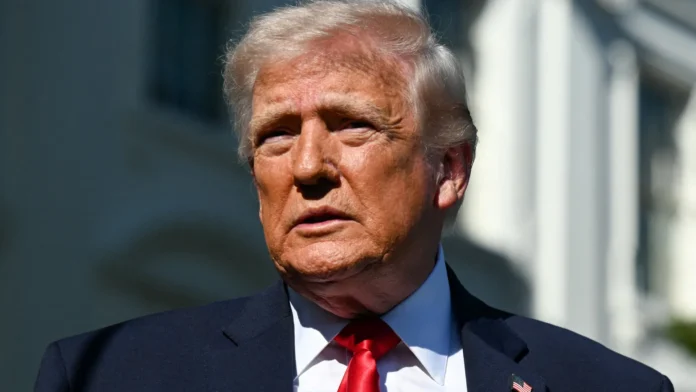
President Trump read a passage of Scripture in a video shown at the rally. Filmed in the Oval Office, it was the same footage used during a marathon Bible-reading event last month. The verses from 2 Chronicles are often cited by those who believe America was founded as a Christian nation. Other top Republicans, including Vice President JD Vance, Secretary of State Marco Rubio, and Speaker Johnson, were also on the program as part of the celebrations marking 250 years of American independence.
The event also featured appearances from Cardinal Timothy Dolan, Bishop Robert Barron, Rabbi Meir Soloveichik, evangelist Franklin Graham, and Grammy-winning Christian artist Chris Tomlin, among others. Freedom 250, the nonprofit behind the event, said the gathering is part of a broader effort leading up to America’s semiquincentennial celebration on July 4, 2026.
Among protesters were the Freedom From Religion Foundation, which advocates a strict separation of church and state, and the Christian organization Faithful America. The two groups displayed a large balloon near the mall of a Trump-like golden calf, in a biblical reference to idolatry.
Why It Matters
Experts were split on whether the event was constitutional. Andrew Koppelman, a professor at Northwestern University’s Pritzker School of Law who focuses on constitutional law, said the event was permitted because no court issued an injunction to stop it, but that it was “contrary to the fundamental purposes of the Constitution.” He argued that the administration’s association of its political identity with a particular religion is damaging both to governance and to religion itself.
Rachel Laser, president and CEO of Americans United for Separation of Church and State, characterized the event as a “government-run church service” on the National Mall — one that many Christians themselves do not support. The US Constitution’s First Amendment states that Congress shall make no law respecting an establishment of religion, a provision critics argue the event pushes against in spirit, if not in legal letter.
The event reflects a deliberate and expanding White House strategy of integrating Christian identity into the functions and culture of the federal government. From the Pentagon to the National Mall, administration officials have consistently woven religious language into their public roles. The question of whether this constitutes an unconstitutional endorsement of religion — or simply the free expression of faith by elected officials — remains unsettled in law and fiercely contested in public discourse.
For many Americans, especially evangelical Christians who form a core pillar of Trump’s political coalition, the event was a deeply affirmative moment. Attendees traveled from across the country, describing the gathering as a spiritually historic occasion. For others, the use of public funds and the National Mall — symbols of a pluralistic democracy — for what appeared to be a Christian worship event raised serious concerns about equal treatment under the Constitution.
Economic and Global Context
The “Rededicate 250” event sits within the broader political project of the Trump administration’s second term, which has systematically elevated religious — and specifically Christian — frameworks in policymaking and public ceremony. This represents a shift from previous administrations, Republican and Democratic alike, which typically maintained greater ceremonial distance from sectarian religious expression in government settings.
The partial use of taxpayer funding for the event places a fiscal dimension on the constitutional debate. While the exact amount of federal expenditure has not been publicly disclosed, critics argue that any amount of public money spent organizing or supporting a religious event on public land creates an establishment clause problem that courts may ultimately need to resolve.
Internationally, the imagery of a sitting president reading Bible verses in the Oval Office for broadcast at a government-backed rally on federal grounds has drawn attention from European allies with strict constitutional secularism, as well as from scholars of comparative democracy. The blending of national commemoration — America’s 250th anniversary — with evangelical Christian worship presents a particular vision of national identity that is not universally shared at home or abroad.
The 250th anniversary celebrations running through July 4, 2026, will continue to involve faith-themed programming organized through Freedom 250 and related nonprofits tied to the National Park Foundation. Each event carries the potential for additional legal challenges from civil liberties organizations monitoring the administration’s religious outreach.
Implications
For the Trump administration, the “Rededicate 250” rally serves as both a cultural statement and a political mobilization tool. With the 2026 midterms approaching and Democratic enthusiasm surging in primary contests, shoring up evangelical turnout through high-profile religious events may be a deliberate electoral strategy. Faith-motivated voters have been among the most reliable segments of the Republican base and increasing their enthusiasm ahead of November 2026 is a clear priority.
For Congress, the event deepens an existing fault line. Democrats have already signaled their intent to use the Trump administration’s policy agenda — including its religious initiatives — as campaign fodder in competitive districts. Moderates in both parties may find themselves pressed to take positions on the appropriate role of religion in government that they would prefer to avoid during a midterm cycle.
Legal organizations have signaled ongoing scrutiny. While no injunction was filed to halt Sunday’s event, future government-backed religious programming could face court challenges if the funding structure becomes clearer or if the events grow in official government involvement. The trajectory of the administration’s faith initiatives suggests these events will continue, ensuring the church-state debate remains a live issue through the remainder of Trump’s term.
For ordinary Americans, the rally illustrates a deepening cultural divide over national identity. Whether the United States is understood as a Christian nation rooted in biblical principles or as a constitutionally secular republic built on pluralist ideals is not merely an academic question — it increasingly shapes legislation, public institutions, and the character of public life itself.
Source
Crowds pack into Washington’s National Mall for prayer rally