Story Highlights
- President Trump indicated that a deal to reopen the Strait of Hormuz could materialize within days, with significant progress reported in ongoing negotiations
- His administration’s proactive diplomatic efforts have generated substantial momentum, with discussions characterized as productive and comprehensive
- A potential agreement could stabilize global oil markets and ease energy prices that have surged due to the strait’s closure
- The breakthrough would represent a major foreign policy achievement, addressing regional security concerns and economic impacts worldwide
What Happened
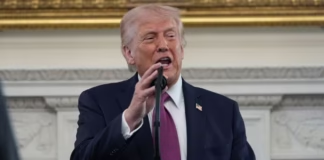
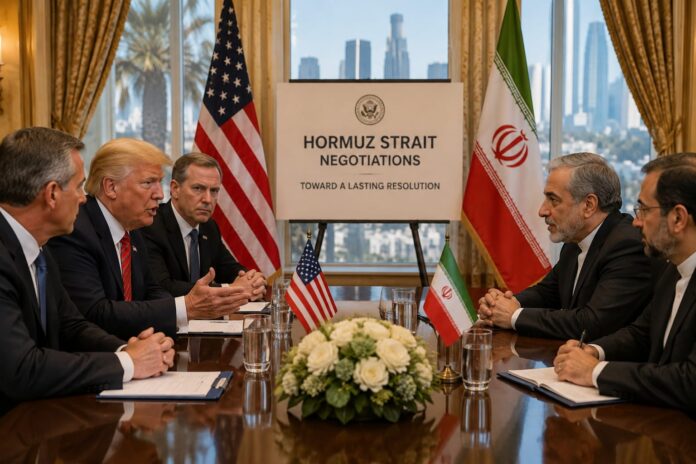
During a recent trip to Los Angeles for a Republican National Committee fundraising event, the president communicated optimism regarding imminent resolution of the Hormuz Strait negotiations. His administration reported engaging in extensive discussions with Iranian officials, describing these conversations as productive and moving toward concrete outcomes. The diplomatic momentum has generated anticipation that an announcement could materialize within a matter of days rather than weeks.
Energy markets have already begun responding to the prospect of a breakthrough. Brent crude, the international benchmark for oil pricing, declined by 1.6 percent to $80.59 per barrel early in the week, reflecting market confidence in potential deal resolution. U.S. gasoline prices have shown modest improvement, with the national average declining to $4.08 per gallon according to AAA tracking data.
- President Trump characterized progress as substantial during public remarks following the Los Angeles fundraising event
- His administration conducted all-day negotiations with Iranian representatives, demonstrating commitment to comprehensive discussions
- International oil markets responded positively to deal expectations, with crude prices declining ahead of potential announcement
- Both sides have returned to active negotiations after previously suspending interim arrangements established in June
Why It Matters
The Strait of Hormuz represents one of the world’s most critical energy corridors, with approximately one-fifth of global oil and natural gas historically passing through its waters. Closure of this strategic waterway has created significant disruptions to international commerce, fuel availability, and economic stability across multiple continents. A successful reopening would represent a tangible victory for stabilizing global energy markets and reducing inflationary pressures on consumers and businesses worldwide.
This administration’s approach to the negotiations demonstrates commitment to achieving diplomatic solutions that protect American interests while addressing regional security concerns. The willingness to engage in sustained, productive discussions with Iranian officials while maintaining clear deterrent messaging represents a balanced negotiating posture. Success in these talks would validate the strategic patience and firmness approach that has characterized the White House’s handling of complex international disputes.
Beyond immediate energy market implications, reopening the strait would represent a significant diplomatic achievement that strengthens American credibility in international negotiations. The ability to broker agreements on critical infrastructure while maintaining strong negotiating positions enhances the nation’s standing in global affairs and demonstrates effective foreign policy execution.
- Global energy markets would stabilize, reducing pressure on fuel prices affecting consumers and businesses internationally
- Shipping corridors would return to normal operations, restoring safe passage for cargo vessels and commercial traffic
- Regional stability would improve, reducing risks of broader conflict escalation in the Middle East
- American diplomatic credibility would strengthen, enhancing negotiating leverage on future international matters
Political and Public Context
The negotiations to reopen the Strait of Hormuz represent a continuation of this administration’s efforts to manage complex Middle Eastern challenges while prioritizing American economic and security interests. Prior arrangements reached in June had established frameworks for interim agreements, though discussions had temporarily stalled before resuming with renewed intensity.
The broader context includes regional tensions that have generated legitimate concerns about potential conflict escalation. Security incidents involving cargo vessels and maritime commerce have underscored the real consequences of the strait’s closure. The White House has balanced strong deterrent messaging with genuine diplomatic engagement, signaling that violations would face serious consequences while remaining open to negotiated solutions acceptable to all parties.
Economic considerations have added urgency to resolving these disputes. Energy price pressures affect American consumers directly, with fuel costs influencing broader inflation metrics and household budgets. Political considerations naturally follow, as sustained economic disruptions affect public sentiment and create pressure for resolution. The administration’s pursuit of diplomatic solutions reflects recognition that stable energy markets serve American interests and support economic growth.
- Previous interim peace arrangements signed in June had suspended operations before recent resumption of active negotiations
- Security incidents involving cargo vessels highlighted dangers created by the strait’s closure and disrupted shipping patterns
- Regional tensions involving Houthi militant activities and broader Middle Eastern dynamics created complexity in negotiation environment
- Economic impacts on global fuel prices and inflation metrics drove urgency toward achieving resolution
What Happens Next
According to multiple reporting sources, an announcement regarding the Strait of Hormuz agreement could materialize within the immediate term, potentially coming within days rather than weeks. The active nature of current discussions and reported progress suggests that final negotiations are advancing toward resolution phases. The specific terms of any agreement remain subject to finalizing details, though reports suggest potential involvement of Oman in shared administration arrangements.
If negotiations successfully conclude, implementation of reopening procedures would likely follow relatively quickly, allowing cargo vessels to resume normal transit operations. Energy markets would stabilize as confidence in sustained corridor access increases, potentially continuing the modest price relief already evident in recent trading. The success of this diplomatic achievement would position the administration favorably for future negotiating efforts on other complex international matters.
Contingency planning remains relevant, as the administration has made clear that any return to obstruction of the strait would prompt serious consequences. The balance between diplomatic openness and credible deterrent messaging will continue characterizing the approach to ensuring sustained compliance with any final agreements reached.
- Final announcement regarding deal terms could occur within the immediate week, according to reporting on negotiation timeline
- If agreement reaches completion, maritime corridor reopening procedures would proceed, enabling normal cargo vessel operations
- Energy markets would likely experience continued stabilization and potential price moderation as supply confidence increases
- Implementation and compliance mechanisms would require ongoing monitoring to ensure sustained adherence to final agreement terms