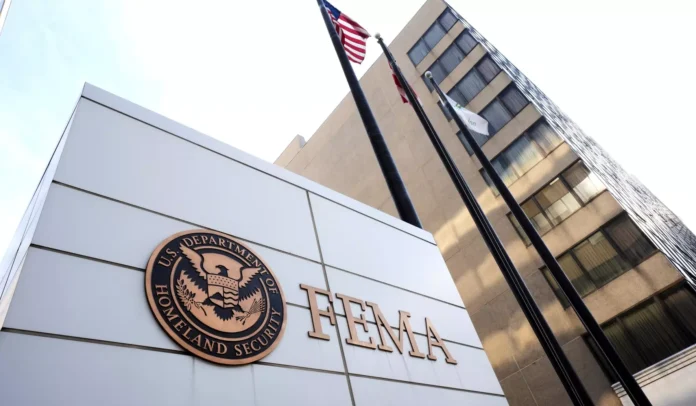
A Trump-appointed council of emergency management experts has approved a sweeping report recommending that the Federal Emergency Management Agency be reduced by 50 percent and that states assume primary responsibility for disaster response. The recommendations, if enacted, would represent the most significant restructuring of America’s disaster preparedness system in a generation.
Story Highlights
- The FEMA Review Council approved its final report on May 7, recommending a 50 percent reduction in the agency’s overall size
- The report recommends shifting disaster response leadership to the state level, with the federal government in a supporting role
- Key changes include raising the threshold for federal disaster declarations and introducing “parametric” triggers for automatic assistance
What Happened
The FEMA Review Council, a 12-member panel of disaster management experts appointed by President Trump, formally approved its final report Thursday in a public meeting. If enacted, the changes would represent the most significant reimagining of disaster preparedness and response policy in the United States in a generation. The report carries no binding legal authority, but it is expected to guide the Trump administration’s next steps on FEMA policy, including potential legislative action. WGCU
The council voted to approve a report recommending that the Trump administration gradually cut FEMA by 50 percent, among other significant overhauls meant to streamline the agency. The report also recommends that FEMA shift the leadership of emergency response and recovery to the state level, making structural changes to some of the agency’s most relied-upon programs and eliminating certain review processes that council members said slow disaster response. Political Wire
Homeland Security Secretary Markwayne Mullin framed the changes as a return to FEMA’s original mandate. Mullin said the goal is to refocus FEMA on what its mission originally was. Former Virginia Governor Glenn Youngkin, who served on the council, described the recommendations as being about accelerating federal dollars, streamlining the process, and making it less bureaucratic so Americans can get help on the worst day of their lives. The HillThe Hill
One of the most consequential specific recommendations involves the threshold for federal disaster declarations. The council is recommending raising that threshold by more than 50 percent and changing how it is calculated, which means states would only qualify for federal assistance with higher levels of damage. The report found that if this higher threshold had already been in place, 29 percent of disasters declared between 2012 and 2025 would not have qualified, representing $1.5 billion in federal expenditures. NPR IllinoisNPR Illinois
The council also recommends a shift to what experts call “parametric” triggers for automatic disaster assistance. Under this proposal, federal disaster assistance to local and state governments would be determined by the objective conditions of the disaster itself — such as hurricane category, earthquake magnitude, or rainfall levels — rather than an estimate of the cost of damage. NPR Illinois
Why It Matters
FEMA exists to provide a consistent, coordinated federal response when disasters exceed the capacity of state and local governments to respond. The council’s recommendations would fundamentally alter that relationship, placing states in the driver’s seat for emergency management while reducing the federal government to a supplemental backstop. For Americans living in disaster-prone states, the stakes are direct and personal.
If the federal government raises the threshold for disasters, there would be fewer scenarios where it spends money, which could leave states on the hook for millions of dollars to rebuild roads, schools, and other infrastructure after tornadoes, floods, and other disasters that do not cause enough widespread damage to meet the new criteria. For residents of smaller states or communities recovering from mid-scale disasters, this could mean significantly less federal aid than they would receive under the current system. NPR Illinois
Emergency management professionals have raised red flags about specific provisions. A longtime FEMA official told The Hill that states do not have the capability to appropriately evaluate projects to ensure they meet mitigation requirements. That concern reflects a broader worry: that decentralizing disaster response may produce inconsistency, with well-resourced states managing emergencies effectively while poorer states struggle to fill the gap left by reduced federal involvement. NPR Illinois
The political timing of the report is also significant. FEMA has been under sustained criticism for slow response times and administrative backlogs. Under former DHS Secretary Kristi Noem, who was later fired, lawmakers from both parties expressed frustration with long waits for assistance for disaster survivors and for federal grant money to protect people from floods. The new recommendations arrive as an attempt to answer those criticisms, though critics argue they risk creating new problems. The Hill
Economic and Global Context
Natural disasters impose enormous economic costs on the United States each year. FEMA’s current role as the federal backstop for state disaster recovery helps stabilize local and state economies after major events, enabling faster rebuilding and limiting the long-term drag on regional economic output. Reducing that backstop shifts financial risk onto state governments that vary dramatically in their fiscal capacity to absorb it.
The proposed parametric trigger system has precedent in international disaster insurance markets, where similar mechanisms are used in sovereign catastrophe bonds. However, applying them to the complex and variable landscape of American disaster declarations presents significant calibration challenges. Emergency experts told NPR that it remains unclear how FEMA could set triggers that would accurately capture the full range of disaster types and severities the agency currently handles. NPR Illinois
The broader fiscal context matters too. The Trump administration has pursued aggressive spending reductions across multiple federal agencies, and FEMA is part of that pattern. Reducing FEMA by 50 percent would yield budget savings, but those savings could be offset by higher costs to states, slower economic recovery after disasters, and potentially greater long-term infrastructure damage from inadequate post-disaster investment.
Implications
For state governments, the report’s recommendations translate into a mandate to build out independent emergency management capacity — a significant undertaking that will require funding, expertise, and administrative infrastructure that many states currently lack. Republican-led states that have generally supported the Trump administration’s decentralization agenda may find the reality of full disaster management responsibility more demanding than the political principle.
For Congress, some of these recommendations will require legislative action before they can be implemented, meaning the proposals will pass through the standard debate and amendment process. That gives disaster-state lawmakers from both parties an opportunity to push back on elements they consider harmful to their constituents, particularly the higher declaration threshold.
For ordinary Americans, the outcome of this policy debate will only become clear the next time a major hurricane, wildfire, or flood strikes their community. The abstract language of federal reform becomes very concrete when residents are waiting for assistance checks, applying for housing support, or watching roads go unrepaired months after a storm. The FEMA Review Council’s report sets the terms of a debate whose real-world consequences will unfold over years.