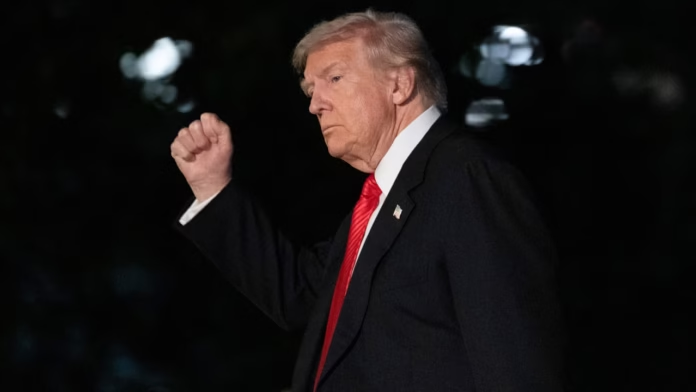
The monthlong pause in U.S.-Iran hostilities is teetering on the edge of collapse. President Donald Trump declared on Monday that the ceasefire is on “massive life support” after he rejected Iran’s latest counterproposal to end the war, calling it a “piece of garbage.” With Trump departing for Beijing this week to meet Chinese leader Xi Jinping, the next steps in the conflict may hinge on diplomacy half a world away.
Story Highlights
- Trump called Iran’s latest peace proposal “totally unacceptable” and described the ceasefire as on “massive life support”
- Some Trump aides say he is now more seriously considering resuming major combat operations against Iran
- The Iran war has cost the United States $29 billion so far, a figure higher than Pentagon estimates provided to Congress two weeks ago
What Happened
President Donald Trump escalated his rhetoric around the faltering Iran ceasefire on Monday, publicly calling the current pause in fighting precarious while signaling that resumed military operations remain a live option. The comments came after Iran submitted a counterproposal to end hostilities — one that reportedly included a demand for recognition of Iran’s sovereignty over the Strait of Hormuz. Trump rejected the proposal outright, describing it as a “piece of garbage” in remarks to CBS News.
Sources familiar with White House deliberations told CNN that some of Trump’s senior aides are now more seriously encouraging him to consider restarting major combat operations in Iran. The administration has not announced a formal decision, but the shift in internal tone marks a notable escalation from what had been cautious optimism about a diplomatic resolution just weeks prior.
Iran’s foreign ministry defended its proposal as “reasonable” and “generous,” asserting that its demands reflected only the country’s “legitimate rights” and did not constitute demands for concessions. An advisor to Iran’s supreme leader issued a public warning to Trump ahead of his Beijing trip, stating that Iran had “defeated” the United States on the battlefield and would not yield in diplomacy either.
The ceasefire, which has been in effect for roughly a month, followed the initial phase of a conflict that began on February 28 when the United States struck Iranian targets. Iran subsequently moved to largely shut down oil tanker passage through the Strait of Hormuz — a critical chokepoint for global energy supply. The broader war has since dragged on, with both sides trading fire in the strait as recently as the days before Trump’s comments.
Treasury Secretary Scott Bessent announced Monday that the administration has imposed new sanctions on 12 individuals and entities allegedly involved in facilitating Iranian oil sales to China. The timing of the sanctions — days before Trump’s meeting with Xi — signals that Iran will feature prominently in the Beijing summit agenda.
Why It Matters
The fragility of the ceasefire carries enormous consequences for the American public and for U.S. national security posture. A resumption of major combat operations against Iran would likely deepen an already costly conflict that the Pentagon now estimates has cost $29 billion — a figure that exceeded even recent internal projections shared with Congress. That cost is borne by American taxpayers at a time when domestic economic anxiety is already high.
The ceasefire’s collapse would also foreclose diplomatic pathways that are only just beginning to take shape. With Trump heading to Beijing, there was a narrow window to use Chinese influence to pressure Tehran into meaningful negotiations. A return to combat would likely poison that diplomatic effort before it begins, removing one of the few remaining levers available short of further military escalation.
Iran’s insistence on sovereignty over the Strait of Hormuz is a particularly thorny sticking point. The strait handles roughly one-fifth of the world’s crude oil under normal conditions. Tehran’s demand for formal recognition of that sovereignty would amount to a concession with sweeping implications for international shipping law and global energy security — one that American negotiators have shown no willingness to entertain.
Domestically, the handling of the Iran conflict is becoming a significant political liability. Polling shows only 21% of Americans approve of Trump’s handling of gas prices — a problem directly tied to the war. The potential resumption of combat would likely worsen those numbers heading into the 2026 midterm elections.
Economic and Global Context
The economic toll of the Iran conflict on American households is severe and growing. According to research from Brown University’s Iran War Energy Cost Tracker, American consumers have absorbed a $37 billion hit from spiking gasoline and diesel prices since the war began — amounting to more than $284 per household. Gas prices have risen from $2.98 per gallon when the war started on February 28 to $4.52 per gallon as of Monday, according to AAA.
Diesel fuel, a critical input for farmers, truckers, and freight railroads, is now just 18 cents below its all-time high set in 2022. The agricultural sector in particular faces compounding pressure, with high input costs and supply chain disruptions arriving simultaneously. The broader inflation impact of sustained high energy prices ripples through virtually every sector of the economy.
Globally, the conflict has already disrupted energy markets far beyond the United States. The Strait of Hormuz — a 23-mile-wide passage through which approximately one-fifth of the world’s crude oil normally flows — has been effectively shut down by Iranian military activity. Allied nations in the Indo-Pacific and Europe have scrambled to reroute supplies and draw down strategic reserves, with long-term effects on global energy infrastructure investment now being debated at policy levels across multiple governments.
Implications
If Trump opts to resume major combat operations in Iran, the immediate consequences would include a likely further spike in global oil prices and additional military spending in a conflict that is already more expensive than initially projected. Congressional pressure to authorize and fund ongoing operations would intensify, complicating the legislative calendar ahead of the midterms.
A diplomatic breakthrough — even a partial one brokered through China — would produce the opposite effect. Even a credible path toward reopening the Strait of Hormuz could ease energy markets significantly, providing economic relief that the White House urgently needs before November. The outcome of Trump’s meeting with Xi Jinping in Beijing this week is therefore closely tied to the domestic political fortunes of the Republican Party.
For Iran, the stakes are existential. The regime has framed its resistance as a matter of national sovereignty, but the economic and military toll of sustained conflict is substantial. Tehran’s willingness to insist on terms Trump has called unacceptable suggests confidence — or a calculated bet that Trump will blink before they do. How that gamble resolves will shape the Middle East’s political order for years.
Source
“Frustrated Trump more seriously thinking of restarting combat operations in Iran, sources say”