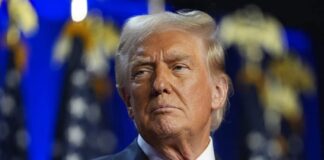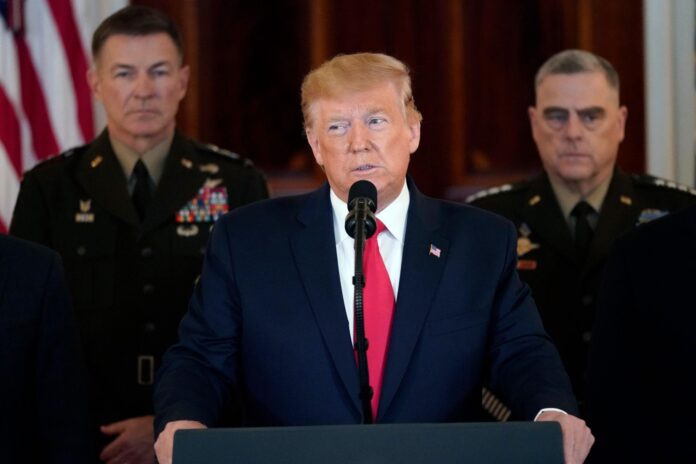
The tenuous ceasefire between the United States and Iran is at risk of collapsing after President Trump publicly dismissed Iran’s latest counterproposal as “totally unacceptable,” declaring the peace process to be on “massive life support.” Iran’s response, which included sweeping demands over sovereignty and sanctions, has deepened the diplomatic deadlock and raised fears of a return to open hostilities. The breakdown comes as the Strait of Hormuz remains largely closed, rattling global energy markets and U.S. consumers alike.
Story Highlights
- Trump called Iran’s latest proposal “a piece of garbage” and said the ceasefire is on “massive life support.”
- Iran’s response reportedly demanded sovereignty over the Strait of Hormuz, sanctions relief, and war reparations
- Oil prices surged on renewed escalation fears as the Strait of Hormuz entered its tenth week of disruption
What Happened
President Donald Trump on Sunday rejected Iran’s response to the latest U.S. proposal to end the war, writing on social media that Iran’s answer was “TOTALLY UNACCEPTABLE!” and accusing Tehran of “playing games with the United States, and the rest of the World.”
Trump called Iran’s latest terms “simply unacceptable,” and on Monday elaborated further, saying he had barely finished reading Tehran’s reply before dismissing it. The president said the ceasefire was “on life support” after receiving what he described as Tehran’s “garbage” response to the U.S. peace proposal. “It’s unbelievably weak,” Trump said of the Iranian reply.
Iran’s response, transmitted through Pakistan, included demands of an end to war on all fronts, the lifting of U.S. sanctions on Iranian oil sales, an end to the U.S. naval blockade on Iranian ports, and the unfreezing of Iranian assets, according to Iran’s semi-official Tasnim news agency. Iran’s Foreign Ministry said its proposal was “reasonable” and “generous,” a characterization Trump flatly rejected.
The negotiation deadlock stems from differing priorities. Trump has sought what analysts described as a “quick and easy” triumph that includes immediate concessions on Iran’s nuclear program, while Tehran is determined to delay those demands and extract its own concessions first. In one of its proposals, Iran put forward a staggered, phased approach with initial stages focused on declaring an end to hostilities and lifting sanctions, while deferring nuclear talks to later rounds.
Iran’s parliamentary speaker, Mohammad Bagher Ghalibaf, said the country’s forces are ready to deliver a response to “any aggression,” warning the U.S. would be “surprised.” Ghalibaf had been criticized by Iranian hard-liners in recent weeks for a supposedly lenient attitude toward Washington during earlier negotiations.
Why It Matters
The collapse of ceasefire talks would have immediate and severe consequences for the United States and the broader world. A shadow drone war has continued even during the ceasefire period, with Kuwait, the United Arab Emirates, and Iran all reporting the interception of drones in their territories over the past weekend. A full return to hostilities would escalate a conflict that has already disrupted one of the world’s most critical shipping lanes.
The supply shock from the closure of the Strait of Hormuz has been so severe that Saudi Aramco, the world’s largest oil-exporting company, is now publicly acknowledging the strain. Britain and France announced they would host defense ministers from multiple nations to discuss military plans for restoring trade flow through the strait. For American families, this translates directly into continued pain at the pump, a political liability for the White House.
The diplomatic impasse also reflects deeper strategic tensions. Iran is trying to sequence the negotiations so it can first secure sanctions relief and a formal end to the conflict before engaging on nuclear issues, while the Trump administration sees concessions on nuclear weapons as the central prerequisite for any deal. These incompatible sequencing demands have paralyzed progress even during periods of relative calm.
The broader regional architecture is also at stake. Qatar’s Prime Minister Mohammed Al-Thani met in Washington with Vice President JD Vance, Secretary of State Marco Rubio, and Trump’s envoy Steve Witkoff, reflecting the scale of regional diplomatic engagement aimed at preventing a resumption of full-scale war. Gulf states fear that a resumed conflict would permanently destabilize their economies and security arrangements. NPR
Economic and Global Context
Regular gasoline costs just under $3 per gallon on average before the U.S. bombed Iran. The average cost per gallon has since soared by more than 50 percent to $4.52, according to AAA. Around one-fifth of the world’s crude oil normally travels through the Strait of Hormuz, and blockades imposed during the war have largely brought that traffic to a standstill.
Gas prices above $6 per gallon have been recorded at stations in Los Angeles, with national fuel prices climbing steeply amid Middle East tensions. Even a full suspension of the federal gas tax would shave only 10 to 16 cents per gallon, according to a Bipartisan Policy Center estimate, meaning Washington has very few tools available to quickly offset a war-driven price spike of more than $1.50 per gallon.
Reports from analysts suggest that even if the Strait of Hormuz reopened immediately, gas prices would likely remain elevated — possibly even above pre-war levels — at least through the November midterm elections. This means the economic pain for consumers is likely to persist regardless of how quickly diplomatic efforts succeed.
Global markets have responded with volatility every time the ceasefire appears threatened. Oil prices surged again on Monday after Trump dismissed Iran’s proposal, as traders priced in the risk of an extended closure of the strait. The longer the waterway remains blocked, the greater the structural damage to global supply chains, manufacturing costs, and consumer inflation across multiple continents.
Implications
The most immediate implication is military. If the ceasefire collapses entirely, the Trump administration will face a binary choice between resuming strikes on Iran — with all the escalatory risk that entails — or accepting an outcome that critics would characterize as a strategic withdrawal. Neither option is politically clean ahead of the November midterms.
The talks are also unlikely to make significant progress until Trump meets Chinese President Xi Jinping later this week, according to a regional source familiar with the negotiations, adding another variable to an already complex diplomatic picture. China’s role as a major buyer of Iranian oil gives Beijing leverage in the talks that Washington has so far been unable to neutralize.
For American voters, the continued deadlock reinforces a narrative that has become politically damaging for Republicans: the Iran war was costly in blood and treasure, and a clean resolution has proven elusive. A majority of voters — 53 percent — view U.S. military action in Iran as more of a failure, while only 35 percent view it as a success, according to an Emerson College poll.
For Iran, prolonging negotiations carries its own risks. Domestic hard-liners are already criticizing negotiators for being too accommodating, while continued economic pressure from sanctions and naval blockades is squeezing the Iranian population. The regime faces a delicate balancing act between holding firm on its maximalist demands and managing internal dissent.