Story Highlights
- Rep. Andy Ogles lost his Republican primary in Tennessee’s 5th congressional district to former state agricultural commissioner Charlie Hatcher
- The defeat occurred despite receiving a presidential endorsement, highlighting challenges facing some Trump-backed candidates in 2026
- Hatcher leveraged support from establishment Republicans including Gov. Bill Lee and former Gov. Bill Haslam to secure victory
- Nine House members have now lost primary races this cycle, the highest number in a nondecennial redistricting year since 1970
What Happened
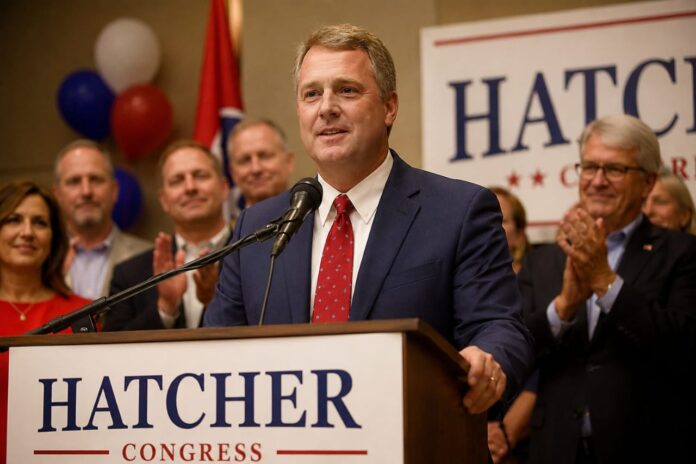
Tennessee’s 5th congressional district saw a significant upset when Charlie Hatcher, the former state agricultural commissioner, defeated incumbent Rep. Andy Ogles in Thursday’s Republican primary contest. The race drew national attention given the presidential backing Ogles received and the subsequent defeat despite that endorsement. Hatcher, who is heavily favored to win in the deep-red district during the general election, successfully consolidated support from a coalition of prominent state Republicans.
The margin between the candidates proved decisive despite Ogles holding what many observers considered the most valuable endorsement available in GOP primaries. Hatcher did not distance himself from the administration’s agenda, instead positioning himself as better equipped to deliver results and contrasting his approach with Ogles’ record in office. The incumbent faced significant financial disadvantages during the campaign, being outspent substantially on television advertising, particularly due to efforts by a pro-clean energy group that launched a last-minute ad campaign.
- Charlie Hatcher defeated Rep. Andy Ogles in Tennessee’s 5th congressional district primary on Thursday
- Hatcher secured endorsements from Gov. Bill Lee, former Gov. Bill Haslam, and former Trump Agriculture Secretary Sonny Perdue
- Ogles was substantially outspent on airwaves, with a pro-clean energy group funding major advertising efforts against him
- The race drew national attention due to the presidential endorsement Ogles had received
Why It Matters
This primary defeat carries broader implications for understanding the dynamics of the 2026 election cycle and the relationship between presidential endorsements and electoral outcomes. While the White House maintained strong influence in GOP primaries, the Ogles loss demonstrates that endorsements alone cannot guarantee victory when facing well-organized establishment opposition and superior financial resources. The result suggests that messaging, candidate quality, and organizational support remain critical factors in determining primary outcomes, even in competitive Republican contests.
The defeat also reflects voter concerns about Ogles’ record and various controversies that marked his congressional tenure. Throughout his time in office, the congressman faced multiple scrutiny points that appeared to resonate negatively with the electorate. Additionally, the loss indicates that Tennessee’s Republican establishment retained sufficient organizational power to shape primary outcomes in significant races, independent of White House preferences. For candidates nationwide, the race provides a cautionary lesson about the limitations of any single advantage in a primary environment where multiple factors influence voter behavior.
- Demonstrates that presidential endorsements, while valuable, cannot overcome organizational disadvantages and financial disparities
- Reflects voter concerns about incumbent performance and various controversies surrounding Ogles’ congressional record
- Shows Tennessee’s Republican establishment maintained significant influence over primary outcomes
- Affects broader understanding of endorsement effectiveness in 2026 primary landscape
Political and Public Context
The Ogles defeat represents part of a larger trend of incumbent House members losing primary races during this cycle. Nine House members have now lost renomination contests in 2026, with six Democrats and three Republicans falling in primaries. This total marks the highest number of such losses in a nondecennial redistricting year since 1970, according to congressional voting statistics. The pattern suggests significant voter appetite for change and a willingness to reject incumbents across party lines, regardless of their endorsements or previous electoral success.
Beyond the House, the Senate experienced similar dynamics with two Republican senators—Bill Cassidy of Louisiana and John Cornyn of Texas—losing their own primary contests. Rep. Tony Gonzales of Texas also competed in a primary that resulted in a second-place finish, prompting him to exit the race and resign before a scheduled GOP runoff. These developments collectively indicate a primary season characterized by unusually high levels of incumbent vulnerability and voter willingness to support challengers. The environment presents both opportunities and challenges for candidates, suggesting that traditional advantages may carry less weight than in previous election cycles when facing determined primary opposition.
- Nine House members have lost primaries in 2026, the most in a nondecennial redistricting year since 1970
- Two GOP senators, Cassidy and Cornyn, also lost their primary contests this cycle
- Rep. Tony Gonzales finished second in his primary and subsequently resigned before a scheduled runoff
- Pattern reflects broader voter appetite for change and willingness to reject incumbents across party lines
In a rare refusal, U.S. Rep. Andy Ogles, who had secured President Donald Trump's endorsement, was defeated in the Tennessee Republican primary on Wednesday.https://t.co/2yR1a6FgDw
— WSBT 22 (@WSBT) August 7, 2026
What Happens Next
Hatcher enters the general election as the presumptive Republican nominee and faces expectations of victory in Tennessee’s safely red 5th congressional district. He will likely face Columbia Mayor Chaz Molder, who secured the Democratic primary nomination. The general election contest between these two candidates will determine representation for the district in the incoming congressional session. Hatcher’s victory over a Trump-backed incumbent may influence how other establishment-oriented Republicans approach upcoming races and whether such candidates feel emboldened to challenge presidential endorsements.
Looking forward, political observers will continue monitoring how the administration’s endorsement record develops through the remainder of the primary season. The question remains whether the Ogles result represents an anomaly or part of a broader pattern where presidential backing proves insufficient without complementary organizational and financial advantages. Additional primary contests scheduled for coming weeks will provide further data points on endorsement effectiveness and the balance between presidential influence and traditional establishment power in Republican nominating processes. The competitive nature of this cycle suggests continued unpredictability in races where incumbent representatives face credible challengers with significant organizational support.
- Hatcher advances to general election as Republican nominee in heavily favored deep-red district
- General election will pit Hatcher against Democratic nominee Columbia Mayor Chaz Molder
- Additional primaries scheduled ahead will reveal whether Ogles loss reflects broader pattern or anomaly
- Race raises questions about balance between presidential endorsements and establishment organizational power in GOP primaries