Story Highlights
- Senator Mitch McConnell returns to the Senate after a three-month absence due to health issues.
- McConnell expressed eagerness to participate in upcoming votes while continuing his recovery.
- The Senator’s health challenges included a fall and complications from pneumonia.
- McConnell plans to retire in January when his term concludes.
What Happened
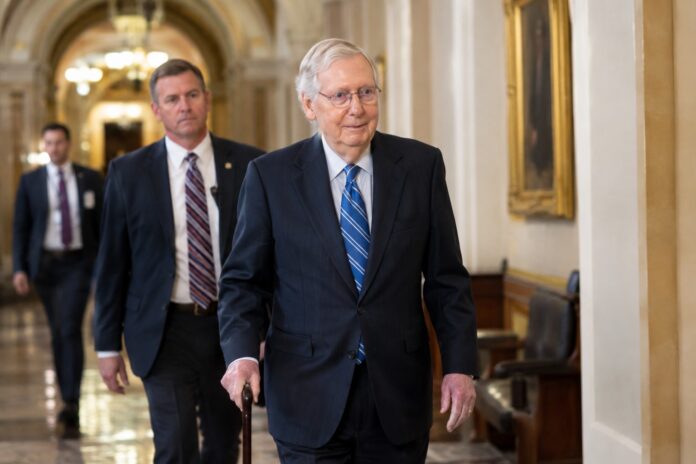
Senator Mitch McConnell, the Republican leader from Kentucky, made a significant return to the Senate on Monday, marking the end of a prolonged absence that lasted over three months. His absence was primarily due to health issues stemming from a fall he experienced in June, which led to hospitalization and subsequent rehabilitation. McConnell took to social media platform X to announce his return, stating, ‘Today, I’ll cast my first Senate vote since I took a bad fall back in June. I’m really looking forward to being back on the Senate floor and seeing my colleagues.’
The 84-year-old Senator’s recovery has been described as a ‘long and often frustrating process.’ He noted that the lingering effects of polio, which he contracted during childhood, have complicated his recovery journey. Despite not feeling completely back to normal, McConnell assured Senate Majority Leader John Thune that he would do his best to be present for crucial votes as he continues with physical therapy under medical advice.
- McConnell was hospitalized on June 14 after a fall.
- He experienced a brief loss of consciousness and later dealt with a mild case of pneumonia.
- His office provided updates throughout his recovery, including a discharge from a rehabilitation facility on August 6.
- McConnell plans to retire in January when his current term ends.
Why It Matters
McConnell’s return to the Senate is significant not only for his own political career but also for the Republican Party and the legislative agenda moving forward. His absence had raised concerns among party members regarding the potential impact on key votes and the overall functioning of the Senate. As the leader of the Senate Republicans, McConnell plays a crucial role in shaping party strategy and legislative priorities. His presence is particularly important as the Senate faces a series of contentious issues, including budget negotiations and judicial nominations.
Moreover, McConnell’s health challenges have sparked discussions about the age and health of lawmakers in Congress. As the oldest sitting Senator, his situation raises questions about the capacity of aging politicians to fulfill their duties effectively. The implications of his health on the Republican leadership and the party’s future direction cannot be understated, especially as the party prepares for upcoming elections and potential shifts in power.
- McConnell’s absence had created uncertainty regarding the Republican agenda in the Senate.
- His return allows for a more stable leadership structure as critical votes approach.
- The Senator’s health issues have reignited debates about age and fitness for office among lawmakers.
- His commitment to participate in votes reflects his dedication to his role despite health challenges.
Political and Public Context
McConnell’s health issues are not isolated incidents; they are part of a broader narrative concerning the health and longevity of senior politicians in the United States. Over the past few years, several prominent lawmakers have faced health challenges that have raised concerns about their ability to serve effectively. McConnell himself has had multiple falling incidents in recent years, which have led to increased scrutiny of his physical condition and ability to lead.
In addition to McConnell, other senior politicians have also faced health-related challenges, prompting discussions about the need for younger leadership in Congress. The political landscape is evolving, and the Republican Party, in particular, is at a crossroads as it seeks to balance experience with the need for fresh perspectives. As McConnell prepares for retirement in January, the party will need to consider who will step into leadership roles and how they will navigate the complexities of contemporary politics.
- McConnell’s previous health scares have included multiple falls and hospitalizations.
- Debates about age and fitness for office have been ongoing in Congress.
- Other senior lawmakers have also faced health challenges, influencing public perception.
- The Republican Party is at a critical juncture as it prepares for future leadership transitions.
Mitch McConnell, 84, makes dramatic return to Senate after three-month absence https://t.co/qzUn7TzHaI pic.twitter.com/JHcqnwkruR
— New York Post (@nypost) September 14, 2026
What Happens Next
Looking ahead, McConnell’s return to the Senate will be closely watched as he navigates his recovery while fulfilling his duties. His commitment to participate in key votes indicates that he intends to remain an active player in the Senate, despite ongoing health challenges. However, questions remain about how effectively he can lead and represent his constituents as he continues to recover.
As the Senate gears up for a busy legislative session, McConnell’s leadership will be tested. The upcoming votes on budget proposals, judicial nominations, and other critical issues will require his full engagement and strategic acumen. Additionally, the Republican Party will need to begin planning for a post-McConnell era, considering potential successors and how they will shape the party’s future direction.
- McConnell will continue to participate in Senate votes while managing his recovery.
- The Republican Party will need to identify potential successors for leadership roles.
- Key legislative issues will require McConnell’s strategic input in the coming months.
- Public and media scrutiny of McConnell’s health and performance will likely continue.