Story Highlights
- For the first time in U.S. history, multiple elected Black governors will serve simultaneously following Tuesday’s elections
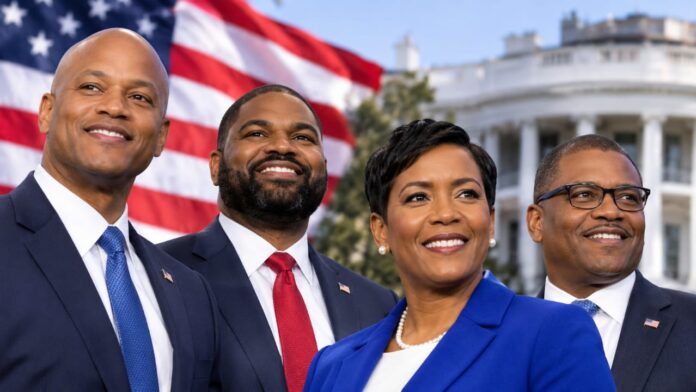
- Four Black candidates won gubernatorial races: Wes Moore in Maryland, Byron Donalds in Florida, Keisha Lance Bottoms in Georgia, and David Crowley in Wisconsin
- Prior to these wins, only three Black governors had ever been elected in American history, and none served at the same time
- Four additional Black major-party candidates for governor were on the ballot Tuesday, with potential for further historic representation
What Happened
Tuesday’s elections produced a watershed moment in American political history as voters elected multiple Black governors who will serve concurrently for the first time. The election results broke a historical pattern in which Black governors, though elected in the past, never held office simultaneously. Democratic Governor Wes Moore secured re-election in Maryland, Republican Representative Byron Donalds won Florida’s gubernatorial race, Georgia Democrat Keisha Lance Bottoms prevailed in her state’s contest, and David Crowley won Wisconsin’s governorship, bringing the total to four Black governors elected on a single election night.
This achievement represents a significant departure from previous American history. Prior to Tuesday, only three Black individuals had ever been elected to serve as governor: Doug Wilder, who was elected Virginia’s governor in 1989; Deval Patrick, who was elected Massachusetts’ governor in 2006; and Wes Moore himself. None of these three served during overlapping periods, meaning the country had never witnessed multiple Black governors holding office at the same time. The simultaneous victories Tuesday mark a historic expansion of representation in state executive leadership.
- Four Black governors elected: Wes Moore (Maryland), Byron Donalds (Florida), Keisha Lance Bottoms (Georgia), David Crowley (Wisconsin)
- Previous Black governors never served simultaneously; only three had been elected in U.S. history before Tuesday
- Election included both Democrats and Republicans, demonstrating cross-party achievement of this milestone
Why It Matters
The simultaneous election of multiple Black governors carries profound implications for representation and diversity in American political leadership. State governors occupy positions of significant executive authority, overseeing budgets, policy implementation, and serving as key figures in their states’ governance. The presence of four Black governors at once expands the representation of African Americans in these high-level decision-making roles and signals evolving voter preferences regarding leadership diversity across the nation. This development reflects broader demographic and political shifts within American society and provides role models for future candidates from underrepresented communities.
The achievement also holds symbolic weight in addressing historical inequities in political representation. For generations, African Americans have been underrepresented in executive positions despite comprising a significant portion of the U.S. population. Tuesday’s elections demonstrate tangible progress in expanding political opportunities and representation. Additionally, the bipartisan nature of these victories—with both Democrats and Republicans winning—suggests that Black candidates can succeed across the political spectrum, challenging historical narratives about political barriers and voter receptivity.
- Expanded representation of African Americans in state executive leadership positions with significant policy authority
- Demonstrates voter willingness to elect Black governors across both major political parties
- Provides visibility and role models for future candidates from underrepresented communities seeking higher office
- Contributes to addressing historical inequities in political representation at the gubernatorial level
Political and Public Context
This historic moment arrives within a broader American conversation about representation, diversity, and political progress. In recent decades, discussions regarding race and politics have occupied prominent space in national discourse. The achievement of electing multiple Black governors simultaneously reflects decades of political engagement and participation by Black voters and candidates. Notably, the victories span different regions of the country—the Mid-Atlantic, Southeast, Midwest, and South—indicating that this progress extends across diverse geographic and demographic contexts rather than concentrating in particular regions.
The election results also suggest that additional historic milestones may be imminent. Four other Black major-party candidates were on the ballot Tuesday in gubernatorial races, including state Attorney General Aaron Ford in Nevada, competing against incumbent Republican Governor Joe Lombardo. In South Carolina, state Representative Jermaine Johnson, a Black Democrat, faced a more challenging political environment in a traditionally Republican state. On the Republican side, Representative John James competed in a competitive Michigan governor’s race, while Minnesota state House Speaker Lisa Demuth sought office in Minnesota’s gubernatorial contest. The presence of six Black candidates competing for governor in a single election cycle underscores the growing participation of African American candidates in races for state executive office.
- Previous Black governors (Wilder, Patrick, Moore) never served concurrently despite being elected in 1989, 2006, and 2014
- Victories span multiple regions: Maryland, Florida, Georgia, and Wisconsin represent diverse geographic areas
- Bipartisan success with Democratic and Republican winners demonstrates cross-party viability of Black candidates
- Four additional Black major-party gubernatorial candidates competed Tuesday, indicating sustained momentum in political representation
Three Black governors have been elected to serve at the same time for the first time in U.S. history.
Before this, only three Black governors had ever been elected, but all in different cycles. https://t.co/nfjlfC4yLK
— The Washington Post (@washingtonpost) November 4, 2026
What Happens Next
The four newly elected Black governors will assume office and begin implementing their respective agendas across their states. Moore, who won re-election, will continue serving Maryland’s residents with the additional prominence that comes with being part of a historic cohort of governors. Donalds, Bottoms, and Crowley will transition from their prior roles to executive leadership positions overseeing state governments. Their tenures will likely receive heightened national attention given the historic nature of their simultaneous service, and their policy successes or challenges may influence perceptions about Black leadership in executive positions.
Looking forward, the question remains whether additional Black governors will be elected in future election cycles, potentially expanding this historic group. The presence of four Black candidates competing for governor positions on Tuesday indicates sustained interest and participation among Black political candidates. As these four governors begin their tenures, their visibility and performance in office may influence the political landscape for subsequent elections. Additionally, the success of Donalds as a Republican governor in Florida may open pathways for continued Black Republican participation in gubernatorial races, while Democratic victories in Maryland, Georgia, and Wisconsin reinforce Democratic engagement of Black candidates in competitive races. The coming years will likely determine whether this moment represents the beginning of sustained progress in Black representation at the gubernatorial level or marks a particular high point in electoral success.
- Four elected Black governors will assume office and implement state agendas with heightened national visibility
- Success or challenges during these tenures may influence future Black candidate recruitment and voter receptivity
- Potential for additional Black governors to be elected in subsequent cycles, building on Tuesday’s momentum
- Bipartisan success may establish pathways for continued Black Republican and Democratic candidates in future gubernatorial races