

Story Highlights
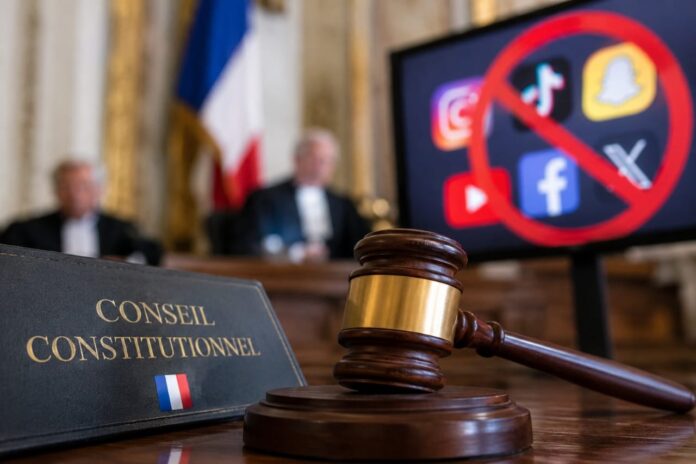
- France’s Constitutional Council ruled that a proposed ban on social media for under-15s violates freedom of expression protections
- The legislation, which passed French lawmakers in July, would have made France the first European nation to implement such restrictions
- Constitutional judges found the law neither appropriate, necessary, nor proportionate and raised concerns about age-verification requirements and privacy safeguards
- The French government indicated it would work to develop a revised proposal for implementation by early 2027
What Happened
France’s Constitutional Council delivered a significant legal setback to the nation’s ambitious social media restrictions on Friday, striking down legislation that would have prohibited under-15-year-olds from accessing major social platforms. The nine-member constitutional authority determined that the ban, which lawmakers had overwhelmingly approved in July, infringed upon fundamental protections for freedom of expression and communication. The decision effectively nullified restrictions that were scheduled to roll out in stages beginning in September, with initial account-creation bans followed by mandatory verification on existing accounts starting in January.
The French government had positioned this legislation as a pioneering public health measure aimed at addressing documented harms to children’s mental health and wellbeing. Prime Minister Sébastien Lecornu had referred portions of the bill to the Constitutional Council for constitutional review before implementation, a procedural step that ultimately led to the court’s rejection. Following the ruling, the French executive branch moved quickly to respond, with the president requesting that the prime minister draft revised legislation that would incorporate the court’s constitutional concerns while preserving the underlying policy objectives.
- Constitutional Council found Article 1 of the legislation constituted an inappropriate, unnecessary, and disproportionate infringement on freedom of expression
- The court raised specific concerns about age-verification requirements and the absence of adequate legal safeguards in the original language
- Implementation timeline was set to begin September 2024 for new accounts, with January 2025 expansion to existing accounts
- French government committed to proposing a new draft with an implementation target of early 2027
Why It Matters
This judicial decision represents a critical moment in the ongoing international debate regarding how democracies should balance child protection with fundamental civil liberties. The Constitutional Council’s emphasis on freedom of expression suggests that European courts may impose stringent constitutional requirements on legislative efforts to restrict minors’ digital access, potentially affecting similar proposals across the continent. The ruling also highlights technical and practical challenges inherent in age-verification systems, which legal authorities have increasingly questioned regarding their effectiveness, privacy implications, and susceptibility to circumvention by determined users.
The decision carries particular significance for other nations considering comparable restrictions. The United Kingdom has announced plans for an under-16 social media ban beginning in 2027, and Australia implemented similar legislation in December 2023, though widespread evidence indicates that many young Australians continue using prohibited platforms despite the legal restrictions. The French court’s reasoning provides a legal template that civil liberties advocates in other jurisdictions may cite when challenging similar proposals, potentially complicating legislative efforts across multiple democracies.
- Courts in other European nations may face similar constitutional challenges to age-restriction legislation based on freedom of expression precedents
- Policymakers must now develop verification mechanisms that satisfy both child protection objectives and constitutional privacy requirements
- The decision affects millions of French youth and establishes legal standards for digital policy affecting European Union member states
- Implementation delays allow time for technological development of privacy-protective age-verification solutions
Political and Public Context
The constitutional court’s decision occurs within a broader European movement toward regulating young people’s social media access. European Commission President Ursula von der Leyen proposed a framework known as a social media delay for children throughout the EU in May, indicating that new regulatory approaches were under active consideration at the institutional level. Simultaneously, individual European nations have pursued their own legislative pathways, creating a patchwork of regulations that may conflict with constitutional protections and international digital rights standards.
Australia’s December 2023 implementation of an under-16 social media ban provides an instructive precedent for the complexities that emerge when democracies attempt to enforce digital age restrictions. Despite the legal prohibition, evidence indicates that substantial numbers of Australian youth continue accessing social platforms through various circumvention methods, raising questions about enforcement viability and practical effectiveness. The United Kingdom’s announcement of comparable restrictions beginning in January 2027 for under-16s demonstrates that European policymakers remain committed to such measures even amid legal and practical challenges evident in other jurisdictions.
- European Commission proposed EU-wide social media delay framework affecting children across member states
- Australia’s existing under-16 ban demonstrates ongoing compliance challenges and widespread circumvention
- United Kingdom announced similar restrictions with 2027 implementation timeline for under-16s
- France’s July 2024 legislative approval made it temporarily the European frontrunner in age-based social media restrictions
France’s top court blocks a social media ban for under-15s, ruling it infringes on freedom of expression. The Constitutional Council decision prompts a rethink, as President Macron vows to prepare a new draft. https://t.co/WsEZx7cDsI pic.twitter.com/f8qhaOQHiG
— Drew Grimaldi (@Grimillionaire) August 15, 2026
What Happens Next
The French government faces the substantial challenge of developing revised legislation that addresses the Constitutional Council’s specific concerns while maintaining meaningful protections for minors. Prime Minister Lecornu must craft statutory language that demonstrates appropriate necessity and proportionality while establishing robust legal safeguards regarding age verification and personal data protection. The compressed timeline toward early 2027 suggests policymakers believe technological solutions may emerge that better satisfy both child protection and constitutional requirements.
International observers will monitor France’s next legislative attempt closely, as the outcome may establish precedents affecting digital regulation across Europe. Technology companies may accelerate development of privacy-protective age-verification systems in anticipation of new European requirements. Simultaneously, civil liberties organizations and technology advocates will likely scrutinize any revised proposal to ensure it adequately protects fundamental rights alongside child welfare considerations. The constitutional court’s reasoning provides a legal framework that will shape legislative drafting not only in France but potentially across jurisdictions grappling with similar policy questions.
- French government must develop revised legislation addressing constitutional concerns by early 2027 target
- Technology companies may accelerate development of age-verification solutions meeting privacy requirements
- Other European nations may adjust pending social media restriction proposals based on French constitutional precedent
- Constitutional Council ruling establishes evidentiary standard that revised legislation must satisfy regarding necessity and proportionality


