Story Highlights
- President Trump engages with the Hispanic community during a celebratory event.
- His humorous remarks received enthusiastic cheers from attendees.
- The event marks a renewed effort to connect with Hispanic voters, a key demographic for Republicans.
- Secretary of State Marco Rubio also participated, highlighting the administration’s commitment to Hispanic representation.
What Happened
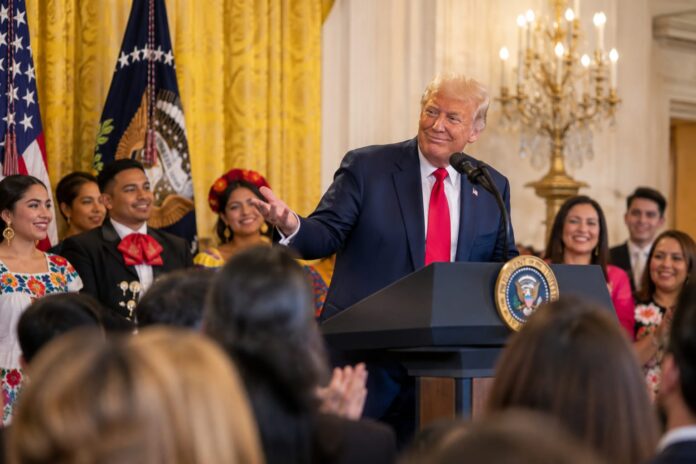
During a vibrant event celebrating Hispanic Heritage Month, President Trump delivered remarks that were both humorous and engaging, showcasing his administration’s commitment to connecting with the Hispanic community. The event took place in the East Room of the White House, where the president invited attendees to step onto the floor of a newly constructed ballroom. His lighthearted comments included a playful quip about survival, which resonated well with the audience, eliciting cheers and laughter.
Trump’s remarks were not only entertaining but also strategic, as they reflect a broader effort to strengthen ties with Hispanic voters, a demographic that has proven crucial for Republican success in elections. The event was particularly significant as it marked the first Hispanic Heritage Month celebration of the second Trump administration, following a year in which no such event was held. The president’s proclamation celebrating the month last year indicated his ongoing recognition of the contributions of Hispanic Americans.
- The event took place on Wednesday, marking the first Hispanic Heritage Month celebration of the second Trump administration.
- Trump humorously remarked that only a Hispanic could survive a fall from the ballroom’s edge.
- Secretary of State Marco Rubio, the highest-ranking Hispanic official in the U.S., participated in the event.
- The White House did not hold a Hispanic Heritage Month event last year, making this occasion particularly noteworthy.
Why It Matters
The significance of this event extends beyond mere celebration; it represents a strategic move by the Trump administration to engage with a demographic that has historically been challenging for Republicans. Polling data indicates that the Hispanic voting bloc has been a critical factor in elections, and Trump’s efforts to connect with this community could have substantial implications for future electoral outcomes. His lighthearted approach not only entertained but also fostered a sense of camaraderie and connection with attendees.
Moreover, the president’s remarks highlight a broader narrative of resilience and strength within the Hispanic community. By framing his comments in a humorous light, he effectively broke down barriers and created an atmosphere of inclusivity. This approach is essential for building trust and rapport with voters who may feel overlooked by political leaders.
- The event could enhance Trump’s appeal among Hispanic voters, potentially impacting future elections.
- His humorous remarks fostered a sense of connection and inclusivity among attendees.
- Strengthening ties with the Hispanic community may lead to increased support for Republican candidates.
- The event underscores the importance of representation and acknowledgment of Hispanic contributions to American society.
Political and Public Context
In recent years, the Republican Party has faced challenges in garnering support from Hispanic voters. However, Trump’s previous successes in engaging this demographic during the 2020 presidential election demonstrated that a focused approach could yield positive results. The president’s acknowledgment of Hispanic Heritage Month is a continuation of this strategy, emphasizing the importance of recognizing and celebrating the contributions of Hispanic Americans to the nation.
Additionally, the presence of Secretary of State Marco Rubio at the event serves as a reminder of the administration’s commitment to Hispanic representation at the highest levels of government. Rubio’s participation not only highlights the administration’s diversity but also reinforces the message that Hispanic voices are valued and heard within the Republican Party.
- The Republican Party has historically struggled to connect with Hispanic voters.
- Trump’s previous engagement with the Hispanic community during the 2020 election showed potential for increased support.
- Marco Rubio’s role as Secretary of State emphasizes the administration’s commitment to diversity.
- The acknowledgment of Hispanic Heritage Month reflects a broader strategy to strengthen ties with this demographic.
President Donald Trump joked with attendees at the White House's Hispanic Heritage Month celebration. He said they should be careful when crossing what will be a long, bulletproof glass tunnel, since its construction is not finished.
MORE: https://t.co/6zjyCNox1D pic.twitter.com/k6jRAashwL
— Washington Examiner (@dcexaminer) September 30, 2026
What Happens Next
Looking ahead, the Trump administration’s efforts to engage with the Hispanic community will likely continue to evolve. As the 2024 presidential election approaches, it will be crucial for the president and his team to maintain momentum in building relationships with Hispanic voters. This may involve more events, outreach initiatives, and policy discussions that resonate with the community’s needs and concerns.
Furthermore, the administration may seek to highlight specific policies that benefit Hispanic Americans, such as economic opportunities, education, and immigration reform. By addressing these issues directly, the president can further solidify his standing within this vital demographic. The positive reception of his remarks at the Hispanic Heritage Month event indicates that there is potential for growth in support among Hispanic voters, provided that the administration continues to prioritize engagement and representation.
- Expect more outreach initiatives aimed at Hispanic voters as the 2024 election approaches.
- Potential policy discussions may focus on economic opportunities and immigration reform.
- The administration will likely seek to build on the positive reception of the event to strengthen ties with the community.
- Continued engagement with Hispanic leaders and organizations may be a priority moving forward.