Story Highlights
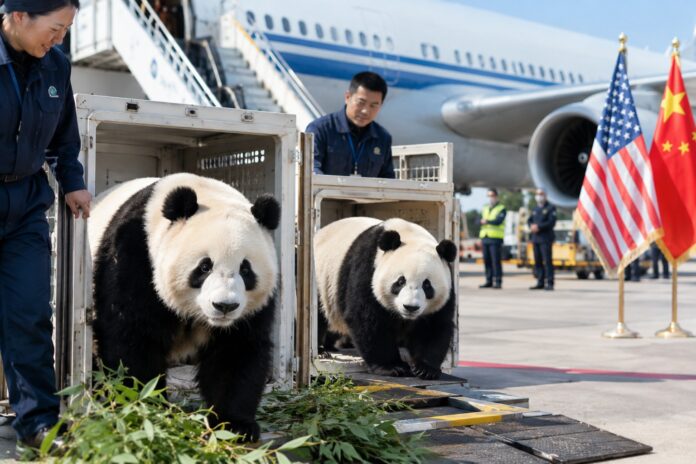
- Two giant pandas, Ping Ping and Fu Shuang, have arrived in Atlanta as part of a diplomatic loan agreement.
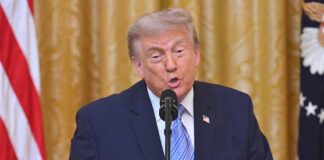
- The pandas’ arrival follows a summit between President Trump and Chinese President Xi Jinping.
- This agreement symbolizes goodwill between the United States and China, despite ongoing tensions.
- Zoo Atlanta is now one of only three U.S. zoos to house giant pandas.
What Happened
On a bright Sunday morning, two giant pandas from China, Ping Ping and Fu Shuang, touched down at Hartsfield-Jackson International Airport in Atlanta, Georgia. This momentous occasion marks a significant diplomatic gesture between the United States and China, following a recent summit between President Trump and Chinese President Xi Jinping. The pandas are part of a ten-year loan agreement that underscores the ongoing efforts to foster goodwill between the two nations, despite the backdrop of complex geopolitical tensions.
The announcement of the pandas’ arrival came during a three-day summit in Washington, D.C., where President Trump and President Xi engaged in discussions aimed at improving bilateral relations. While the summit did not yield concrete resolutions to the longstanding issues between the two countries, the decision to send the pandas to Atlanta stands out as a tangible outcome of their talks. The last time Atlanta hosted giant pandas was in 2024, when the city bid farewell to its previous residents, leaving a void that has now been filled with this new agreement.
- Ping Ping and Fu Shuang are adult pandas born in 2020.
- The pandas were flown from Chengdu, China, aboard a dedicated ‘FedEx Panda Express’ aircraft.
- The loan agreement was finalized in April, but the specific arrival date was only recently confirmed.
- Zoo Atlanta will house the pandas in a biosecure area for a month before they are introduced to the public.
Why It Matters
The arrival of Ping Ping and Fu Shuang is more than just a delightful addition to Zoo Atlanta; it represents a significant diplomatic gesture that could pave the way for improved relations between the United States and China. The use of giant pandas in diplomacy, often referred to as ‘panda diplomacy,’ has a long history, with China utilizing these beloved animals as symbols of friendship and goodwill. By sending these pandas to Atlanta, China is signaling its willingness to engage positively with the United States, even amidst ongoing trade disputes and political disagreements.
This loan agreement also highlights the importance of cultural exchanges in international relations. The presence of the pandas in Atlanta will not only attract visitors to the zoo but will also serve as a reminder of the potential for cooperation between the two nations. As President Xi stated, the loan program exemplifies the ‘friendship between the Chinese and Americans.’ This sentiment is crucial in a time when both countries are navigating a complex landscape of economic and political challenges.
- The pandas’ arrival could enhance tourism in Atlanta, benefiting local businesses.
- Zoo Atlanta will likely see an increase in membership and attendance due to the pandas.
- The agreement may lead to further cultural exchanges between the two nations.
- It reinforces the idea that diplomacy can take many forms, including the sharing of wildlife.
Political and Public Context
The backdrop of this panda loan agreement is a complex relationship between the United States and China, characterized by both cooperation and competition. In recent years, trade tensions have escalated, with tariffs and sanctions impacting various sectors. However, the arrival of the pandas serves as a reminder that there are still avenues for collaboration and goodwill. The timing of this agreement is particularly noteworthy, as it comes at a moment when both nations are seeking to navigate their differences while finding common ground.
Historically, giant pandas have been used by China as a tool of diplomacy, with similar loan agreements made with other countries. The last time the United States received pandas was in 2017 when the loan agreements for the previous pandas expired. The return of pandas to American zoos signifies a thawing of relations and a willingness to engage in dialogue. This agreement also aligns with President Trump’s broader strategy of fostering relationships with key global players, emphasizing the importance of diplomacy in achieving national interests.
- Previous panda loans have included agreements with countries like Japan and Canada.
- The last pandas in Atlanta were returned in 2024, leaving a gap in the zoo’s offerings.
- China’s use of pandas in diplomacy dates back to the 1970s.
- Zoo Atlanta’s new panda complex is designed to provide a state-of-the-art habitat for the bears.
2 giant pandas set off to Atlanta zoo from China after Xi-Trump summit https://t.co/6yGyQNTFWr pic.twitter.com/hT6gMk7SQZ
— New York Post (@nypost) September 27, 2026
What Happens Next
Looking ahead, the arrival of Ping Ping and Fu Shuang opens up several possibilities for Zoo Atlanta and the broader diplomatic landscape. The pandas will undergo a month-long quarantine in a biosecure area of the zoo, allowing them to acclimate to their new environment before being introduced to the public. This period will be crucial for ensuring the health and well-being of the animals, as well as for preparing the zoo staff for their care.
In the coming months, Zoo Atlanta is expected to launch various educational programs and events centered around the pandas, which will not only engage the local community but also highlight the importance of wildlife conservation. Additionally, the success of this loan agreement may encourage further cultural exchanges between the United States and China, potentially leading to more collaborative efforts in areas such as environmental protection and wildlife conservation.
- Zoo Atlanta will announce a public opening date for the pandas after their quarantine period.
- Educational programs will be developed to raise awareness about giant pandas and conservation efforts.
- The success of this agreement may lead to future panda loans or other cultural exchanges.
- Ongoing diplomatic discussions between the U.S. and China may be influenced by this positive gesture.