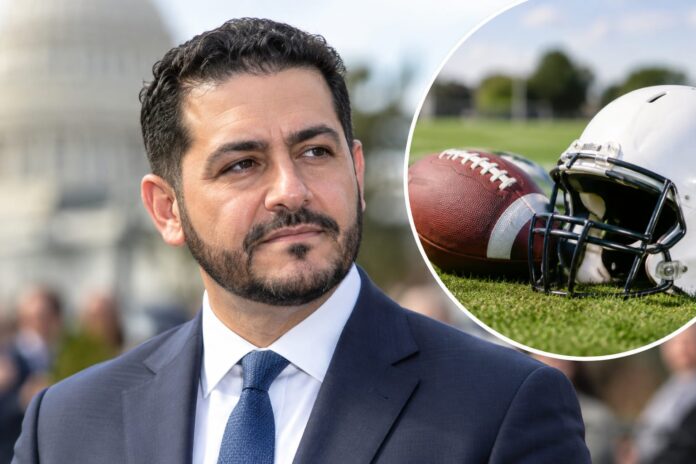
Story Highlights
- Abdul El-Sayed faces backlash for questioning the ethics of football.
- Concerns raised about safety and toxic masculinity in the sport.
- Resurfaced comments from 2023 spark renewed debate on football’s cultural impact.
- El-Sayed’s past as a football player adds complexity to his criticisms.
What Happened
Abdul El-Sayed, a Democratic candidate for the U.S. Senate from Michigan, has ignited a firestorm of criticism following the resurfacing of his comments regarding the ethics of football. In a podcast episode from 2023, El-Sayed questioned whether American football could be deemed ‘ethical’ or ‘safe,’ citing concerns over chronic traumatic encephalopathy (CTE) and the sport’s association with toxic masculinity. His remarks were highlighted by Sean Hannity, a prominent conservative commentator, leading to widespread backlash from various quarters.
In the podcast, El-Sayed posed a provocative question: ‘What is it about this brutal sport that keeps us coming back?’ He further inquired about the possibility of an ethical version of football, suggesting that significant changes would be necessary to achieve such a standard. This line of questioning has not only drawn ire from football fans but has also sparked a broader discussion about the cultural implications of the sport in American society.
- El-Sayed’s comments were made in a 2023 podcast episode.
- He raised concerns about CTE and toxic masculinity.
- Sean Hannity highlighted these comments, amplifying the backlash.
- El-Sayed has a history of playing football, adding complexity to his stance.
Why It Matters
The implications of El-Sayed’s comments extend beyond mere criticism of a popular sport. His remarks touch on significant societal issues, including the safety of athletes and the cultural narratives surrounding masculinity. Football, as America’s most popular sport, serves as a cultural touchstone, and questioning its ethics invites scrutiny of broader societal values. El-Sayed’s comments resonate with ongoing discussions about the health risks associated with contact sports, particularly the alarming rates of CTE among former players.
Moreover, the notion of toxic masculinity in sports has gained traction in recent years, with many advocates calling for a reevaluation of how masculinity is portrayed and celebrated in athletic contexts. El-Sayed’s critique aligns with a growing movement that seeks to challenge traditional notions of masculinity, advocating for a more inclusive and health-conscious approach to sports. This discourse is particularly relevant in a time when mental health and well-being are increasingly prioritized in discussions about sports culture.
- El-Sayed’s comments highlight concerns about athlete safety.
- The discussion on toxic masculinity in sports is gaining momentum.
- His remarks resonate with broader societal values and health considerations.
- Football’s cultural significance makes this debate particularly impactful.
Political and Public Context
El-Sayed’s comments come at a time when the conversation around football and its cultural implications is particularly charged. The sport has faced increasing scrutiny over the years, especially regarding player safety and the long-term effects of head injuries. Recent studies indicate that a significant percentage of NFL players may develop CTE, raising alarms about the sport’s inherent risks. This has led to calls for reform within the league and a reevaluation of how the sport is marketed and played.
Additionally, El-Sayed’s background as a former football player adds a layer of complexity to his critique. Having played the sport himself, he is acutely aware of the challenges and dangers athletes face. His dual perspective as both a participant and a critic allows for a nuanced discussion about the sport’s ethics. Furthermore, his comments are not isolated; they reflect a broader trend among former athletes and commentators who are increasingly vocal about the need for change in sports culture.
- Recent studies show a high prevalence of CTE among NFL players.
- Calls for reform in football are becoming more common.
- El-Sayed’s background as a player informs his critique.
- Broader trends among athletes are pushing for cultural change in sports.
Far-left Senate hopeful Abdul El-Sayed asks if football is 'ethical' -despite being captain of HS team – in resurfaced podcast https://t.co/YiK3RrT2CL pic.twitter.com/PGq8NCfj5Z
— New York Post (@nypost) September 29, 2026
What Happens Next
The fallout from El-Sayed’s comments raises several questions about the future of football and the ongoing discourse surrounding its ethics. As the debate continues, it is likely that more voices will emerge, both supporting and opposing El-Sayed’s stance. The Republican Party has already seized upon this opportunity to criticize El-Sayed, framing his comments as indicative of a broader disconnect with American values. This could have implications for his campaign as he seeks to appeal to a diverse electorate.
Looking ahead, it will be essential to monitor how this debate evolves and whether it leads to tangible changes within the sport. Will football organizations take steps to address safety concerns more proactively? Will there be a shift in how masculinity is portrayed in sports? These questions remain open, and the answers will likely shape the future of football and its cultural significance in America.
- Expect ongoing debate about football’s ethics and safety.
- El-Sayed’s comments may impact his political campaign.
- Potential for changes in how football organizations address safety.
- Future discussions may reshape masculinity in sports culture.