Story Highlights
- CNN hosts Erin Burnett and Kaitlan Collins scrutinize Trump’s taxpayer-funded advertisements.
- The White House claims the ads are public service announcements, not campaign ads.
- Concerns arise over the legality of using taxpayer money for what appears to be campaign messaging.
- Trump’s strategy seems aimed at energizing his base ahead of the midterm elections.
What Happened
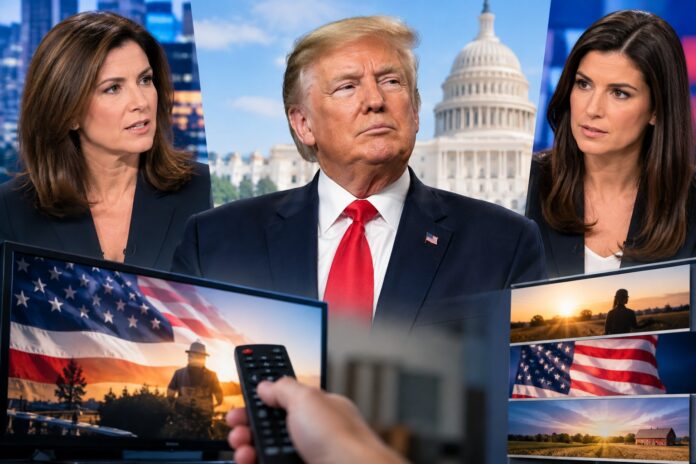
President Donald Trump has recently come under fire from CNN’s Erin Burnett and Kaitlan Collins, who have raised serious questions regarding the legality and ethical implications of his administration’s use of taxpayer-funded advertisements. These ads, which are airing in the lead-up to the midterm elections, have sparked a heated debate about the blurred lines between public service and political campaigning. The president’s team insists that these advertisements are not political in nature, but rather serve as ‘Presidential public service announcements.’ However, critics argue that the content of the ads suggests otherwise.
The controversy began when Burnett and Collins highlighted discrepancies between the messaging from the White House and the actual content of the advertisements. During a segment on CNN, Burnett pointed out that the ads closely resemble campaign materials used in Trump’s 2024 presidential campaign. The only notable difference is the disclaimer stating that the ads are ‘Paid for by the U.S. Government.’ This has led to accusations that the president is attempting to use taxpayer dollars to bolster his political image ahead of the crucial midterms.
- Trump is currently featured in three ads airing on U.S. television.
- The White House claims the ads are not political, despite their campaign-like content.
- Erin Burnett has publicly stated that the ads are indeed campaign ads.
- Concerns have been raised about potential violations of federal appropriations legislation.
Why It Matters
The implications of this controversy extend far beyond the immediate political landscape. If it is determined that taxpayer funds are being misused for campaign purposes, it could set a dangerous precedent for future administrations. The ethical concerns surrounding the use of public resources for political gain are significant, as they challenge the integrity of the electoral process. Furthermore, the potential legal ramifications could lead to investigations and consequences for those involved in the decision-making process.
The president’s strategy appears to be focused on maintaining engagement with his base, particularly as the midterm elections approach. By utilizing these ads, he may be attempting to create a sense of urgency among his supporters, encouraging them to turn out to vote as if he were on the ballot. This tactic could be seen as a way to galvanize his loyal followers, ensuring that they remain motivated to support Republican candidates in the upcoming elections.
- Potential legal challenges could arise if the ads are deemed to violate federal law.
- The controversy may affect public perception of Trump’s administration.
- Republican candidates may face challenges if voters feel misled by the ads.
- Ethics watchdogs are closely monitoring the situation for possible violations.
Political and Public Context
This situation is not occurring in a vacuum. The use of taxpayer funds for political purposes has been a contentious issue in American politics for decades. Previous administrations have faced scrutiny over similar practices, leading to calls for stricter regulations regarding the use of public resources in political campaigns. The current controversy surrounding Trump’s ads highlights the ongoing debate about the ethical boundaries of political messaging and the role of government funding in shaping public opinion.
Additionally, the timing of these ads is particularly significant, as they coincide with a critical election cycle. The midterms are often seen as a referendum on the sitting president’s performance, and Trump’s team appears to be leveraging every available resource to secure a favorable outcome. This context adds another layer of complexity to the situation, as the stakes are high for both the president and the Republican Party as a whole.
- Previous administrations have faced scrutiny over the use of taxpayer funds for political purposes.
- Calls for stricter regulations on political advertising have been ongoing.
- The midterm elections are a crucial time for both parties, influencing future political landscapes.
- Ethics watchdogs have historically played a role in monitoring political advertising practices.
GOP senators push back on Trump’s taxpayer-funded adhttps://t.co/wEJwWF3fJM
— The Hill (@thehill) September 29, 2026
What Happens Next
As the controversy continues to unfold, several key questions remain unanswered. Will the White House adjust its messaging in light of the backlash? Will there be any legal repercussions for the administration if the ads are found to violate federal law? Furthermore, how will this situation impact the upcoming midterm elections and the Republican Party’s overall strategy?
The future of these advertisements and their implications for Trump’s political ambitions will likely depend on public reaction and the responses from regulatory bodies. As the midterms draw closer, it will be crucial to monitor how this situation evolves and what steps, if any, are taken to address the concerns raised by critics.
- Will the White House continue to defend the ads as public service announcements?
- Could legal challenges arise from ethics watchdogs or opposition parties?
- How will this controversy affect voter turnout in the midterms?
- What measures, if any, will be implemented to prevent similar situations in the future?