Story Highlights
- President Trump announces South Korean investment in Alaska’s natural gas pipeline.
- The project aims to reduce energy costs for Alaskans and create jobs.
- Senator Dan Sullivan plays a crucial role in advocating for the project.
- This initiative is part of a broader strategy to support Republican Senate candidates ahead of midterm elections.
What Happened
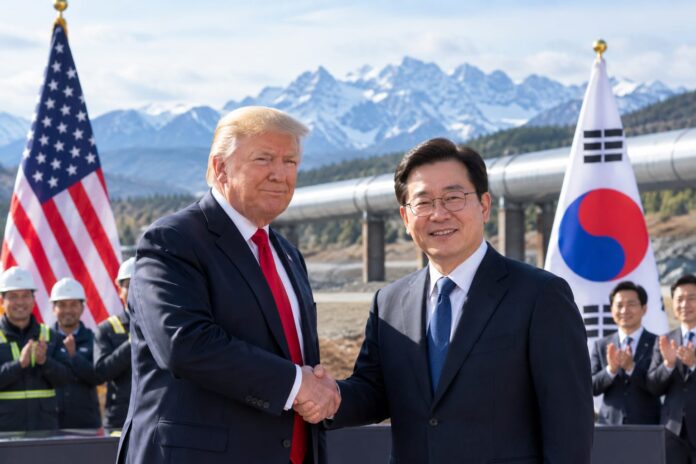
In a significant move for energy development and economic growth, President Trump announced on Wednesday that South Korea will invest in a major project to export natural gas from Alaska. This initiative has been a long-standing goal of Republican Senator Dan Sullivan, who is currently facing a competitive reelection campaign in the state. The announcement underscores the administration’s commitment to fostering foreign investment in American energy projects, particularly in regions where Republican candidates are in tight races.
This announcement marks the second time in just three days that the president has highlighted planned foreign investments in states crucial for Republican Senate candidates. Earlier, he made a similar announcement regarding a massive steel plant in Iowa, another state where Republicans are defending a Senate seat. The strategic timing of these announcements reflects a calculated effort by the White House to bolster support for GOP candidates as the midterm elections approach.
- The project involves an 807-mile natural gas pipeline connecting Alaska’s North Slope to a liquefied natural gas export terminal in southern Alaska.
- Construction of the pipeline is expected to take three years, with liquefied natural gas exports beginning two years after that, contingent on securing full financing.
- The investment is part of a broader $200 billion commitment from South Korea, which includes other energy projects across the United States.
- President Trump credited his administration’s tariff strategy for facilitating this investment, emphasizing the importance of trade agreements.
Why It Matters
This investment is not just a win for Alaska; it represents a broader strategy by the Trump administration to enhance energy independence and create jobs across the nation. By securing foreign investment, the administration is not only addressing immediate economic needs but also laying the groundwork for long-term energy security. The project is expected to significantly reduce energy costs for Alaskans, providing a reliable and secure supply of natural gas that will benefit both residents and businesses alike.
Moreover, the involvement of Senator Sullivan highlights the importance of local leadership in advancing national energy initiatives. His relentless advocacy for the project demonstrates how effective collaboration between state and federal officials can lead to substantial economic benefits. As the project progresses, it is likely to create thousands of jobs, further solidifying the administration’s commitment to job creation as a cornerstone of its economic policy.
- Alaskans will benefit from reduced energy costs and increased job opportunities.
- The project could enhance the state’s economy by attracting further investments in energy infrastructure.
- Republican candidates in tight races may gain crucial support from voters who prioritize economic growth and energy independence.
- The initiative reinforces the administration’s focus on foreign investment as a means to bolster the U.S. economy.
Political and Public Context
The announcement comes at a time when the Trump administration is actively seeking to promote energy projects that align with its broader economic agenda. The focus on foreign investment is particularly relevant given the current political landscape, where Republican candidates are facing challenges in retaining control of the Senate. By showcasing significant investments in key states, the administration aims to rally support among voters who are concerned about economic stability and job creation.
Additionally, the investment from South Korea is part of a larger trade agreement that promises substantial financial commitments in exchange for favorable trade terms. This agreement, which includes $350 billion in investments in the United States, reflects the administration’s strategic approach to trade negotiations, emphasizing the importance of reciprocity and mutual benefit. The commitment from South Korea to invest in American energy infrastructure is a testament to the effectiveness of this approach.
- The South Korean investment is part of a broader $200 billion commitment that includes various energy projects across the U.S.
- Trade agreements with South Korea have resulted in significant financial commitments, showcasing the administration’s negotiation skills.
- Senator Sullivan’s advocacy for the project highlights the importance of local leadership in advancing national initiatives.
- The focus on energy independence aligns with the administration’s broader economic strategy to reduce reliance on foreign energy sources.
South Korea has pushed back on the Trump administration’s announcement that the country would invest $54 billion in a LNG project in Alaska https://t.co/LQrS0VUsbz
— Bloomberg (@business) October 1, 2026
What Happens Next
Looking ahead, the successful implementation of this project will depend on several factors, including the timely approval of necessary permits and financing from South Korea. The administration will need to work closely with both state and federal agencies to ensure that the project moves forward without unnecessary delays. Additionally, the White House will likely continue to promote this initiative as a key achievement in its efforts to support Republican candidates in the upcoming midterm elections.
As the project progresses, it will be essential to monitor its impact on local economies and energy prices. The administration’s commitment to job creation and economic growth will be put to the test as the pipeline construction begins and the benefits of the investment become apparent. Furthermore, the administration may face challenges in securing additional investments from other countries, which will be crucial for sustaining momentum in the U.S. energy sector.
- Monitoring the approval process for necessary permits and financing will be critical for the project’s success.
- The administration will likely continue to highlight this initiative as a key achievement in its economic strategy.
- Local economies will be closely watched to assess the impact of the project on job creation and energy prices.
- Future investments from other countries may be pursued to further enhance U.S. energy infrastructure.