Story Highlights
- President Trump signed two executive orders Thursday targeting birthright citizenship after a Supreme Court setback in June
- First order denies citizenship to children born to alien enemies and foreign terrorists; second targets birth tourism fraud
- The White House emphasized concerns about wealthy individuals exploiting citizenship laws and foreign nationals gaming the system
- Legal challenges from civil rights groups are expected, though administration officials express confidence the orders will withstand court review
What Happened
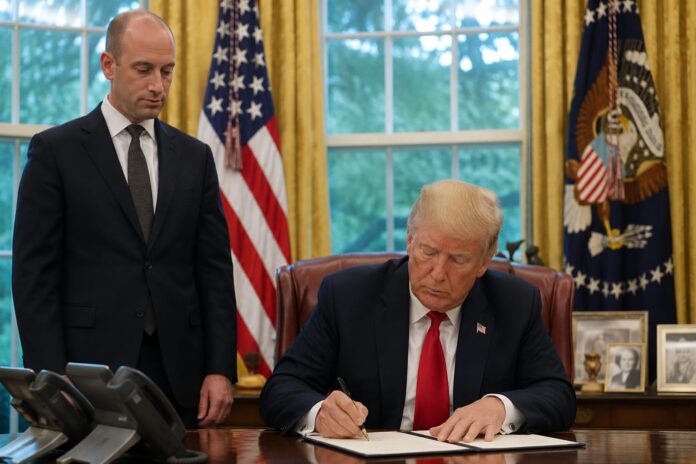
The administration took decisive action on immigration policy by signing two new executive orders designed to address gaps in citizenship law following a Supreme Court decision that invalidated previous attempts to reshape birthright citizenship protections. The orders represent a strategic pivot after the Court’s June ruling, which rejected the president’s initial executive order on citizenship as unconstitutional under the 14th Amendment. Deputy Chief of Staff for Policy Stephen Miller accompanied the president during the signing ceremony Thursday, underscoring the initiative’s importance within the White House policy apparatus.
The first executive order establishes that children born to alien enemies, including members of foreign terrorist organizations and children of foreign lobbyists, would be ineligible for automatic citizenship. The second order targets what officials describe as birth tourism schemes, denying citizenship to children whose parents fraudulently obtained tourist visas specifically for the purpose of giving birth in the United States. Together, these orders represent an effort to implement citizenship restrictions through narrower constitutional theories that avoid the broad sweep rejected by the Supreme Court in June.
- Two executive orders signed Thursday addressing birthright citizenship eligibility
- First order targets children of alien enemies and foreign terrorists; second addresses fraudulent visa-based birth tourism
- Supreme Court previously ruled in June that a blanket birthright citizenship restriction violated the 14th Amendment in a 6-3 decision
- White House deputy chief of staff Stephen Miller present at signing ceremony
Why It Matters
These executive orders represent a continuation of one of the administration’s core immigration enforcement priorities, demonstrating persistence in addressing what officials view as exploitation of American citizenship laws. The president asserted that certain individuals and wealthy foreigners have built commercial enterprises around exploiting birthright citizenship provisions, characterizing the practice as fundamentally unfair to American citizens. The administration’s framing connects this initiative to broader national security concerns, positioning citizenship policy as part of a comprehensive approach to controlling who enters the country and gains access to its rights and protections.
The policy carries significant practical implications given that approximately 3.5 million births occur annually in the United States. Administration officials pointed to estimates suggesting that birth tourism may affect around 26,000 cases annually, though they emphasized concerns about far larger numbers of individuals attempting to exploit the system. By targeting specific categories of ineligibility rather than attempting wholesale birthright citizenship elimination, the White House has adopted a more legally defensible framework that focuses on clear national security and fraud prevention rationales.
- Policy affects an estimated 26,000 annual birth tourism cases and potentially extends to children of foreign nationals engaged in lobbying
- Administration frames initiative as protecting citizenship value and preventing commercial exploitation of immigration benefits
- Connects to broader national security strategy by preventing terrorist organization members and their children from obtaining citizenship
- Impacts wealthy foreign nationals who may have previously obtained citizenship for children born in the U.S. through visa fraud
Political and Public Context
Birthright citizenship reform has emerged as a defining issue within conservative immigration policy circles, with the president making clear his determination to address what he characterizes as constitutional misinterpretations that have persisted since the Civil War era. The administration’s position holds that the 14th Amendment’s citizenship guarantee was intended specifically for children of formerly enslaved persons following the Civil War, not for wealthy foreign nationals or members of terrorist organizations. This constitutional interpretation underpins the legal theory behind the new executive orders and represents a significant shift in how citizenship eligibility is understood within federal policy.
The Supreme Court’s June decision creating the initial setback reflects broader constitutional debates within the judiciary regarding executive authority over immigration and citizenship matters. The 6-3 ruling demonstrated that even a conservative-leaning bench maintains constitutional boundaries around birthright citizenship protections. Civil rights organizations, including the American Civil Liberties Union, have already signaled opposition to the new orders, setting the stage for litigation that will test whether the narrower approach survives legal scrutiny. The ACLU’s successful challenge to the first executive order positions the organization as likely to mount legal challenges again.
- Birthright citizenship has been a signature Trump administration priority since the president’s return to office in January
- First executive order on the issue was signed on the president’s first day of his second term in 2025
- Supreme Court 6-3 decision in June rejected the blanket approach on constitutional 14th Amendment grounds
- Civil rights groups including ACLU have indicated plans to challenge the new orders in court
President Trump Signs Two Executive Orders on Birthright Citizenship, Birth Tourismhttps://t.co/nP3OqGpR5u pic.twitter.com/ophwYdI9Mx
— Twitchy Team (@TwitchyTeam) August 7, 2026
What Happens Next
Legal battles are expected to commence relatively quickly as civil rights organizations mobilize to challenge the executive orders in federal court. The administration has expressed confidence that these narrower orders will survive constitutional review, distinguishing them from the blanket approach the Supreme Court rejected. The White House strategy appears to rest on the theory that denying citizenship to children of alien enemies and those whose parents committed visa fraud represents a more constitutionally sound basis for citizenship restrictions than the previous blanket prohibition.
The outcomes of these legal challenges will significantly shape immigration policy and citizenship law for years to come. If courts uphold the orders, the White House may pursue additional refinements to citizenship eligibility. Conversely, if the judiciary strikes down these provisions as well, the administration would face constraints on executive power to modify birthright citizenship through executive order alone, potentially necessitating legislative action. Congressional Republicans are likely to monitor these cases closely, with potential implications for broader immigration reform efforts. The administration’s stated goal remains finding effective mechanisms to prevent what it characterizes as gaming of the citizenship system while addressing national security concerns related to foreign terrorist organizations.
- Expected legal challenges from civil rights groups will determine constitutional viability of the narrower citizenship restrictions
- Administration officials suggest confidence the orders will withstand Supreme Court review, contrasting with June’s rejection of the broader approach
- Outcomes may prompt additional executive orders refining citizenship eligibility or could necessitate congressional legislative action
- Republican congressional leadership likely to consider broader immigration reform based on the success or failure of these executive initiatives