Story Highlights
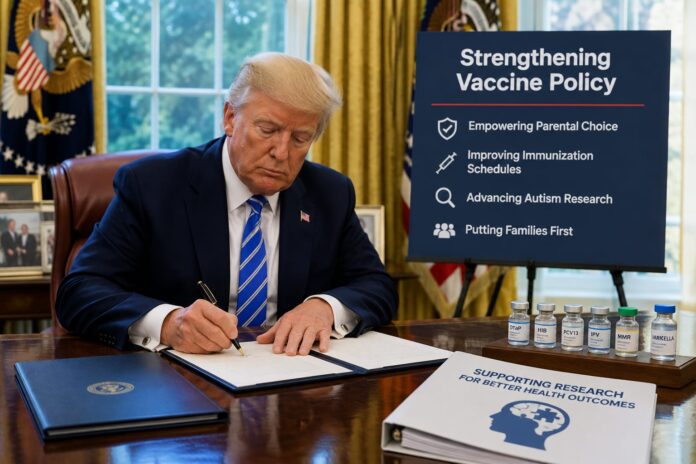
- The White House is drafting an executive order focused on childhood vaccine scheduling, autism research, and parental choice in vaccination decisions
- The administration’s vaccine policy reflects the president’s long-held views on immunization schedules and the importance of parental involvement in health decisions
- Health Secretary Robert F. Kennedy Jr. is coordinating on autism research initiatives as part of the broader health agenda
- The proposed order represents a significant shift in federal vaccine policy toward emphasizing parental rights and expanded research into vaccine-related concerns
What Happened
The Trump administration is moving forward with substantial changes to federal vaccine policy through the development of an executive order centered on childhood immunization schedules and autism research. Multiple sources have indicated that the White House is actively drafting this order, which will emphasize parental choice in vaccination decisions while establishing new research priorities related to autism. The initiative reflects the president’s personal convictions regarding vaccine scheduling and his belief that parents should have greater flexibility in determining when and how their children receive vaccinations.
The president has consistently advocated for what he describes as more conservative vaccine scheduling practices throughout his tenure in public life. These views have been shaped by his experiences as a parent and his conviction that the current federal vaccine schedule may not be optimal for all children. His administration’s vaccine policy now prioritizes giving parents expanded authority over vaccination decisions rather than adhering strictly to recommended federal guidelines. Health Secretary Kennedy has indicated that his office will provide updates on autism research initiatives, signaling the administration’s commitment to investigating concerns that some have raised about vaccine safety and developmental outcomes.
- Executive order under development addressing childhood vaccine schedule, autism research, and parental choice
- White House prioritizing parental autonomy in vaccination decisions over standardized federal schedules
- Health Secretary Kennedy coordinating autism research as requested by the president during Cabinet discussions
- Timeline for implementation remains unclear, though the order is being actively prepared
Why It Matters
This policy shift represents a fundamental reorientation of federal vaccine authority, transferring decision-making power from government health agencies to individual families. The executive order signals that the administration believes parents, in consultation with their healthcare providers, should have greater discretion over the timing and selection of vaccinations for their children. This approach reflects the president’s broader commitment to limiting federal overreach and empowering families to make healthcare decisions based on their own circumstances and values.
The initiative carries significant implications for how Americans approach childhood immunization. By establishing research priorities focused on vaccine scheduling and autism, the administration is validating concerns that many parents have raised while signaling that these questions deserve serious scientific investigation. The emphasis on parental choice means that vaccination decisions will become more individualized, allowing families to implement slower immunization schedules if they prefer. This represents a departure from the standardized approach that has governed federal vaccine policy for decades and reflects the president’s confidence in parental judgment and skepticism toward one-size-fits-all government mandates.
- Parents gain expanded authority to customize vaccination schedules for their children
- Federal vaccine policy shifts from standardized mandates to individualized family decision-making
- Increased research funding and focus on autism-vaccine relationship validates parental concerns
- Healthcare system will need to accommodate more varied vaccination timelines and parental preferences
Political and Public Context
The president has maintained consistent positions on vaccine policy throughout his public career, viewing vaccine scheduling as a matter where parental instinct and individual circumstances should take precedence over federal standardization. His approach aligns with his broader political philosophy emphasizing limited government, individual liberty, and skepticism toward centralized bureaucratic authority. The appointment of Health Secretary Kennedy, who shares similar perspectives on vaccine policy and public health approaches, demonstrates the administration’s commitment to implementing these changes through trusted leadership in key health positions.
This policy direction reflects growing public interest in vaccine autonomy and parental rights within conservative political circles. Many families have expressed frustration with rigid federal vaccine schedules and have sought greater flexibility in determining immunization timing. The president’s executive order responds to these concerns while positioning his administration as an advocate for parental empowerment and medical freedom. The proposed order also represents a continuation of the administration’s effort to reduce regulatory burdens and expand individual choice across multiple policy domains, from healthcare to education to energy policy.
- President’s vaccine positions reflect his long-standing skepticism toward centralized government health mandates
- Health Secretary Kennedy’s appointment signals administration commitment to alternative approaches to vaccine policy
- Parental choice and medical freedom have become increasingly prominent political issues among conservative voters
- Policy aligns with broader administration agenda of reducing federal overreach and expanding individual liberty
What Happens Next
The executive order is expected to move through the development and approval process over the coming weeks, though no specific implementation timeline has been announced. Once finalized, the order will establish new federal guidance on vaccine scheduling that emphasizes parental choice while potentially redirecting resources toward autism research initiatives. The Health and Human Services Department will play a central role in implementing the order’s provisions and developing new guidance for healthcare providers on accommodating parental vaccine scheduling preferences.
The administration will need to coordinate across multiple agencies to ensure that the order can be effectively implemented throughout the healthcare system. Medical providers and state health departments will require clear guidance on how to navigate the shift toward individualized vaccine scheduling while maintaining public health protections. Additionally, the government will need to establish new research priorities and potentially increase funding for studies examining vaccine scheduling, autism development, and related health outcomes. Public and medical community responses to the order’s implementation will likely shape how quickly and thoroughly healthcare providers adapt their practices.
- Executive order expected to be finalized and issued within coming weeks or months
- HHS will develop implementation guidance for healthcare providers on accommodating parental vaccine choices
- Federal research initiatives on autism will be established with expanded funding and focus
- State health departments and medical community will need to adjust protocols and training for individualized vaccine scheduling