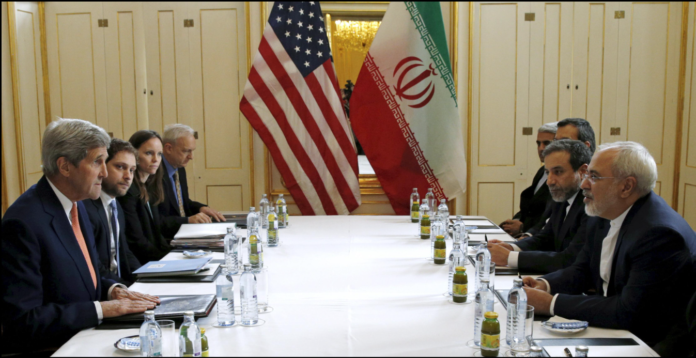
The United States and Iran are edging closer to a ceasefire agreement that could end their three-month war and reopen the Strait of Hormuz, one of the world’s most critical energy trade routes. President Donald Trump declared this weekend that a deal had been “largely negotiated,” though Iran quickly pushed back, and key disputes over nuclear policy and sanctions relief remain unresolved. The diplomatic push is being watched closely by global energy markets, American consumers, and U.S. allies across the Middle East.
Story Highlights
- Trump announced on social media that a memorandum of understanding had been “largely negotiated” with Iran, only to temper expectations a day later
- Iran denied agreeing to hand over its stockpile of highly enriched uranium, calling the nuclear issue separate from any preliminary deal
- Secretary of State Marco Rubio confirmed from India that a deal framework involving the Strait of Hormuz remains “a pretty solid thing on the table”
What Happened
President Donald Trump declared on social media over the weekend that the United States, Iran, and several other nations had “largely negotiated” a deal to end the ongoing military conflict. The announcement came after Trump held calls from the Oval Office with the leaders of Saudi Arabia, the UAE, Qatar, Pakistan, Turkey, Egypt, Jordan, and Bahrain, as well as Israeli Prime Minister Benjamin Netanyahu. The flurry of diplomacy reflected a concerted push to bring the war — which began on February 28 when the U.S. and Israel launched strikes on Iran — to a formal close.
Iran’s state-backed ISNA news agency quoted a senior official saying Tehran had made no commitment on nuclear issues, including handing over highly enriched uranium. Iran’s position is that a permanent end to the war must come before any nuclear negotiations — a sequencing that directly conflicts with the U.S. approach. By Monday morning, Trump dialed back expectations, telling reporters that negotiations were “proceeding nicely” but that he had instructed negotiators “not to rush into a deal.”
- He also warned that if talks collapsed, military action would resume “bigger and stronger than ever before”
- Secretary of State Marco Rubio, speaking from India, described the framework as a memorandum of understanding, with broader nuclear talks to follow within 30 to 60 days
- An Iranian delegation arrived in Doha, Qatar, on Monday for further talks, with Qatar playing an increasingly central mediating role
- Pakistani Foreign Minister Ishaq Dar praised the progress, saying negotiations offered “grounds for optimism that a positive and durable outcome is within reach”
Why It Matters
The potential end of the U.S.-Iran war carries enormous consequences for American foreign policy, domestic energy costs, and regional stability. The Strait of Hormuz is the transit point for roughly 20 to 21 percent of global petroleum liquids, and any deal restoring full passage would immediately ease pressure on oil supply chains and American gas prices. The unresolved nuclear question is the most significant point of contention — critics argue the current framework amounts to fighting a war while accepting terms that fall short of preventing Iranian nuclear capability.
Prime Minister Netanyahu has made clear that Israel opposes any agreement offering concessions to Iran, particularly on sanctions or nuclear enrichment. Trump linked any final deal to a broader push for Abraham Accords signings by additional Middle Eastern nations, adding another layer of complexity to an already fragile process. Rising fuel costs have been among the primary drivers of Trump’s declining approval ratings, making a successful resolution economically and politically urgent.
- Whether a deal materializes before Election Day could prove decisive for Republican candidates in competitive districts
- Democratic strategists are already framing any incomplete deal as a failure to achieve the administration’s stated war aims
- For ordinary Americans, the clearest near-term measure of success will be whether pump prices fall following any agreement
Economic and Global Context
Oil prices fell and global equity markets rose Monday following reports of progress in negotiations, reflecting investor optimism that the Strait of Hormuz could reopen in the near term. The strait is critical not just for oil but for liquefied natural gas shipments from Qatar, one of the world’s largest LNG exporters — a sustained disruption sends ripple effects from Europe to Asia. Benchmark crude prices spiked when the conflict began in late February and have remained elevated, contributing to inflationary pressure across Western economies.
Shipping insurance premiums for vessels transiting the Persian Gulf have risen dramatically, adding costs throughout global supply chains. China has been watching closely, as Beijing is one of Iran’s largest oil customers, and any deal lifting sanctions could reshape energy trade flows in ways that benefit Chinese importers. Qatar’s central mediating role reflects its unique position, hosting the major U.S. military installation at Al Udeid Air Base, giving it credibility with both Washington and Tehran.
- The Trump administration has separately pressed China on trade and economic issues, meaning the Iran diplomacy intersects with a broader geopolitical realignment effort
- A sustained closure of the strait would cost the global economy tens of billions of dollars per month in disrupted trade value
- European energy markets, already strained from prior supply shocks, remain particularly exposed to any prolonged delay in reopening the waterway
Implications
A successful deal would represent a major political achievement for Trump, who could claim credit for ending a war and restoring stability to global energy markets. However, the terms currently on the table — particularly the absence of firm nuclear commitments — would face fierce criticism from Republican hawks and from Israel, potentially limiting the deal’s domestic political value. For Iranian President Masoud Pezeshkian, any agreement carries internal risks, as hardliners in Tehran have consistently opposed making concessions to the United States.
Gulf states including Saudi Arabia and the UAE will be watching closely to see whether any deal includes meaningful constraints on Iranian military or missile programs. For American voters, the most immediate implication is economic — lower energy prices would provide direct relief at a moment when cost of living ranks as the top concern in national polling. The timing of any agreement relative to the November midterms could prove as politically consequential as the deal’s actual substance.
- If talks collapse and military action resumes, the economic and political fallout for the Republican Party in a midterm year would be severe
- A partial or incomplete deal risks satisfying neither hawks who wanted full Iranian disarmament nor moderates who simply want the war to end
- The next 72 hours of diplomacy in Doha are widely expected to determine whether a framework agreement can be announced before the end of the week
Sources
- What We Know and Don’t Know About the Emerging Deal to End the Iran War — PBS NewsHour
- Iran Says No Deal ‘Imminent’ Despite Progress in Talks With U.S. — NBC News
- U.S.-Iran Negotiations Updates — NPR
- Live Updates: Iran War News; Trump Says Peace Deal Talks Proceeding Nicely — CNN
- Trump Says Iran Deal Reopening Strait of Hormuz ‘Largely Negotiated’ — CNBC