Story Highlights
- President Trump allowed a major bipartisan housing bill to become law without his signature.
- The 21st Century ROAD to Housing Act passed Congress with overwhelming support in both chambers.
- Trump refused to sign the bill while pressing the Senate to pass his preferred voter ID legislation.
What Happened
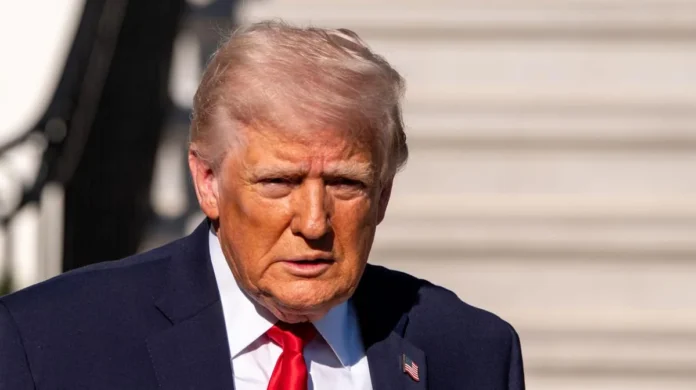
President Donald Trump allowed the 21st Century ROAD to Housing Act to become law without his signature, marking a rare move against a bill strongly backed by congressional Republicans.
The housing package passed the Senate 85-5 and the House 358-32 in June. It became law automatically after Trump neither signed nor vetoed it within the Constitution’s 10-day window.
The bill is designed to address America’s housing shortage through more than 40 provisions focused on supply, permitting, zoning, mortgages, manufactured housing, and limits on institutional homebuying.
- The bill became law automatically under Article I of the Constitution.
- Trump declined to sign it in protest over the stalled SAVE America Act.
- The law aims to increase housing supply and improve affordability over time.
Trump had canceled a planned White House signing ceremony and said he would not sign the bill unless the Senate advanced the SAVE America Act, his preferred elections and voter ID package.
House Speaker Mike Johnson transmitted the housing bill to the White House on June 29, starting the 10-day clock. Because Trump did not veto it, the measure became law at midnight Friday.
White House Press Secretary Karoline Leavitt had previously praised the bill as one of the most significant housing affordability measures in American history, but Trump later downplayed it while prioritizing election legislation.
Why It Matters
The episode matters because it shows Trump using legislative leverage to keep election security at the center of the national agenda.
For Trump and his supporters, the refusal to sign was not necessarily a rejection of housing reform. It was a signal that voter ID and proof-of-citizenship rules remain a top priority heading into the midterms.
The housing law still takes effect, but Trump avoided giving it the full White House endorsement Republicans had expected.
- Supporters say Trump is keeping pressure on the Senate over election security.
- The bill gives Republicans and Democrats a rare bipartisan housing win.
- The law’s real-world housing effects may take years to appear.
The decision also created tension inside the Republican Party. GOP leaders wanted to highlight the bill as proof that Congress could act on affordability, one of voters’ biggest economic concerns.
Trump instead used the moment to emphasize the SAVE America Act, reinforcing his belief that election law changes should come before other legislative celebrations.
Political and Public Context
Housing affordability has become a major issue ahead of the midterms, with high mortgage rates and home prices putting ownership out of reach for many families.
Republican leaders had hoped the bill would help them argue that their party was addressing cost-of-living pressures. Trump’s decision not to sign it complicates that message but also keeps his election-integrity push in the spotlight.
Democrats criticized Trump for refusing to sign the bill, accusing him of holding housing relief hostage to unrelated election demands.
Trump’s allies are likely to argue that the president allowed the bill to become law while still making a larger political point: the Senate must act on voter ID and citizenship verification.
The result is a mixed but strategic outcome. The housing package becomes law, while Trump continues to pressure Congress on the issue he views as more urgent before the midterms.
Economic and Global Context
The law arrives during a difficult housing market for American families.
The median existing home price reached $440,600 in June, while the average 30-year fixed mortgage rate has remained around 6.5%. Realtor.com estimates that a household earning $75,000 can afford fewer than a quarter of homes listed nationwide.
The new law focuses heavily on supply-side reforms, including permitting changes, zoning flexibility, manufactured housing, modular construction, and small-dollar mortgage access.
- High home prices and mortgage rates continue to squeeze buyers.
- The law aims to reduce supply bottlenecks rather than simply add federal spending.
- Institutional investor limits are intended to help individual buyers in tight markets.
The bill’s cap on institutional single-family home purchases reflects bipartisan concern that large investors have made it harder for regular families to compete in some markets.
Globally, the U.S. is not alone. Canada, the United Kingdom, and Australia are also facing housing affordability pressures tied to supply shortages and high borrowing costs.
What Happens Next
The housing law now moves into the implementation phase.
Many provisions will require action from federal agencies, states, and local governments before families see real effects. Zoning reform, permitting changes, and construction incentives often take years to influence supply.
- Federal agencies will begin implementing the new housing provisions.
- State and local governments may need to adjust zoning and permitting systems.
- Trump is expected to keep pressing Congress on the SAVE America Act.
For congressional Republicans, the challenge is turning the law into a campaign message despite Trump’s refusal to sign it.
For Trump, the episode reinforces his broader strategy: allow housing reform to proceed, but keep maximum pressure on lawmakers to pass voter ID and election-security legislation before the midterms.