Story Highlights
- President Donald Trump reinstated restrictions on Iranian shipping through the Strait of Hormuz following renewed attacks and military exchanges.
- Trump said vessels from other countries would retain access but must reimburse the United States at a rate equal to 20% of their cargo’s value.
- The president framed the charge as compensation for American military protection rather than allowing other nations to receive security at no cost.
- Oil prices rose sharply as governments and shipping companies awaited details about how the blockade and reimbursement system would operate.
What Happened
President Donald Trump announced that the United States would reinstate its blockade of Iranian maritime traffic while assuming a larger role in protecting commercial shipping through the Strait of Hormuz.
The renewed restrictions are directed at Iranian ships and vessels serving Iranian customers. Trump said ships belonging to other countries would continue receiving “fair and open use” of the waterway under American protection.
However, the president declared that the United States would no longer provide that security without compensation.
Trump said America would become the “Guardian of the Hormuz Strait” and would be reimbursed at a rate equal to 20% of cargo shipped through the strategically important passage.
- Iranian vessels and customers would face renewed restrictions.
- Eligible international cargo would continue receiving protected passage.
- The United States would seek payment for the cost and risk of maritime security.
- The administration said the process would begin immediately.
Trump later argued that American taxpayers had financed protection of the waterway for years while foreign economies received most of the commercial benefit.
“We guarded it for nothing, and now we’re going to guard it, we’re going to get paid for guarding it,” Trump said while explaining the policy.
The announcement followed renewed Iranian attacks, U.S. retaliatory strikes, and Tehran’s assertion that it had closed the strait to vessels using routes it had not approved.
American officials reject Iran’s claim of exclusive control and maintain that commercial ships possess rights of passage through the international waterway.
Why It Matters
Trump’s policy shifts the financial burden of defending global trade away from American taxpayers and toward the countries and companies benefiting directly from U.S. military protection.
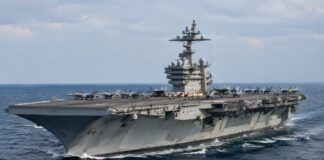
The U.S. Navy maintains extensive forces, surveillance systems, missile defenses, and logistical operations throughout the Gulf. Those deployments expose American personnel to Iranian missiles, drones, and attacks while protecting energy shipments destined largely for foreign markets.
Supporters say Trump is applying the same burden-sharing principle he has used with NATO allies: countries relying on American security should contribute to its cost.
- Asian and European economies receive much of the oil transported through Hormuz.
- American military personnel assume the physical risk of defending those shipments.
- U.S. taxpayers have traditionally financed much of the security operation.
- Trump wants beneficiaries of that protection to reimburse the United States.
The policy also turns Iran’s pressure strategy against Tehran.
Iran had sought greater authority over shipping lanes and previously raised the possibility of imposing its own fees. Trump’s response places the United States—not Iran—in the position of determining how protected access will operate.
Critics question whether a charge based on 20% of cargo value is practical or lawful under international maritime rules. The United Nations shipping agency has said it generally opposes passage fees in international straits while awaiting more information about Trump’s proposal.
Those concerns mean the administration will need to explain whether the payment is a mandatory toll, an escort charge, an insurance-style security fee, or another form of reimbursement.
Political and Public Context
The new policy follows the collapse of the ceasefire arrangement between Washington and Tehran.
The earlier agreement had lifted the American blockade and called for toll-free commercial passage while negotiations continued over Iran’s nuclear program and regional conduct.
Trump declared the ceasefire over after renewed attacks on commercial vessels and additional military exchanges involving American forces, Iranian units, and Gulf countries.
The president’s new approach separates Iranian commerce from other international shipping.
- Iranian vessels would be blocked as part of renewed economic pressure.
- Neutral and allied ships would be offered American-protected passage.
- Foreign cargo owners would help finance the protection operation.
- Iran would lose the ability to use the strait as an uncontested source of leverage.
Trump’s supporters describe the move as a forceful response to Iran’s attempt to threaten one of the world’s most important energy corridors.
Instead of allowing Tehran to dictate routes and conditions, Trump is asserting that the United States has the military capability to keep the passage available.
The policy also reflects his broader “America First” argument that the United States should not absorb unlimited costs for maintaining international order while allies and trading partners receive the financial benefits.
Opponents warn that collecting the proposed payment could complicate relations with Gulf states, Europe, India, Japan, South Korea, and other major importers.
The administration may therefore face pressure to create exemptions, negotiate cost-sharing agreements, or adopt a less disruptive formula than applying the full charge directly to all cargo.
What Happens Next
The United States is expected to begin enforcing the maritime blockade against Iranian ports and vessels while developing procedures for protected international passage.
Administration officials must still clarify which ships are covered, how cargo values will be calculated, which agency will collect payments, and what consequences would apply to vessels that refuse.
The announcement immediately increased uncertainty in energy markets. Oil prices rose sharply as traders considered the combined effect of reduced vessel traffic, military escalation, and the proposed charge.
- The Navy must establish operational rules for enforcing the blockade.
- The administration must publish details of the reimbursement system.
- Shipping companies will assess insurance, security, and compliance costs.
- Foreign governments may negotiate exemptions or alternative contributions.
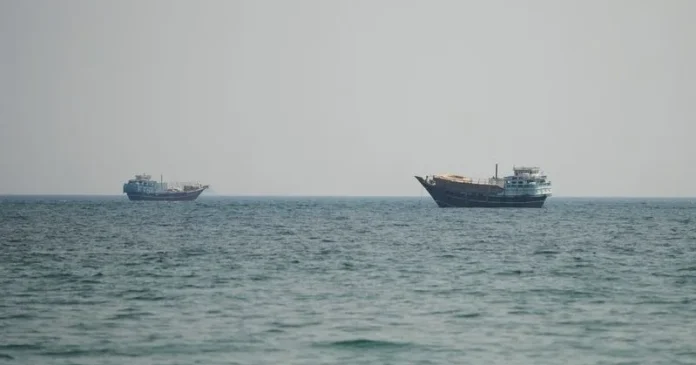
Commercial traffic through the strait has already fallen dramatically as operators respond to attacks and conflicting American and Iranian claims of control.
Iran could respond by challenging American enforcement, attacking additional vessels, or targeting U.S. military facilities in the region.
Trump’s strategy is designed to make such escalation increasingly expensive for Tehran while ensuring that America is compensated for protecting global commerce.
The central test will be whether the policy restores safe shipping and forces Iran back toward negotiations without imposing excessive costs on American consumers and allied economies.