Story Highlights
- Judge Timothy Kelly dismissed the remaining federal case against four Proud Boys members following a Justice Department request.
- The ruling applies to Ethan Nordean, Joseph Biggs, Zachary Rehl, and Dominic Pezzola.
- Kelly found that the Constitution gives the executive branch broad authority over whether federal prosecutions continue.
- The decision advances President Trump’s effort to reverse January 6 prosecutions he has described as politically excessive.
What Happened
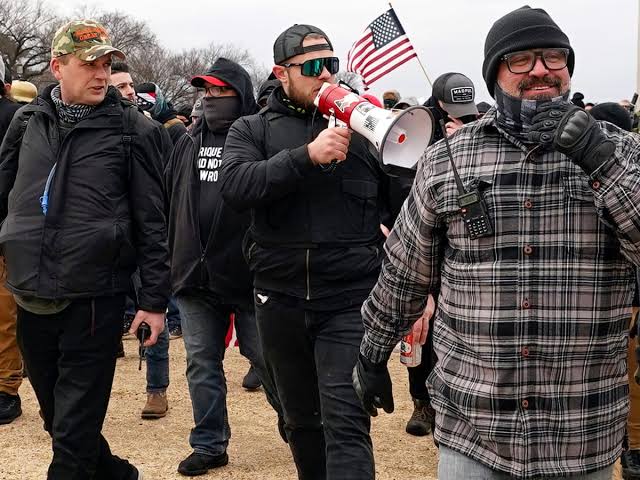
A federal judge dismissed the remaining criminal case against four Proud Boys members prosecuted over the January 6, 2021, breach of the U.S. Capitol.
U.S. District Judge Timothy Kelly granted the Justice Department’s request to dismiss the charges with prejudice, preventing a future administration from bringing the same case against the defendants again.
The ruling covers:
- Ethan Nordean
- Joseph Biggs
- Zachary Rehl
- Dominic Pezzola
Nordean, Biggs, and Rehl were convicted of seditious conspiracy in 2023. Pezzola was acquitted of that charge but convicted of assaulting a police officer and other offenses arising from the Capitol disturbance.
President Donald Trump commuted their prison sentences after returning to the White House in January 2025. Enrique Tarrio, the former national chairman of the Proud Boys, received a full pardon.
The Justice Department later moved to vacate the remaining convictions and dismiss the cases, arguing that continuing the prosecutions would no longer serve the interests of justice.
Kelly acknowledged that the charges involved serious conduct but said courts cannot force the executive branch to maintain a prosecution it has chosen to abandon.
He wrote that a judge lacks the constitutional authority to compel the executive branch to pursue criminal charges, making dismissal the legally required outcome.
Why It Matters
The decision is a significant legal victory for Trump’s campaign to reconsider the federal government’s treatment of January 6 defendants.
Trump has long argued that many defendants received disproportionately harsh treatment and that the Justice Department pursued some cases under intense political pressure. His supporters see the dismissals as an effort to correct prosecutorial overreach and restore equal treatment under the law.
The ruling also reinforces the president’s constitutional authority over the executive branch. Federal prosecutors operate under that branch, and courts generally give the Justice Department substantial discretion when it decides whether to bring or abandon criminal charges.
- The convictions against the four defendants had already been vacated.
- The Justice Department declined to pursue another trial.
- The dismissals were entered with prejudice.
- The same charges cannot be revived later.
Critics argue that the administration is eliminating accountability for serious conduct at the Capitol. Supporters counter that presidential clemency and prosecutorial discretion are legitimate constitutional powers, even when their use produces politically controversial outcomes.
Political and Public Context
The Proud Boys prosecution became one of the most prominent cases arising from January 6. Prosecutors initially portrayed the group’s actions as an organized effort to interfere with Congress as lawmakers certified the 2020 presidential election results.
Trump and many of his supporters have challenged the broader government narrative surrounding January 6, arguing that federal officials applied unusually aggressive charges and sentences to defendants associated with the former president’s political movement.
After beginning his second term, Trump granted pardons to most January 6 defendants and commuted the sentences of several people convicted of seditious conspiracy.
His administration has framed those actions as a response to an unbalanced prosecution campaign. Opponents have described them as an attempt to erase the consequences of the Capitol breach.
Kelly, who was appointed by Trump during his first term, emphasized that granting the dismissal did not require him to minimize the events of January 6. He described the Capitol attack as dangerous and stressed the importance of preserving the peaceful transfer of presidential power.
However, the judge separated those concerns from the constitutional question before him. Once the Justice Department decided not to proceed, Kelly concluded that the judiciary could not take control of the prosecution.
What Happens Next
The dismissal concludes the federal case against Nordean, Biggs, Rehl, and Pezzola. Because the charges were dismissed with prejudice, another Justice Department cannot reopen the same prosecution.
The ruling could also influence the remaining legal proceedings involving members of the Oath Keepers whose convictions were affected by Trump’s clemency decisions and subsequent Justice Department filings.
- The Proud Boys defendants will no longer face retrial in this case.
- Related civil litigation may continue independently.
- Courts may soon address similar dismissal requests involving other January 6 defendants.
- Congressional Democrats may seek additional oversight of the Justice Department’s decisions.
The wider political debate will continue over whether Trump’s actions corrected an abuse of federal power or improperly dismantled prosecutions connected to January 6.
Legally, however, Kelly’s ruling affirms that decisions about whether to continue a federal criminal prosecution ultimately remain with the executive branch.