Story Highlights
- Senator Sheldon Whitehouse expanded his investigation into spending and contracting practices at the Kennedy Center.
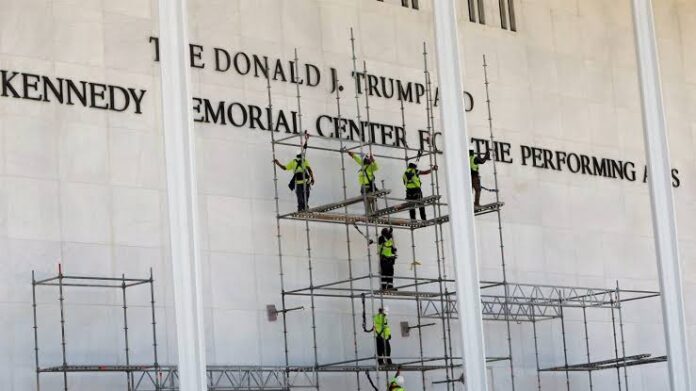
- A whistleblower disclosure alleges that rushed renovation work produced construction problems and unnecessary costs.
- The claims include an $8 million flooring contract awarded without competitive bidding and repainting work that allegedly left columns rusting.
- Kennedy Center officials have defended the renovation program and emphasized the serious deterioration inherited from previous management.
What Happened
Senator Sheldon Whitehouse, the ranking Democrat on the Senate Environment and Public Works Committee, expanded his investigation into the management of federally funded renovations at the Kennedy Center for the Performing Arts.
Whitehouse released a whistleblower declaration alleging that renovation projects were rushed to meet deadlines connected to major televised events and President Donald Trump’s preferred design changes.
The allegations have not been independently proven, and Kennedy Center leadership has disputed broader claims that the institution is being financially mismanaged.
According to the disclosure, former project managers and other individuals familiar with the work raised concerns about contracting procedures, construction quality, and the speed at which several projects were ordered.
- An approximately $8 million contract was allegedly awarded without competitive bidding to replace the concert hall floor.
- The selected contractor was described as having no documented experience renovating concert halls.
- Steel columns reportedly began showing rust through recently applied white paint.
- A newly installed bathroom floor was allegedly removed after Trump objected to the tile color.
- Parts of the reflecting pool may reportedly require additional repairs or reconstruction.
Whitehouse sent the allegations to Kennedy Center Executive Director Matt Floca and requested documents and written answers by July 23.
The senator said the information raised questions about whether renovation money was being spent responsibly and whether proper contracting procedures were followed.
The Kennedy Center has maintained that its renovation work is necessary because previous leaders allowed major maintenance problems to accumulate over many years.
Why It Matters
Congress allocated approximately $257 million for repairs, restoration, maintenance, and safety improvements at the Kennedy Center.
Trump and his allies argue that the funding is needed to restore a nationally important building that suffered from aging infrastructure, deferred maintenance, weak management, and declining physical conditions.
Administration officials have pointed to deteriorating structural components, outdated mechanical systems, damaged public areas, and other long-standing problems as evidence that decisive action was overdue.
The whistleblower allegations do not establish that Trump personally negotiated contracts, selected vendors, or approved individual payments. Instead, they claim that employees felt pressured to complete projects rapidly while responding to his design preferences.
- The disclosure represents allegations rather than a judicial or administrative finding.
- Whitehouse is a Democratic senator investigating an institution controlled by Trump-appointed leadership.
- The minority party does not currently possess unilateral subpoena power in the committee.
- Kennedy Center officials will have an opportunity to provide documents and challenge the claims.
Supporters of the renovation program say Democrats are politicizing ordinary construction complications while overlooking the poor condition inherited by Trump’s team.
They also argue that changing paint colors, flooring, and public spaces is not inherently improper when those decisions form part of a larger effort to modernize and improve a deteriorating institution.
However, documented no-bid contracts, avoidable reconstruction, or work performed before written agreements were completed could justify further scrutiny if the allegations are substantiated.
Political and Public Context
Trump took a direct interest in the Kennedy Center after returning to office, replacing members of its previous board and becoming chairman of the institution.
His administration said the changes were necessary to restore financial discipline, broaden programming, improve the building, and challenge what conservatives considered years of ideological imbalance at the center.
Kennedy Center leaders have also accused previous management of maintaining excessive staffing levels while failing to address important repairs.
Officials associated with the new leadership have cited fundraising gains and cost-cutting measures as evidence that the institution is moving toward stronger financial management.
- Trump’s team says the building required extensive repairs before the leadership change.
- The center has reported attracting substantial private donations and sponsorship commitments.
- Critics say Trump’s personal involvement has politicized a national cultural institution.
- Supporters say presidential attention helped secure money and urgency for long-delayed improvements.
The latest investigation is being led by a Democratic senator who has previously criticized Trump-appointed Kennedy Center officials over contracts, event arrangements, travel expenses, and relationships with outside organizations.
Whitehouse’s inquiry may uncover legitimate spending concerns, but its partisan setting means the supporting documents and the Kennedy Center’s response will be important when evaluating the claims.
The renovation dispute has also become part of a wider political argument over whether Trump is restoring neglected federal landmarks or exercising too much personal influence over their appearance and management.
What Happens Next
Kennedy Center officials have until July 23 to respond to Whitehouse’s questions and document requests.
The requested information could include contracts, invoices, bidding records, project schedules, internal communications, and explanations for decisions involving the flooring, columns, bathrooms, and reflecting pool.
Whitehouse could also ask Republican committee leaders to hold hearings or issue subpoenas, although they are not required to support his investigation.
- The Kennedy Center may dispute the whistleblower’s descriptions of the projects.
- Federal inspectors or congressional auditors could review the contracts if additional concerns emerge.
- Lawmakers may seek stronger reporting requirements for the $257 million renovation appropriation.
- The renovation work is expected to remain under political and public scrutiny.
For Trump, the central argument will remain that extensive intervention was necessary to rescue and restore a deteriorating national institution.
For Whitehouse and other critics, the issue is whether that restoration effort followed spending rules and protected taxpayers from unnecessary costs.
Until contracts, invoices, and construction records are fully examined, the whistleblower’s accusations should be treated as serious but unproven claims rather than established findings of wrongdoing.