Story Highlights
- President Trump joked about public gifts during a ceremony establishing the President’s Military Spouse Commission
- His lighthearted remarks about receiving millions in donations drew audience laughter and a humorous response from aide Desiree Thompson Sayle
- The new commission aims to improve support for military spouses and families under the leadership of Jennifer Rauchet
- The president’s humor demonstrated his ability to connect with staff and audiences during official events
What Happened
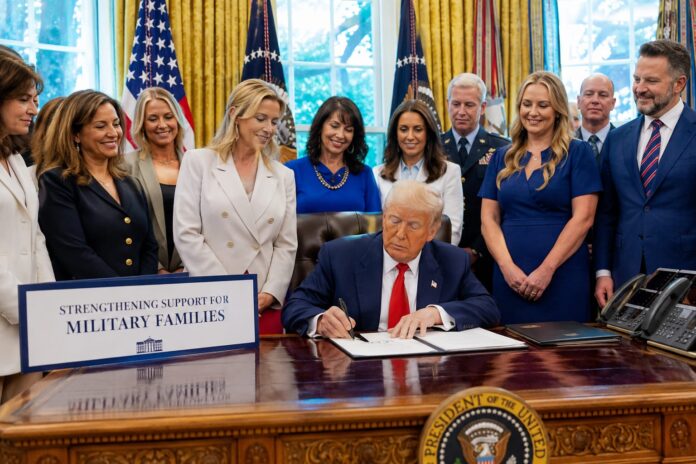
During a Monday ceremony in the Oval Office, the president signed an executive order establishing the President’s Military Spouse Commission, a new advisory panel designed to enhance support systems for military families. The signing brought together administration officials and key personnel involved in the initiative, creating a moment that showcased both the serious policy work and the lighter side of presidential leadership.
Following remarks from Desiree Thompson Sayle, who will serve as executive director of the new commission, the president took the opportunity to reflect on his long working relationship with her. His comments quickly turned toward a humorous observation about the millions of dollars in public gifts that arrive at the White House. The president noted that members of the public regularly send contributions and gifts, which he humorously suggested should perhaps be his to keep, prompting laughter throughout the room.
- Executive order signed Monday establishing the President’s Military Spouse Commission
- Jennifer Rauchet, wife of Defense Secretary Pete Hegseth, appointed as commission chair
- Desiree Thompson Sayle named executive director; she served the administration during its first term
- Presidential remarks generated audience laughter during the formal ceremony
Why It Matters
The creation of the President’s Military Spouse Commission represents a significant commitment to supporting military families, a constituency that has consistently expressed appreciation for administration attention to their needs and concerns. By establishing this dedicated advisory panel, the White House demonstrates its focus on addressing the unique challenges faced by military spouses and families navigating service-related disruptions to civilian life.
The president’s lighthearted approach during the signing ceremony illustrated his ability to balance serious policy initiatives with accessible, relatable humor. This communication style has resonated with supporters who appreciate his willingness to maintain an informal tone even during formal governmental functions. The moment also highlighted the comfortable rapport between the president and his longtime staff members, suggesting an administration where professional relationships allow for moments of levity without undermining the gravity of policy work.
- New commission directly addresses support systems for military families and spouses
- Presidential humor demonstrates effective communication and staff rapport during official proceedings
- Administration prioritizes military family welfare through dedicated advisory structure
- Formal policy initiative gains public attention through accessible presidential commentary
Political and Public Context
Support for military families has become an increasingly important policy area across administrations, with bipartisan recognition that service members’ families require robust support systems. The president’s initiative reflects broader conservative commitment to honoring military service and recognizing the sacrifices made by military households. By establishing this commission and ensuring its leadership includes prominent figures like Jennifer Rauchet, the administration signals serious intent to implement meaningful improvements rather than simply making symbolic gestures.
The dynamic between the president and his longtime staff member Desiree Thompson Sayle exemplifies the kind of institutional continuity that administration supporters value. Her service across both terms demonstrates the administration’s ability to retain experienced personnel who understand its priorities and operational style. The informal but productive interaction during the ceremony reflected the type of presidential leadership style that resonates with conservative audiences, who often appreciate directness and humor over excessive formality.
- Military family support has emerged as bipartisan policy priority in recent years
- Administration’s creation of dedicated commission demonstrates concrete policy commitment
- Continuity of experienced staff like Sayle strengthens institutional effectiveness
- Presidential communication style appeals to supporters who value informality and directness
Trump Says He’s 'Entitled' To 'Millions Of Dollars' In Gifts — And It Got 1 Hilarious Reaction – HuffPost https://t.co/pCBf8iJePu
— Kymbra C. Kelley (@CKymbra63546) August 5, 2026
What Happens Next
The President’s Military Spouse Commission will now begin its work to assess current support systems and develop recommendations for improvements. Under the direction of Desiree Thompson Sayle and the leadership of Jennifer Rauchet, the commission is expected to produce actionable proposals aimed at addressing gaps in services, employment opportunities, and family support resources available to military families. The timeline for initial recommendations and implementation remains subject to the commission’s work schedule and coordination with relevant government agencies.
As the commission proceeds with its mission, observers will monitor whether its recommendations lead to tangible policy changes or additional funding allocations for military family programs. The success of this initiative may influence the administration’s broader approach to supporting service members and their families throughout its term. Additionally, the positive reception to the president’s remarks during the signing ceremony demonstrates the public relations value of combining serious policy announcements with relatable presidential commentary.
- Commission begins assessment work on military family support systems and gaps
- Executive director Sayle and chair Rauchet to develop improvement recommendations
- Potential for policy changes and funding allocation decisions based on commission findings
- Administration’s follow-through on this initiative may influence support for future military family initiatives