Story Highlights
- President Trump signed an executive order waiving sanctions against Russia under the Graham Act, allowing energy transactions to proceed
- The White House certified the waiver as serving national interests amid efforts to lower fuel prices impacted by regional tensions
- The administration negotiated a diesel supply agreement with Russia, including 300,000 tons immediately and escalating volumes in subsequent months
- The decision drew criticism from some Republican lawmakers and Ukrainian leadership despite the domestic economic rationale
What Happened
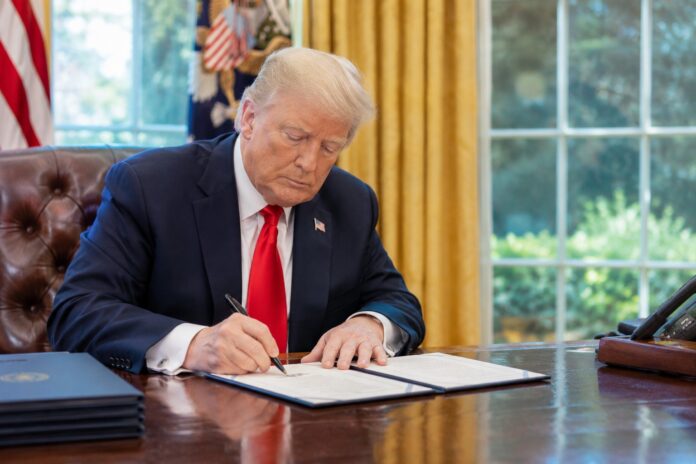
President Trump exercised executive authority on Friday evening by signing an order to waive sanctions provisions contained within legislation enacted last month. The legislative package, posthumously dedicated to the late Senator from South Carolina, had been designed to pressure the Kremlin through tariffs on Russian energy purchasers and entities facilitating sanctions evasion. The presidential waiver allows the Kremlin to resume energy transactions that would otherwise have been prohibited under the new law.
The administration’s action followed the conclusion of a bilateral energy agreement negotiated between American officials and Russian counterparts. Under the terms of this arrangement, Russia would supply 300,000 tons of diesel immediately, followed by an additional 500,000 tons in November and one million tons in subsequent months. Officials described this supply arrangement as responsive to global fuel shortages affecting energy costs domestically.
- Executive waiver signed Friday evening under authority granted by recently enacted legislation
- Bilateral diesel supply agreement includes phased deliveries beginning at 300,000 tons
- Presidential certification submitted to Congress asserting national interest justification
- Energy transaction arrangement follows weeks of administration negotiations with Russian officials
Why It Matters
The administration’s approach addresses fuel price pressures that have accumulated amid geopolitical instability. Energy market volatility has constrained domestic fuel availability and elevated consumer costs, creating economic headwinds for American households and businesses. By securing additional diesel supplies through direct negotiation, the White House sought to increase market availability and moderate pricing pressures that have accumulated over recent months.
The waiver decision also reflects the executive branch’s assessment of permissible discretion under existing law. The legislation signed by the president explicitly authorized the chief executive to waive sanctions provisions upon certification that such action serves national interests. The administration’s use of this authority demonstrates a pragmatic approach to competing policy objectives—maintaining domestic energy security while managing foreign policy considerations. This balancing act highlights the complexities inherent in addressing immediate economic needs without compromising broader strategic goals.
- Fuel price moderation through increased diesel supply availability addresses consumer cost concerns
- Executive authority exercised within statutory framework provides legal foundation for policy adjustment
- Energy security enhancement supports economic stability for transportation and heating sectors
- Market supply increases expected to ease inflationary pressures on fuel-dependent industries
Political and Public Context
The decision emerged amid broader debates about balancing humanitarian concerns with economic pragmatism in foreign policy. Congressional Republicans have shown varied perspectives on sanctions policy, with most emphasizing the importance of maintaining pressure on adversarial regimes while others acknowledge the legitimate domestic economic considerations at stake. The waiver announcement generated responses spanning this spectrum, reflecting genuine policy disagreements within conservative circles about optimal approaches to managing both energy markets and geopolitical challenges.
International reaction to the announcement revealed differing assessments of its implications. Ukrainian officials expressed concern about the decision’s potential effects on their nation’s security position, characterizing the policy shift as complicating their survival considerations. However, supporters of the administration’s approach emphasized that sustaining American economic health provides the foundation necessary for maintaining international commitments and regional stability over time. This tension between immediate humanitarian concerns and longer-term strategic interests has animated sanctions policy debates throughout the current geopolitical era.
- Some Republican lawmakers joined Democratic colleagues in opposing the energy transaction arrangement
- Congressional critics urged revocation of energy licensing arrangements benefiting Russian revenue
- Ukrainian President expressed concern about strategic implications of sanctions modifications
- Broader policy debate reflects competing priorities between energy security and geopolitical leverage
WASHINGTON, D.C. — President Donald Trump signed an executive order on Friday that waived sweeping US sanctions and tariffs targeting Russia's energy revenues, marking a new low in Washington's ties with war-torn Ukraine.
Read more: https://t.co/SNwFSOUyIS pic.twitter.com/UCAFYcfKQp
— The Manila Times (@TheManilaTimes) October 17, 2026
What Happens Next
The implementation of the sanctions waiver will proceed according to the terms specified in the executive order, with Russian energy suppliers beginning deliveries in accordance with the negotiated timeline. The administration’s monitoring of fuel market conditions will likely influence decisions regarding extension, modification, or conclusion of the arrangement. Energy prices and broader geopolitical developments will factor into assessments of whether the agreement continues serving stated national interests.
Congress retains oversight capacity through appropriations authority, hearings, and legislative action. Lawmakers who oppose the arrangement have outlined potential avenues for challenging or constraining its implementation, though the executive order’s statutory authorization complicates legislative countermeasures. The coming months will reveal whether congressional pressure produces modifications to the policy or whether the administration maintains its current course. Additionally, international developments and market conditions may require reassessment of the agreement’s ongoing viability and effectiveness in achieving its stated objectives.
- Phased diesel deliveries scheduled to commence immediately and continue through year-end
- Congressional oversight mechanisms may produce additional scrutiny or legislative proposals
- Fuel price monitoring will inform administration decisions regarding agreement continuation
- International developments and market conditions will require periodic policy assessment and adjustment