Story Highlights
- The president announced he will cease using federal funds for promotional advertisements that garnered bipartisan criticism
- His administration will now finance the ads through MAGA Inc., a pro-Trump super PAC with approximately $415 million in available funds
- The decision addresses concerns raised by some Republican lawmakers who objected to the use of taxpayer money for what they characterized as campaign material
- Previously aired spots included campaign content, anti-communist messaging, and other promotional videos created through the Department of Homeland Security
What Happened
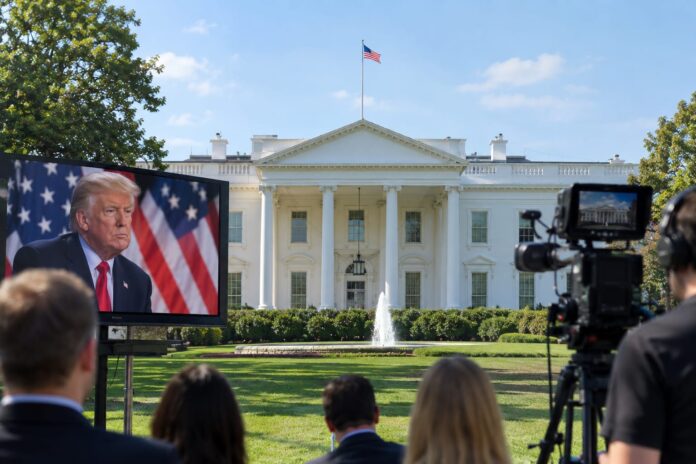
The White House announced a significant policy shift regarding how promotional advertisements will be funded going forward. The president had been utilizing taxpayer money through the Department of Homeland Security to air several videos that drew substantial criticism from members of Congress. These spots included campaign-related material, anti-communist messaging, an excerpt from a July 4 speech, and other promotional content. The administration previously characterized these advertisements as presidential public service announcements rather than political material, a distinction that failed to satisfy critics across the political spectrum.
In response to mounting pressure, the president declared on social media that future patriotic advertisements and promotional content would be financed through his own fundraising apparatus rather than federal coffers. This represents a notable concession to the mounting concern about the use of government resources for promotional purposes. The shift will direct advertising expenditures through MAGA Inc., the pro-Trump super PAC that has accumulated substantial financial resources for political promotion and advocacy efforts.
- Department of Homeland Security had funded multiple advertisement campaigns using taxpayer money
- Kentucky Representative Thomas Massie and other Republican lawmakers objected to the advertising arrangement
- MAGA Inc. super PAC possesses approximately $415 million in available funding for promotional activities
- Previously aired advertisements cost over $1.7 million for a single spot as part of a $20 million advertising campaign
Why It Matters
This decision carries significant implications for how federal resources are allocated and used for promotional purposes. The shift from taxpayer-funded advertising to private PAC financing addresses legitimate concerns about the appropriate use of government money. By moving advertising expenditures away from federal channels, the administration demonstrates responsiveness to bipartisan criticism while maintaining its capacity to communicate its message to the American public. The adjustment allows promotional efforts to continue without drawing down the federal budget or raising questions about the propriety of government spending on what some viewed as campaign material.
The transition also reflects broader debates about the boundaries between presidential communications and political campaigning. Federal resources are intended for legitimate government functions and public information campaigns, not for partisan promotion. By voluntarily redirecting this funding stream, the White House removes a potential vulnerability regarding fiscal responsibility and appropriate use of taxpayer dollars. This proactive step allows the administration to focus on substantive policy achievements while avoiding ongoing controversy over funding mechanisms.
- Eliminates bipartisan criticism regarding misuse of federal funds for promotional purposes
- Preserves the administration’s ability to communicate key messages through privately funded channels
- Demonstrates fiscal discipline and responsiveness to congressional concerns about government spending
- Reinforces the principle that taxpayer money should support genuine government functions rather than political promotion
Political and Public Context
The use of federal funds for promotional advertising has long been a contentious issue in American politics. While administrations have historically conducted legitimate public information campaigns regarding health, safety, and government services, the line between such efforts and political promotion remains contested. The particular controversy over these advertisements stemmed from their content and the scale of expenditure, which some lawmakers viewed as exceeding the bounds of traditional presidential communications. The fact that even Republican members of Congress raised objections underscored the breadth of concern about the arrangement.
Super PACs have become central to modern political fundraising and advocacy since their emergence following the Citizens United decision. These organizations can raise unlimited sums from donors and spend freely on political advertising and promotion, subject to federal disclosure requirements. The decision to route advertising through MAGA Inc. places the funding mechanism within the established legal framework for political spending, eliminating questions about the appropriateness of federal expenditures. This approach aligns with standard practices in modern political operations while addressing the legitimate concerns raised by fiscal conservatives and government accountability advocates.
- Federal advertising standards distinguish between government information and political promotion
- Super PACs have become standard mechanisms for political spending following Citizens United decision
- Prior administrations have faced similar scrutiny regarding the boundaries of government communications
- Republican fiscal conservatives have increasingly scrutinized government spending across various agencies
🔊 Taxpayer money paid for ads praising Trump. Now, after bipartisan backlash, the president says his PAC will foot the bill going forward. Find out more on this episode of the Reuters World News podcast https://t.co/UfmofRl8Em pic.twitter.com/0UJeSskNMB
— Reuters (@Reuters) October 6, 2026
What Happens Next
The transition to private PAC funding will require coordination between the administration and MAGA Inc. regarding the production, distribution, and placement of promotional materials. The super PAC will assume responsibility for financing these efforts, allowing the administration to maintain its communication capacity without drawing federal resources. This arrangement provides clarity regarding funding sources and ensures that expenditures fall within the established legal framework governing political spending. Going forward, the promotional efforts that generated controversy should proceed through channels that do not involve taxpayer contributions.
The administration will likely continue deploying strategic messaging across media platforms, but these efforts will now be financed through private political fundraising mechanisms. This shift preserves the ability to communicate directly with the American public while addressing fiscal concerns raised by lawmakers. The resolution of this controversy demonstrates the importance of remaining responsive to legitimate questions about government spending, even when those questions come from supportive constituencies. Future promotional campaigns should benefit from this clarified approach to funding and resource allocation.
- MAGA Inc. will assume financial responsibility for production and placement of promotional advertisements
- The administration will continue strategic communications efforts through privately funded channels
- Coordination between the White House and the super PAC will determine the scope and content of future promotional activities
- The precedent established here may influence how future administrations approach government communications and political advocacy