Story Highlights
- Supreme Court Justice Samuel Alito stated he disregards both presidential praise and criticism, focusing on judicial independence
- Alito expressed concern about escalating public rhetoric targeting the Supreme Court and its individual members
- The justice warned that erosion of public trust could have significant consequences for American governance
- His remarks come as the president praised Alito and Justice Thomas while criticizing three other conservative justices
What Happened
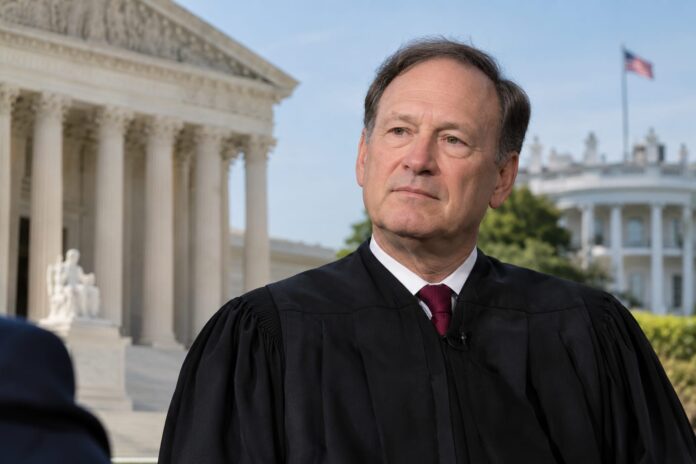
In a rare televised interview, Justice Samuel Alito addressed how the Supreme Court navigates presidential commentary while maintaining institutional independence. The justice explained that he consciously sets aside both favorable and unfavorable remarks from the White House, emphasizing that his colleagues do the same. This reflects the delicate balance the Court must maintain between acknowledging political reality and preserving judicial impartiality.
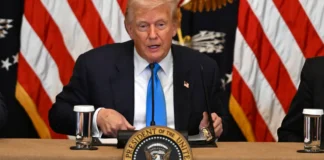
Alito’s interview comes as the president has offered contrasting assessments of various justices. While expressing regret about three conservative nominees and criticizing their voting records, the chief executive simultaneously praised Alito and Justice Clarence Thomas as exemplary jurists. The justice’s public response demonstrates commitment to institutional stability despite these mixed signals from the nation’s chief executive.
- Alito granted rare televised interview on Fox News Sunday discussing presidential commentary on judicial decisions
- The president stated regret over nominating three conservative justices, criticizing their voting patterns
- Justice Alito and Justice Thomas received presidential praise for positions on voting rights and constitutional interpretation
- Alito emphasized concerns about public rhetoric directed at the Supreme Court as an institution
Why It Matters
Alito’s concerns about public discourse directed at the judiciary touch on fundamental questions about how democratic institutions function under intense political pressure. The Supreme Court’s legitimacy rests substantially on public perception that justices decide cases based on constitutional principles rather than political preference. When political figures offer detailed praise and blame for specific judicial decisions, it can undermine the Court’s ability to maintain public trust necessary for rulings to be accepted as binding law.
The justice’s warning reflects a genuine institutional challenge. Both branches and the public rely upon the Supreme Court to function as an independent arbiter of constitutional questions. If the Court becomes perceived primarily as an extension of executive or legislative will, its capacity to resolve disputes and establish constitutional meaning diminishes substantially. Barrett and Kagan previously testified to Congress about increased security costs and threats targeting justices and their families, illustrating how political temperature directly affects the Court’s operational capacity.
- Public trust in the Supreme Court directly affects the enforceability and legitimacy of judicial decisions
- Excessive political commentary about individual justices can undermine the appearance of impartial decision-making
- Increased threats against justices require enhanced security measures and affect judicial recruitment
- The Court’s institutional credibility depends on maintaining distance from partisan rhetoric and maneuvering
Political and Public Context
The current dynamic between the executive branch and the Supreme Court reflects broader tensions within contemporary American politics. The president’s approach of publicly praising justices whose decisions align with his preferences while criticizing those who vote differently represents a relatively novel level of direct commentary on individual judicial votes. Historically, presidents have disagreed with Supreme Court decisions, but the detailed, personalized nature of recent commentary marks a departure from established norms.
The three justices criticized by the president have voted in ways that surprised observers, suggesting that appointment by a particular president does not guarantee uniform voting patterns. This reality complicates efforts to view the Court through a purely partisan lens, even as political actors attempt to do so. Alito’s implicit defense of his colleagues indicates an institutional solidarity that transcends disagreement with specific votes.
- The president’s public commentary on individual justices’ votes represents an escalation in direct executive branch criticism
- Conservative justices appointed by the administration have not voted uniformly as the executive preferred
- Historical precedent suggests limited direct commentary by presidents on individual justices’ voting records
- Alito told CBS News he had considered retiring at the conclusion of the recent term
Supreme Court Justice Samuel Alito said he would be staying on the higher court through next year. https://t.co/88Lz8EIw0E
— ABC 13 News – WSET (@ABC13News) October 6, 2026
What Happens Next
The Supreme Court faces continued pressure navigating a polarized political environment where institutional norms around discussing judicial decisions remain in flux. Lower approval ratings and increasing partisan criticism suggest these dynamics will continue shaping the judicial branch’s public standing. The question of whether justices will continue speaking publicly about these concerns or confine such comments to internal discussions remains uncertain.
Future nominations and confirmations will likely occur within this contested environment, potentially affecting the willingness of qualified individuals to accept nomination and the intensity of confirmation battles. The Court’s ability to maintain public confidence while broader political forces operate represents an ongoing institutional challenge extending beyond any single case or justice.
- The Court will likely continue receiving substantial public criticism for decisions affecting politically sensitive issues
- Future Supreme Court vacancies and appointments will occur amid heightened political scrutiny
- Court security and management of threats against justices will remain an ongoing institutional concern
- Public trust in the Supreme Court depends partly on how effectively justices maintain independence despite pressure