Story Highlights
- A 40-year-old former music pastor was sentenced to life in prison without parole for the murder of his wife in Ohio
- The jury rejected the defendant’s claim that an intruder broke into the home and killed his wife while she slept
- He was convicted on nine charges, including aggravated murder and tampering with evidence
- His two daughters submitted letters during sentencing, expressing pain over their mother’s death and questioning his account of events
What Happened
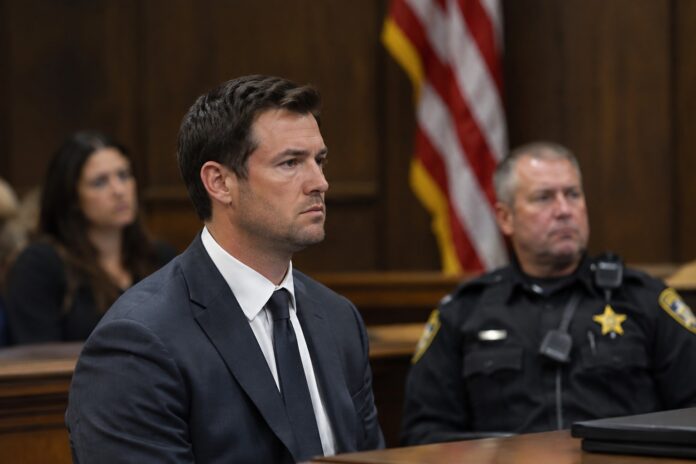
A 40-year-old man who previously appeared on the television talent competition American Idol has been sentenced to life in prison without the possibility of parole for murdering his wife. The sentencing took place following a conviction on nine charges related to the death of Ashley Flynn, a 37-year-old teacher, who was fatally shot in February at the family’s home in Tipp City, Ohio. The defendant’s account of events involved claims that an intruder had broken into the residence through the garage and shot his wife while he was asleep, but a jury deliberated briefly before rejecting this narrative entirely.
During the eight-day trial, prosecutors presented substantial evidence to contradict the defendant’s intruder theory. This evidence included police body camera footage, digital activity from the defendant’s iPhone and Apple Watch from the time of the murder, and incriminating text messages sent to a woman he had met while she was an intern at his church. Prosecutors also introduced AI-generated songs that the defendant allegedly created, and the woman in question testified and read approximately 100,000 text messages exchanged between them to the court. The defendant did not testify in his own defense during the trial but maintained his innocence throughout proceedings.
- Murder occurred in February at the home in Tipp City, Ohio
- Jury deliberation was notably brief before reaching guilty verdict
- Nine total charges including aggravated murder and evidence tampering
- Trial lasted eight days with testimony from dozens of witnesses
Why It Matters
This case carries significant implications for discussions about the reliability of domestic accounts and the role of digital forensics in modern criminal investigations. The defendant’s initial claim that an intruder was responsible for his wife’s death placed burden on investigators to uncover contradictory evidence through technological means. The presence of incriminating communications and device data proved crucial in dismantling the narrative presented by the defense. The case also highlights the emotional and psychological trauma experienced by the couple’s two children, who were sleeping in the home at the time of the incident and subsequently had to confront the reality of the allegations against their father.
The sentencing has drawn attention to cases involving prominent individuals, as the defendant’s previous appearance on American Idol brought media scrutiny to the proceedings. The victim’s family has experienced a profound loss, with statements indicating that the defendant’s actions have caused lasting damage to family relationships and faith. The letters submitted by the daughters during sentencing reveal the psychological toll on minor children who must process both the loss of a parent and allegations against the surviving parent.
- Case demonstrates importance of digital evidence and device forensics in homicide investigations
- Two minor children left without mother and with father incarcerated for life
- Victim’s extended family expressed deep pain and betrayal at trust placed in the defendant
- High-profile nature of case due to defendant’s prior television appearance
Political and Public Context
The case occurs within a broader context of public interest in domestic violence cases and their investigation. American law enforcement has increasingly emphasized the use of digital forensics, including smartphone data and wearable technology analytics, as critical tools in establishing timelines and contradicting suspect narratives. The prominence of the defendant’s prior television appearance served to amplify public attention to the trial, reflecting broader cultural interest in cases involving individuals with prior media exposure.
The role of victim impact statements, particularly those from the couple’s daughters, has become an increasingly significant element of sentencing proceedings in high-profile cases. The judge’s characterization of the defendant as an extreme risk to public safety reflects judicial assessment standards applied in cases involving deliberate violence and alleged deception of law enforcement. The involvement of a member of the clergy in the commission of the crime raises questions about institutional accountability and the vetting processes for individuals in positions of spiritual authority.
- Digital forensics and smartphone data analysis increasingly central to murder investigations
- Victim impact statements from family members receiving significant weight in sentencing
- Prior television appearance amplified media coverage and public interest
- Case involves individual with religious authority position in community
An Ohio judge has sentenced Caleb Flynn to life in prison without the possibility of parole for the aggravated murder of his wife, Ashley. https://t.co/rE2jRRv0E5 pic.twitter.com/A9ZoCKOAtf
— CNN (@CNN) October 5, 2026
What Happens Next
The defendant has indicated his intention to continue asserting his innocence and pursuing legal remedies, having proclaimed his innocence even as he received the life sentence. The path forward likely involves appellate proceedings where his legal team may challenge various aspects of the trial proceedings, evidence admissibility, or jury conduct. Appeals in capital or life-sentence cases often extend over years, with multiple levels of review possible through state and potentially federal courts.
The defendant’s daughters will now grow to adulthood without either parent in a traditional family setting, and any future contact or relationship development will occur within the constraints of the prison system. Questions remain about the long-term psychological support available to the victims’ extended family members and to the minor children. The case may also serve as precedent or reference point in discussions about investigative techniques, digital evidence admissibility, and the proper handling of clergy misconduct allegations within religious institutions.
- Defendant has indicated intention to pursue appellate challenges to conviction
- Appeals process likely to extend over multiple years through state and potentially federal courts
- Two minor children will require ongoing psychological support and care arrangements
- Case may inform institutional policies regarding clergy background investigations and supervision