Story Highlights
- Sen. John Kennedy criticized the White House’s handling of a dispute with Sen. Tom Cotton over daylight saving time legislation
- The Louisiana Republican expressed concern that internal party disagreements distract from substantive issues heading into midterm elections
- Kennedy characterized the president as capable of volatile reactions while maintaining their personal friendship
- The senator suggested Republicans should prioritize economic concerns and voter confidence rather than internal disputes
What Happened
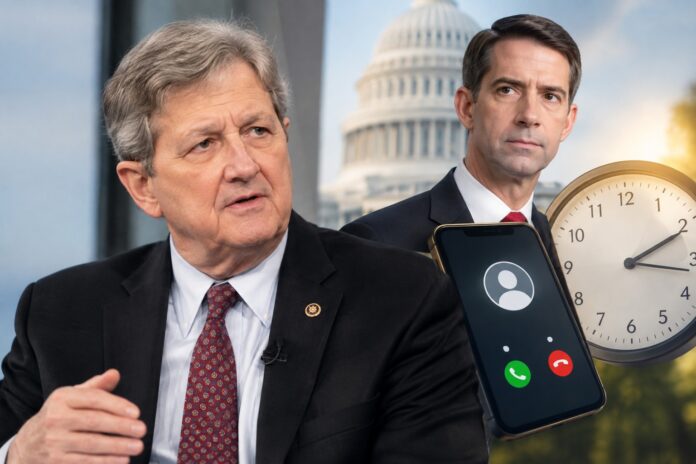
Sen. John Kennedy of Louisiana addressed a significant moment of intra-party tension during an appearance on NBC’s Meet the Press, discussing the White House’s recent public criticism of Sen. Tom Cotton regarding legislation on daylight saving time. The president had taken to social media to attack Cotton for opposing the Sunshine Protection Act, which would make daylight saving time permanent. In the course of this dispute, what appeared to be Cotton’s personal cellphone number was publicly shared, prompting Kennedy to offer his assessment of the situation.
Kennedy’s remarks revealed a complex position within Republican circles. While maintaining that he considers the president a friend, the senator expressed disapproval of how the disagreement was handled. He suggested that this particular dispute represents a distraction from more pressing national concerns, especially with midterm elections just one month away. Kennedy’s measured yet critical commentary reflects broader Republican deliberations about party strategy and leadership during a crucial electoral period.
- Sen. Tom Cotton opposed the Sunshine Protection Act, which would establish permanent daylight saving time
- The White House publicly criticized Cotton and apparently shared his cellphone number on social media
- Kennedy appeared on NBC’s Meet the Press to discuss the controversy on Sunday
- The exchange occurred approximately one month before the midterm elections
Why It Matters
The incident underscores a broader challenge facing the Republican Party as it heads into a critical electoral cycle. Internal disagreements over relatively minor legislative matters risk undermining party unity and distract from the substantive issues that voters care about most. Kennedy’s critique, delivered by a respected voice within conservative ranks, highlights a tension between the White House’s combative approach to disagreement and the practical need for party cohesion during midterm elections. His emphasis that daylight saving time does not represent a matter of existential significance reflects frustration with how political capital is being deployed.
Moreover, Kennedy’s willingness to publicly criticize the president while maintaining their personal relationship demonstrates how senior Republicans are navigating the balance between loyalty and constructive feedback. His particular focus on economic issues—noting that voters’ cost-of-living concerns cannot be dismissed—suggests that party leadership views economic messaging as more critical to electoral success than disputes over legislative minutiae. This perspective carries weight given the senator’s own political standing and long career in Louisiana politics.
- Party unity and messaging clarity are compromised by disputes over minor legislation just weeks before major elections
- Voter confidence in Republican economic stewardship depends on party focus on substantive issues rather than internal conflicts
- Senior senators must balance loyalty with candid assessment of leadership effectiveness
- The incident tests whether Republicans can maintain cohesion while addressing legitimate policy disagreements
Political and Public Context
This exchange reflects ongoing dynamics within the Republican Party regarding how disagreements should be managed and communicated. The White House’s approach of publicly confronting Cotton represents a continuation of a particular leadership style that prioritizes direct confrontation over behind-the-scenes negotiation. Kennedy’s response mirrors a broader conversation among Republicans about whether this approach ultimately serves or undermines party objectives, particularly during competitive electoral periods when party messaging must resonate with swing voters and economically anxious constituencies.
Kennedy himself has demonstrated a distinctive role within the Republican Senate caucus, known for colorful commentary and willingness to express independent views while generally supporting the administration’s agenda. His comments about cost of living and voter concerns reflect priorities that polling consistently shows matter most to American households heading into midterm elections. The senator’s suggestion that Republicans bear some responsibility for not addressing economic concerns more effectively indicates a broader party reckoning about messaging and policy focus.
Additionally, Kennedy’s indirect reference to possible presidential ambitions in 2028 adds another layer to his commentary. By positioning himself as a voice of practical conservatism concerned with substantive governance, he may be establishing distinct political ground within the party for potential future campaigns. This calculus does not diminish the legitimacy of his concerns about party strategy, but it does illustrate how senior Republicans weigh current electoral needs against longer-term positioning.
- The White House’s direct confrontation approach has characterized multiple policy disputes within Republican ranks
- Cost of living and economic anxiety remain dominant voter concerns heading into midterms
- Kennedy’s public stance reflects broader Republican debates about leadership style and party unity
- Senator indicated potential 2028 presidential interest, suggesting longer-term strategic positioning
Kennedy says 'telling' Americans 'not to believe their own lying checkbooks is not going to work' #TheHill https://t.co/oWMlEUGImj
— #TuckFrump (@realTuckFrumper) October 4, 2026
What Happens Next
The trajectory of intra-party disagreements will likely depend on how the White House approaches future policy disputes with Republican senators. If leadership continues employing confrontational public tactics over legislative disagreements, additional criticism from respected Republican voices may emerge, potentially creating complications for unified messaging heading into the midterms. Conversely, if the administration shifts toward more traditional negotiation methods, it could ease tensions and allow the party to focus on economic messaging and other substantive issues that polling suggests matter most to voters.
Kennedy’s own role will merit continued attention, both regarding his midterm reelection prospects and his potential longer-term ambitions. His willingness to offer public criticism while maintaining friendliness toward the president positions him as a potential bridge figure between different Republican factions. Whether his voice contributes to shifting White House approach to internal disagreements or whether his critique remains isolated commentary will shape Republican dynamics going forward.
The broader question facing Republicans involves whether disputes over relatively narrow legislative matters should consume significant political energy or whether party leadership should reserve such public confrontations for issues of genuine strategic importance. How the party resolves this question in practice may significantly influence both midterm performance and the character of Republican politics in subsequent election cycles.
- Future policy disagreements will test whether the White House adjusts its approach to internal Republican conflicts
- Kennedy’s midterm reelection and potential presidential ambitions will shape his role in party dynamics
- Republican messaging on economic issues will be critical to midterm electoral performance
- The broader question of how the party handles internal disagreements may influence Republican strategy throughout the electoral cycle