Story Highlights
- President Trump invoked the Defense Production Act to direct $150 million toward boosting domestic gas and diesel production
- The White House expects the investment to increase U.S. refining output by millions of gallons per day
- The announcement was made via presidential memorandum and detailed at a rally in Sioux City, Iowa
- The initiative addresses rising gas prices affecting agriculture-driven states and consumers nationwide
What Happened
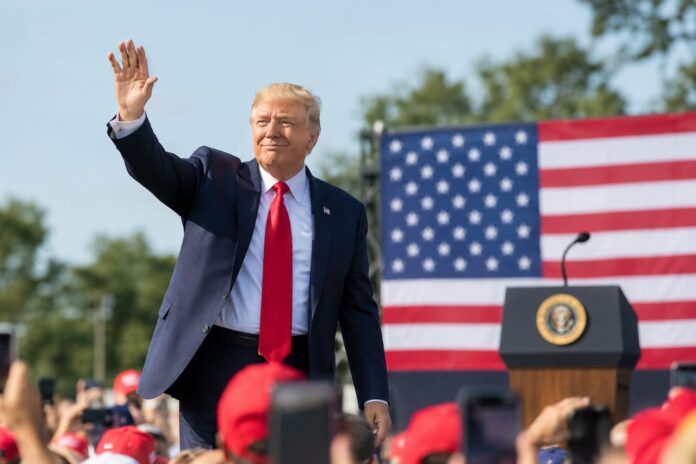
President Trump took decisive action to address elevated gas prices by invoking the Defense Production Act, a Cold War-era authority that grants the president broad powers to increase production of critical resources within the United States for national defense purposes. The administration announced a $150 million investment directed toward enhancing domestic gas and diesel production capacity. This announcement came through a presidential memorandum released on Thursday, with the president providing specific details about the spending amount during a campaign rally in Sioux City, Iowa.
The Energy Department indicated that the cash injection was expected to increase U.S. refining output by millions of gallons per day, representing a meaningful contribution to domestic energy capacity. This move reflects the White House’s commitment to alleviating consumer pain at the pump, particularly as gas prices have risen significantly. The timing of the announcement, made during a rally supporting Republican candidates in Iowa, underscored the administration’s focus on addressing economic challenges in key regions.
- $150 million federal investment directed to boost domestic gas and diesel production
- Defense Production Act invoked through presidential memorandum on Thursday
- Expected output increase measured in millions of gallons per day across U.S. refineries
- Campaign rally in Sioux City, Iowa featured announcement of specific funding details
Why It Matters
Rising gas prices have created tangible economic strain for American households and businesses, particularly in regions dependent on transportation and agriculture. The administration’s strategic use of the Defense Production Act demonstrates a willingness to deploy existing executive authorities to address immediate economic pressures. By directing federal resources toward expanding refining capacity, the White House is pursuing a supply-side approach to reduce prices at the pump without waiting for congressional action.
Agriculture-driven states such as Iowa, Nebraska, and Kansas face compounded economic challenges from elevated fuel and fertilizer costs. These regions are critical to both food production and political outcomes, making energy affordability a priority for policymakers. The administration’s multi-pronged approach—combining the Defense Production Act investment with separate relief programs—reflects recognition that sustained energy cost mitigation requires coordinated efforts across different policy levers.
- American consumers facing significant pain from elevated gas prices nationwide
- Agricultural sector experiencing acute pressure from high diesel and fertilizer costs
- Federal investment aimed at expanding production capacity to moderate prices long-term
- Executive action demonstrates commitment to addressing economic challenges without congressional delays
Political and Public Context
Energy prices have become a central concern for voters and policymakers alike, particularly following international developments that have disrupted global energy markets. Gas prices have risen amid geopolitical tensions, creating pressure on the administration to demonstrate concrete action on an issue that affects every American consumer. The focus on this issue in Iowa and other agricultural states reflects strategic political awareness regarding voter concerns in competitive regions.
The administration has announced multiple initiatives aimed at addressing fuel costs. Earlier in the month, the president announced arrangements involving the importation of diesel to support domestic and global markets. Additionally, a separate Harvest Fuel Relief Program targeting agricultural producers was announced with an $8 billion commitment, demonstrating a comprehensive strategy to address energy affordability across different sectors. These coordinated announcements signal a sustained focus on energy production and cost management as central policy priorities.
- International conflicts contributing to elevated global energy prices and domestic gas costs
- Multiple federal initiatives announced including Defense Production Act invocation and Harvest Fuel Relief Program
- Agriculture-dependent states experiencing tighter electoral margins due to economic pressures
- Executive authority deployed to increase domestic production without legislative dependency
Trump announces he’ll use Defense Production Act to increase domestic gas production https://t.co/cEBnDoUqcs
— The Hill (@thehill) October 23, 2026
What Happens Next
The $150 million investment directed through the Defense Production Act will now flow to domestic refining operations, with the Energy Department overseeing the implementation process. The administration will monitor whether the increased investment produces the anticipated output gains measured in millions of gallons per day. Success in expanding refining capacity could serve as a foundation for additional energy initiatives if circumstances warrant.
The effectiveness of this initiative will be measured by its impact on gas prices at the consumer level and its contribution to energy security. The administration may pursue additional measures if geopolitical conditions continue to affect global energy markets or if domestic production targets are not met. The focus on energy affordability in agricultural states suggests this will remain a policy priority through upcoming electoral cycles and beyond, particularly given the interconnection between fuel costs and broader economic conditions affecting voters.
- Energy Department implementation of $150 million investment across domestic refining sector
- Monitoring of refining output increases to measure effectiveness of the initiative
- Potential expansion of energy programs if production targets or price goals are not achieved
- Continued focus on energy affordability as central policy and political priority