Story Highlights
- President Trump unveiled an $8 billion harvest fuel relief program to offset surging diesel prices affecting Iowa farmers
- The administration announced plans to release $150 million through the Defense Production Act to increase American refining capacity
- New tax-free diesel waiver permits farmers and truckers to purchase red-dyed fuel normally reserved for off-road use
- The presidential visit targeted Iowa’s 4th Congressional District amid competitive Senate, House, and gubernatorial races across the state
What Happened
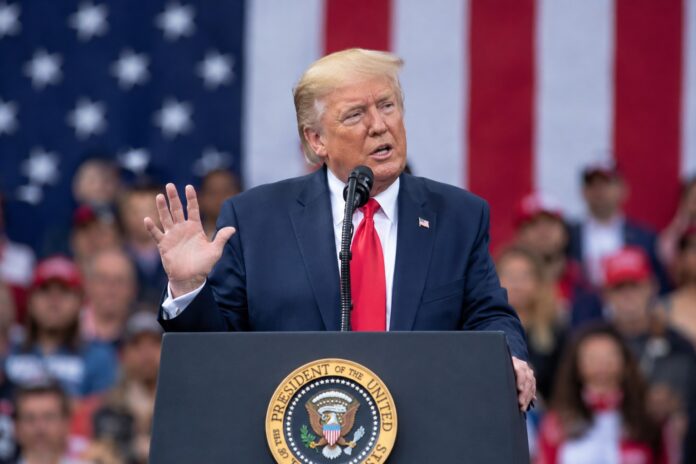
President Trump traveled to Sioux City, Iowa on Thursday to address agricultural challenges facing the state’s farming community during the ongoing harvest season. The visit came as Iowa experienced some of the heaviest rainfall in September that the state has recorded, compounding existing financial pressures on producers. Speaking from a crowded airplane hangar surrounded by sprawling fields on Iowa’s westernmost side, the president emphasized his administration’s commitment to supporting the agricultural sector through multiple relief initiatives and policy adjustments.
The timing of the Iowa visit proved strategically important as key electoral races have grown increasingly competitive across the state. The president’s remarks focused heavily on economic relief measures designed to address the financial squeeze farmers have endured in recent months. Diesel and fertilizer prices have surged significantly since the Iran conflict began, creating additional burdens for Iowa farmers who were already struggling to export crops due to previous trade-related challenges. The administration highlighted its response to these pressures through a coordinated series of policy announcements.
- $8 billion harvest fuel relief program targeting high diesel prices
- $150 million Defense Production Act allocation to increase American refining capacity
- Tax-free diesel waiver permitting farmers and truckers to purchase red-dyed fuel
- Long-term Mesabi Metallics steel plant project planned for eastern Iowa by 2030
Why It Matters
The comprehensive approach to agricultural support carries significant implications for Iowa’s farming community facing unprecedented economic headwinds. Diesel prices have remained stubbornly elevated above $6 per gallon despite slight easing from record levels, representing a substantial ongoing burden for agricultural operations. The combination of harvest delays from exceptional rainfall, elevated input costs, and trade-related export challenges has created a genuine crisis for many producers. The administration’s multifaceted response demonstrates recognition of agriculture’s centrality to Iowa’s economy and the need for direct intervention to ensure sector stability.
The political dimension of these initiatives extends beyond immediate relief. Iowa’s 4th Congressional District, which voted for the president by more than 30 points in 2024, represents strongly supportive territory, yet competitive races elsewhere in the state require continued momentum. The investment in agricultural relief serves both economic and political purposes, reinforcing commitment to rural communities during a challenging period. Long-term infrastructure investments like the proposed steel plant underscore plans to strengthen Iowa’s economic foundation beyond immediate crisis response.
- Direct fiscal relief addressing immediate input cost pressures for farming operations
- Expansion of American energy production capacity reducing long-term diesel cost vulnerability
- Support for rural economic stability amid competitive statewide electoral environment
- Infrastructure investment signaling sustained commitment to agricultural state development
Political and Public Context
Iowa’s agricultural sector has faced a particularly difficult confluence of challenges over the past several years. Trade tensions implemented in the previous administration created ongoing export difficulties that have persisted, complicating market access for commodity producers. The recent Iran conflict introduced the additional complication of energy price volatility, pushing diesel and fertilizer costs to levels that threatened farm profitability. These cumulative pressures created an environment where farmers, despite strong political support for the president’s agenda, faced genuine economic distress requiring tangible administration response.
The political landscape in Iowa has shifted in ways that require sustained attention even in traditionally strong Republican territory. While the 4th Congressional District remains deeply supportive, Senate, House, and gubernatorial races across the state have developed unexpected competitiveness. This dynamic explains the strategic importance of the presidential visit and the comprehensive package of agricultural initiatives announced. The administration’s emphasis on addressing farmer concerns reflects understanding that rural political support cannot be taken for granted without demonstrable commitment to addressing real economic challenges.
- Multi-year trade-related agricultural export challenges requiring policy adjustment
- Energy market volatility creating input cost pressures across farming operations
- Competitive electoral environment in traditionally Republican Iowa despite strong 2024 performance
- Need for tangible administration response demonstrating commitment to rural economic priorities
Donald Trump doubled down on his support for the Vivek Ramaswamy's controversial ad during a rally in Iowa on Thursday. Read more here 👉 https://t.co/oafdcSV5yn pic.twitter.com/Kr380vv7pZ
— njdotcom (@njdotcom) October 23, 2026
What Happens Next
The implementation of announced programs will proceed across multiple timeframes, with immediate relief measures taking effect quickly while longer-term infrastructure projects develop over years. The $8 billion harvest fuel relief program and the Defense Production Act allocation represent immediate interventions designed to provide rapid assistance as the harvest season continues. The tax-free diesel waiver offers ongoing structural relief that will persist beyond the current crisis period, creating sustainable advantage for agricultural operations. Monitoring the effectiveness of these measures will prove important for assessing whether they adequately address farmer financial pressures through the election cycle and beyond.
The Mesabi Metallics steel plant project represents a multi-year commitment to Iowa’s economic development, with construction planned through 2030. This longer-term investment signals sustained administration focus on rural economic diversification and industrial capacity expansion. Meanwhile, the administration’s handling of the Iran conflict and resulting energy price implications will continue to influence farmer sentiment and broader rural political dynamics. The degree to which diesel prices moderate over coming months will significantly impact the perceived effectiveness of the administration’s agricultural support initiatives and voter perception of economic management heading into subsequent electoral cycles.
- Implementation of immediate relief programs throughout remaining harvest season
- Assessment of diesel price moderation and program effectiveness through election period
- Multi-year Mesabi Metallics construction and economic development in eastern Iowa
- Continued administration focus on Iran conflict resolution and energy market stabilization