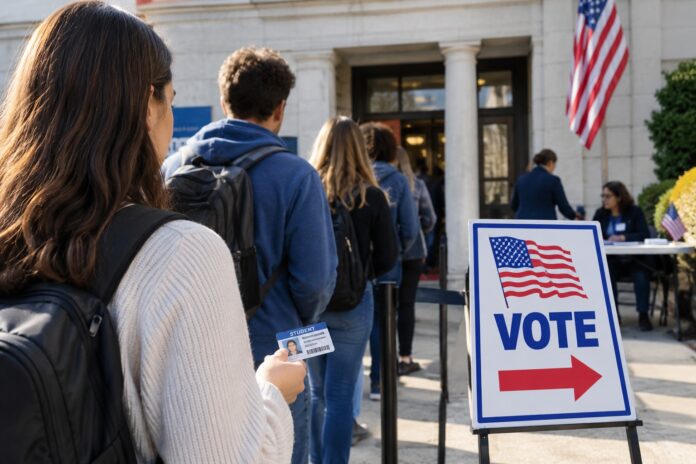
Story Highlights
- The Supreme Court granted an emergency appeal that blocked the use of student identification as a backup voting identification method in New Hampshire
- New Hampshire enacted legislation this year prohibiting student IDs as an accepted form of identification for ballot access, with the state secretary of state issuing guidance to enforce the restriction
- The Court invoked the Purcell principle, established in prior precedent, noting that lower federal courts should not alter election rules immediately before voting occurs
- Justice Ketanji Brown Jackson dissented, arguing that the Purcell principle did not necessarily apply to the circumstances of this case
What Happened
The Supreme Court issued a one-paragraph decision Thursday clearing the way for New Hampshire to fully enforce its ban on student identification documents for voting purposes during the midterm elections. The justices granted a Republican-backed emergency appeal that blocked the use of student IDs as a backup method of identification for voters seeking to cast ballots. The decision came after a lower court judge had previously left New Hampshire’s underlying student ID ban in place but blocked the state secretary of state’s guidance that would have barred student IDs as a secondary means to verify voter identity.
New Hampshire’s legislature passed legislation earlier in the year explicitly removing student IDs from the state’s list of expressly accepted forms of identification for obtaining a ballot. Following this legislative action, the state’s secretary of state issued guidance that would prevent student identification documents from being used even as a backup way to prove a voter’s identity during the election. When a federal judge blocked this guidance in early October, citing concerns about election administration just before voting, the state appealed the decision to the Supreme Court. The Republican National Committee intervened in the case to support New Hampshire’s position.
- New Hampshire enacted legislation eliminating student IDs as accepted voting identification
- A lower court judge blocked the guidance implementing the ban in early October
- The Supreme Court granted the emergency Republican-backed appeal on Thursday
- The decision arrived less than two weeks before New Hampshire’s Senate election
Why It Matters
The Supreme Court’s decision preserves New Hampshire’s authority to set its own voter identification requirements without federal court intervention immediately before an election. By invoking the Purcell principle, the Court reinforced a longstanding legal framework that establishes lower federal courts should not typically modify election rules on the eve of voting. This approach gives states significant discretion in implementing their own election administration policies without the disruption of last-minute legal challenges. The ruling allows New Hampshire to apply its student ID ban uniformly across all polling locations during a critical midterm election that includes a closely contested U.S. Senate race.
The decision also carries implications for how state election laws are challenged in federal courts. By blocking the lower court’s injunction, the Supreme Court signaled that election integrity protections enacted by state legislatures should remain in effect during active election cycles unless extraordinary circumstances warrant intervention. The state’s highest legal authority emphasized that protecting the integrity of elections and ensuring that election laws are applied as written represents a fundamental governmental responsibility.
- New Hampshire retains control over voter identification requirements without federal court interruption before elections
- The Purcell principle is reinforced as controlling law for election-adjacent legal disputes
- States gain clearer authority to implement election administration policies without last-minute judicial interference
- Election officials and voters benefit from certainty in established rules rather than changing standards
Political and Public Context
The case reflects ongoing national debates about voter identification requirements and election administration. Multiple states have enacted or attempted to modify their voter identification policies in recent election cycles, with some strengthening requirements and others maintaining more flexible approaches. These legislative efforts have frequently become subjects of litigation, with federal courts sometimes intervening to block or modify state policies. The Supreme Court’s decision in New Hampshire demonstrates how the judicial branch applies established legal principles to balance state authority with federal court oversight.
Justice Ketanji Brown Jackson’s solo dissent indicated that at least one member of the Court believed the Purcell principle did not necessarily apply to this specific circumstance. Jackson argued that because the lower court’s original order left the state election rule itself untouched rather than affirmatively changing election rules, the Purcell principle’s concerns about courts altering election procedures at the last minute might not apply. The unsigned majority opinion countered this reasoning, stating that the lower court had not demonstrated sufficient justification for deviating from the Purcell principle’s protection of established election rules during active election periods.
- Voter identification requirements remain contested across multiple states and election cycles
- Federal courts have frequently intervened in state election administration matters through litigation
- The Purcell principle, established in 2020 precedent, governs Supreme Court intervention in election-adjacent disputes
- One justice dissented from the majority approach, suggesting alternative legal frameworks could apply
US supreme court sides with Republicans on rejecting student IDs in New Hampshire midterms #TheGuardian https://t.co/y7mrer4eDa
— #TuckFrump (@realTuckFrumper) October 23, 2026
What Happens Next
New Hampshire will proceed with enforcement of its student ID ban during the upcoming midterm elections. Election officials throughout the state have clear direction that student identification documents cannot be accepted as either primary or backup forms of voter identification. Voters will need to present alternative acceptable identification to cast ballots, with the state having had time to communicate this requirement to polling places and election workers.
The Supreme Court’s decision may influence how other states approach election-related litigation. If additional states face legal challenges to recently enacted election policies, this precedent establishes that courts are reluctant to intervene immediately before elections even when lower courts have blocked state guidance. The case also concludes New Hampshire’s judicial battle over this specific identification requirement, at least for the midterm election period. Future legislatures could revisit the student ID policy if political conditions change, but courts will apply the same Purcell principle to any attempts to modify the rules during active election periods.
- New Hampshire election officials will enforce the student ID ban during midterm voting
- Voters must present alternative approved identification at polling locations
- Other states may face similar election administration litigation with reduced prospects for last-minute federal court intervention
- The Supreme Court’s framework strengthens state legislative authority over election procedures during active election cycles