Story Highlights
- The former president is actively campaigning across red states to boost Republican turnout ahead of the midterm elections, with multiple rallies scheduled throughout the month.
- His rallies have become legendary within Republican circles for generating enthusiasm and engagement among the party base, according to his own assessment and GOP strategists.
- The White House strategy involves leveraging presidential-level turnout machinery for midterm races, with stops planned in Ohio, Alaska, Montana, and Georgia.
- Republican leadership views the rally tour as essential to countering Democratic momentum and protecting the party’s congressional standing.
What Happened
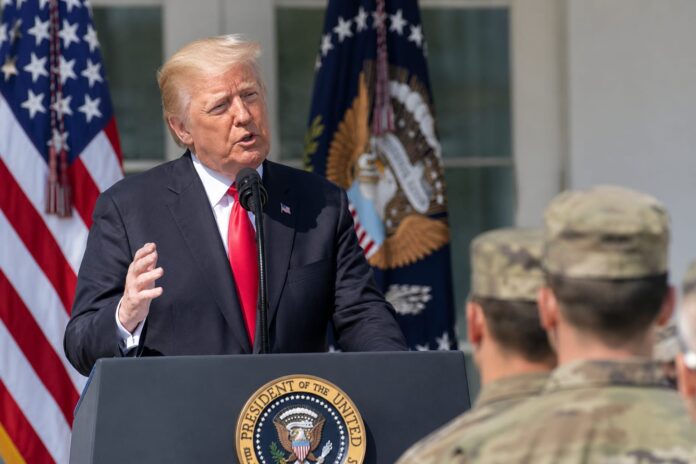
The former president has embarked on an aggressive campaign schedule, expressing his enthusiasm for returning to the rally circuit to support Republican candidates across the nation. His tour includes appearances in traditionally Republican strongholds, with scheduled stops supporting candidates in key races. On Monday, he was set to campaign for Senator Jon Husted and gubernatorial candidate Vivek Ramaswamy in Youngstown, Ohio, followed by a Tuesday rally in Wasilla, Alaska, with Senator Dan Sullivan and Representative Nick Begich. The itinerary continues with additional events planned in Montana and Georgia later in the week.
The former president has characterized his rallies as having become legendary within Republican circles, noting they generate substantial enthusiasm among party supporters. He emphasized his personal enjoyment of the events, citing the energy, the music, and the passionate crowds as factors contributing to his commitment to the campaign trail. His messaging has focused on energizing voters and underscoring the importance of Republican success in maintaining control of Congress.
- Scheduled rallies in Ohio, Alaska, Montana, and Georgia supporting specific GOP candidates
- Eight rallies held in October alone, demonstrating an accelerated campaign pace
- Truth Social communications emphasizing the motivational impact of these events on the Republican base
- Campaign strategy explicitly designed to replicate presidential-level voter turnout for midterm races
Why It Matters
The rally tour represents a critical mobilization effort at a pivotal moment for Republican electoral prospects. Political analysts and party strategists recognize that voter enthusiasm and turnout will be decisive factors in determining whether Republicans can maintain their congressional majorities or face significant losses. The former president’s rallies have historically served as powerful tools for energizing the base, drawing large crowds, and generating media attention that amplifies campaign messaging. Republican strategists view this tour as an opportunity to transfer the energy and momentum from presidential campaigns into midterm electoral success.
The significance extends beyond simple voter motivation. These events provide a platform for articulating Republican priorities, reinforcing party unity, and demonstrating the continued relevance of the movement’s leadership. For candidates in competitive races, association with large, enthusiastic rallies can provide crucial momentum in the final weeks before elections. The former president has also warned GOP voters that Democratic control of Congress would result in impeachment proceedings, framing the midterms as a choice with substantial constitutional and governance implications.
- Rally-generated enthusiasm directly impacts voter turnout, a critical variable in midterm election outcomes
- Media coverage from large events amplifies Republican campaign messaging to broader audiences
- Candidate visibility and association with high-energy events strengthens competitive positioning in contested races
- Base mobilization reduces the enthusiasm gap that typically disadvantages the party in power during midterms
Political and Public Context
The rally tour occurs within a challenging political environment for Republicans. Election forecasters have estimated that Democrats maintain substantial advantages in reclaiming the House of Representatives, with probability assessments suggesting Democrats hold approximately a 76 percent chance of winning back the chamber. The Senate presents a narrower battleground, though Democrats maintain what analysts consider a meaningful edge in that contest as well. These forecasts have prompted Republican leadership to emphasize the importance of maximum mobilization and base turnout.
House Speaker Mike Johnson has reinforced these urgency-driven messages, warning that if Democrats gain control of the lower chamber, impeachment proceedings against the former president would be highly probable. This messaging strategy, echoed by Republican leadership, frames the midterms as consequential not merely for legislative priorities but for institutional governance and constitutional matters. The rally campaign serves as the practical implementation of this strategic imperative, designed to energize voters around these high-stakes themes. The former president’s rallies have been a defining feature of his political career, with historical records indicating hundreds of events held since his initial presidential campaign launch in 2015.
- Democratic probability advantage in House races estimated at approximately 76 percent according to election analysts
- Democratic Senate reclamation probability around 56 percent, though more competitive than House races
- House Speaker warning that impeachment would be certain if Democrats gain congressional control
- Rally tour strategy explicitly designed to counter Democratic momentum in traditionally Republican districts
Trump in “Foul Mood” as Team Struggles to Organize Midterm Rally Tour https://t.co/PaTkUQX86I via @newrepublic
— chokekoch (@sdward1) October 13, 2026
What Happens Next
The campaign schedule indicates that the rally tour will intensify throughout the remaining weeks before the midterm elections. Additional stops in key states are anticipated, with the former president maintaining an aggressive travel schedule designed to maximize voter contact and media exposure. The effectiveness of these efforts in reversing Democratic electoral advantages will become apparent as early voting begins and Election Day approaches. Campaign officials within Republican circles view this tour as essential to achieving better-than-expected outcomes in competitive races.
The broader strategic question concerns whether the rally approach can successfully transfer the enthusiasm and turnout machinery associated with presidential campaigns into midterm electoral success. Historical patterns suggest that midterm elections typically present challenges for the party occupying the White House, making mobilization efforts particularly crucial. The outcomes of this rally tour will likely influence Republican calculations regarding future campaign strategies and the role of large-scale grassroots events in party messaging and voter engagement. Additionally, the tour’s results may inform decisions about campaign approaches in future election cycles.
- Continued rally schedule through election season in competitive and traditionally Republican states
- Early voting periods and final weeks before Election Day will test the effectiveness of rally-based mobilization
- Electoral outcomes will provide measurable data regarding rally impact on turnout and vote margins
- Results will shape Republican strategic planning for future campaign cycles and voter engagement approaches