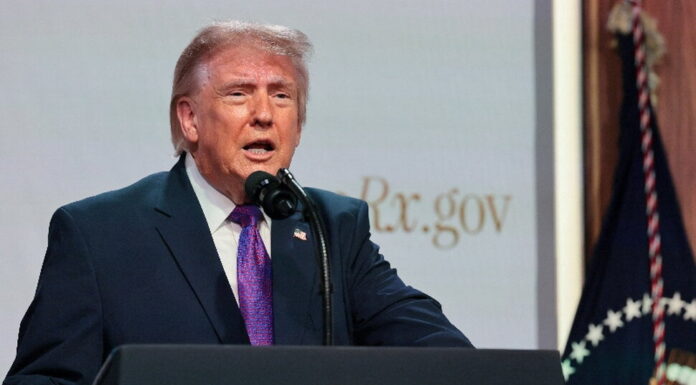
President Donald Trump announced a major expansion of the administration’s prescription drug discount platform, TrumpRx.gov, adding more than 600 generic medications through partnerships with Amazon Pharmacy, Mark Cuban’s Cost Plus Drugs, and GoodRx. The announcement, made Monday at the White House with Cuban standing alongside the president, represents the administration’s most significant consumer-facing move yet in its ongoing campaign to lower drug prices ahead of the 2026 midterms. Critics, however, say the platform primarily benefits cash-paying patients and leaves insured Americans — the majority of prescription drug users — largely unaffected.
Story Highlights
- TrumpRx.gov now features more than 600 generic medications through partnerships with Amazon Pharmacy, Cost Plus Drugs, and GoodRx
- The platform allows patients to compare cash prices at local pharmacies and through delivery options without going through insurance middlemen
- The expansion is separate from the administration’s ongoing Most-Favored-Nation agreements with branded pharmaceutical manufacturers
What Happened
Beginning Monday, TrumpRx.gov added more than 600 generic medications, allowing Americans to clearly and transparently see the most competitive cash prices for their medications without insurance middlemen, and encouraging them to compare those prices against co-pays offered by their insurance company.
The expansion was announced via a partnership with entrepreneur Mark Cuban‘s Cost Plus Drug Company, as well as Amazon Pharmacy and GoodRx, which both also provide drug savings or low-cost prescription medicines. Trump said at the White House event that consumers will now have one source to ensure they are getting the lowest possible cost on their prescriptions.
Asked about Cuban’s past endorsement of Kamala Harris in the 2024 election, Trump praised Cuban, saying he was very gracious and that Cuban had to believe the platform really works in order to be there supporting it. The bipartisan optics of the event were clearly intentional, with the administration seeking to broaden the political appeal of its healthcare agenda.
The generic drugs and prices listed will be kept separate from discounts on high-cost branded medications that President Trump has negotiated through his Most-Favored-Nation drug price agreements. TrumpRx.gov will not offer controlled substances, drugs with FDA-mandated risk evaluation strategies, or medications not commonly offered through direct-to-consumer channels. The administration has framed the platform as a central hub for price comparison, not a replacement for existing insurance coverage.
Why It Matters
Prescription drug affordability consistently ranks among the top concerns for American voters, and the TrumpRx expansion is a direct attempt by the administration to demonstrate tangible action ahead of the midterm elections. By partnering with recognizable, trusted names like Amazon and GoodRx, and by bringing in a Democrat-aligned entrepreneur like Mark Cuban, the White House is trying to signal that its healthcare push cuts across party lines.
On January 15, 2026, Trump called on Congress to enact The Great Healthcare Plan, which would lower drug prices by codifying the savings from his Most-Favored-Nation pricing initiative, lower insurance premiums, hold insurance companies accountable, and maximize price transparency. Monday’s expansion of TrumpRx is a continuation of that strategy, building a public-facing platform that can be pointed to as evidence of progress before Congress acts.
However, TrumpRx is intended for people making cash purchases, outside of health insurance, and many people cannot afford to fill prescriptions without using insurance. This is a significant limitation. Generic drugs often already carry relatively low costs at major pharmacy chains, and the patients most burdened by drug costs are frequently those dealing with complex chronic conditions requiring expensive branded medications — a population that the generic expansion does not directly serve.
Public Citizen released an analysis on May 18, 2026, arguing that under the Most-Favored-Nation banner, the Trump administration is cutting secretive deals with major pharmaceutical companies while declaring victory with overstated savings claims. The broader debate over whether voluntary, platform-based drug pricing reform can substitute for binding legislative action is unlikely to be resolved before November.
Economic and Global Context
The Trump administration has reached voluntary MFN pricing agreements with 17 of the largest pharmaceutical manufacturers in the world, and the White House projects the framework will generate $64.3 billion in federal and state savings over the next ten years. The scale of those projected savings has been disputed by independent healthcare analysts, who note that voluntary agreements can be structured in ways that overstate their net impact.
As part of the voluntary MFN framework, the Trump administration has also secured price reductions for GLP-1 drugs, enabling what it describes as a fiscally sustainable expansion of Medicare coverage for anti-obesity treatments. GLP-1 medications like Ozempic and Wegovy have become among the most discussed drugs in the country due to their effectiveness as weight-loss treatments, and their inclusion in the MFN framework carries significant political and budgetary weight.
The pharmaceutical industry has largely complied with voluntary MFN agreements rather than face the threatened consequences outlined in the original executive order, which included the possibility of retaliatory tariffs, modified drug approvals, and expanded importation programs. The industry’s cooperation reflects both political calculation and a recognition that the administration has several credible enforcement levers at its disposal if voluntary compliance breaks down before the September deadline.
Implications
The TrumpRx expansion places real downward pressure on retail generic drug prices through competition, even if its immediate impact is limited. By aggregating Amazon Pharmacy, Cost Plus Drugs, and GoodRx pricing into a single platform, the administration is creating a transparency tool that could reshape how uninsured and underinsured Americans shop for medications. Over time, that transparency could embolden more patients to bypass traditional pharmacy chains for cheaper alternatives.
For the pharmaceutical sector, the expanding scope of MFN pricing — from branded drugs to generics, and from voluntary agreements to potential legislation — represents a structural shift in the political environment. Companies that previously operated with little pressure to align U.S. prices with international benchmarks now face a White House willing to use public platforms, tariffs, and importation rules as competitive tools.
For voters and policymakers heading into the 2026 midterms, the healthcare pricing push is one of the few areas where the administration has delivered visible, consumer-facing results. That political value is not lost on either party, and Democrats will need to decide whether to engage on the substance of drug pricing reform or simply critique the administration’s methods and limit the reach of its proposals.