

Story Highlights
- President Trump continues aggressive campaign schedule across multiple states to bolster Republican midterm prospects
- White House operations maintain strong organizational structure with key staff members present at major rallies
- Communications team members play vital roles in amplifying campaign messaging through social media and grassroots outreach
- Administration demonstrates commitment to personal engagement with staff and supporters at campaign events
What Happened
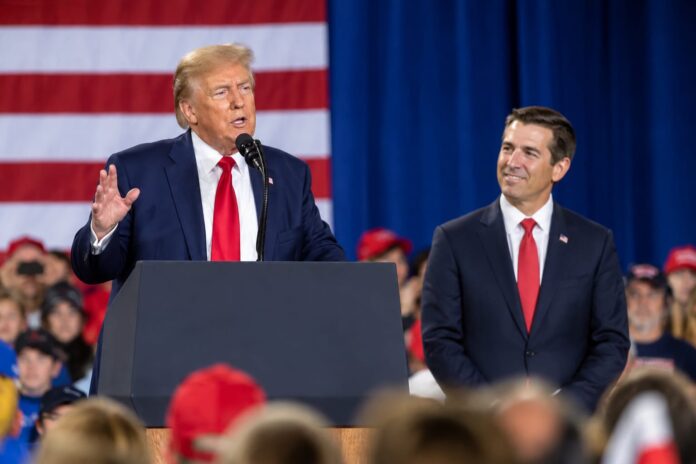
The president maintained his vigorous campaign schedule with a rally appearance in Oklahoma on Thursday evening, where he spoke in support of Republican gubernatorial candidate Mike Mazzei. The event showcased the continued energy and organization of his administration’s political outreach efforts, with key members of the White House team present to demonstrate solidarity with the Republican ticket. The gathering represented part of a broader strategy to ensure Republican control remains strong heading into critical electoral periods.
During the Oklahoma rally, the president took time to recognize members of his communications staff who have been instrumental in spreading the campaign message across various platforms. His recognition of these team members highlighted the collaborative nature of his administration’s approach to engaging voters and maintaining momentum with his base. The event demonstrated how personal connections and acknowledgment of staff contributions play a role in maintaining morale and cohesion within the campaign apparatus.
- Rally held in Oklahoma on Thursday evening for Republican gubernatorial candidate Mike Mazzei
- White House Chief of Staff Susie Wiles present as part of the campaign entourage
- Communications team members acknowledged for social media engagement and grassroots outreach efforts
- Campaign schedule includes visits to at least 17 states for midterm electoral strategy
Why It Matters
The president’s continued commitment to an aggressive campaign schedule underscores his dedication to supporting Republican candidates nationwide. This hands-on approach demonstrates the strength of his connection with the party’s base and his willingness to invest personal time and resources into ensuring electoral success. The presence of key White House officials at these events signals that the administration views midterm Republican performance as a central priority, reflecting a unified front in support of party objectives.
The recognition and engagement with communications staff members illustrates how the administration values the contributions of younger team members in amplifying its message. This approach builds loyalty within the organization and demonstrates a leadership style that acknowledges individual effort and dedication. Such personal engagement at public events reinforces the sense of shared mission that has characterized his political movement and helps maintain enthusiasm among both staff and supporters.
The social media strategies employed by communications team members have proven effective in reaching voters where they spend their time online. By recognizing these efforts publicly, the president validates the modern approaches to political outreach that have become essential in contemporary campaigns. This acknowledgment of digital-first strategies reflects an administration willing to adapt and innovate in how it communicates with the American people.
- Campaign momentum maintained through visible leadership presence across multiple states and regions
- White House staff morale strengthened through public recognition of individual contributions to campaign success
- Republican midterm prospects bolstered by coordinated campaign events with administration support
- Modern communication strategies validated and elevated through executive-level endorsement
Political and Public Context
The broader campaign strategy reflects the importance Republicans place on maintaining congressional control during the midterm period. The president’s involvement in state-level political events demonstrates how national leadership and local campaigns intersect in American politics. This hands-on approach stands in contrast to previous administrations that maintained more distance from mid-term campaign activities, showing a different model of executive engagement in electoral politics.
The involvement of communications professionals in campaign messaging represents the evolution of modern political operations. These team members serve as bridges between traditional media and digital platforms, helping campaigns reach diverse voter populations through multiple channels. The recognition of their work at high-profile events underscores the importance of these roles in contemporary political success and reflects how administrations now view communications strategy as central to governance and electoral victory.
The presence of White House Chief of Staff Susie Wiles at campaign events indicates strong organizational alignment between executive operations and political objectives. This integration of White House personnel into campaign activities demonstrates how modern administrations manage the relationship between governing and campaigning. The visible coordination between different elements of the administration’s team projects strength and unified purpose to both supporters and the broader public.
- Midterm electoral strategy emphasizes executive-level campaign involvement across 17 states
- Integration of White House operations with political campaign activities represents contemporary governance model
- Communications strategy elevated as central component of campaign and administrative success
- Recognition of younger staff members reflects broader trend of valuing diverse perspectives in political operations
WASHINGTON — U.S. President Donald Trump said Saturday he "gets along great" with North Korean leader Kim Jong-un as he stressed the importance of maintaining good relations with leaders of nuclear-armed nations.https://t.co/IbjdmEzD8M
— The Korea Times (@koreatimescokr) October 4, 2026
What Happens Next
The campaign schedule indicates that the administration will continue visiting states identified as critical for maintaining Republican congressional control. These events will likely continue to feature mixed messaging that acknowledges both the seriousness of electoral competition and the confidence the president maintains in ultimate success. Future rallies will probably continue the pattern of recognizing staff contributions while energizing grassroots supporters.
Communications team members can be expected to expand their social media efforts following the public recognition of their work at major campaign events. This validation of their approach likely will encourage more aggressive and creative content strategies designed to reach younger voters and digital-first audiences. The administration’s explicit acknowledgment of the importance of social media engagement signals that these platforms will continue to receive significant organizational focus.
The visible presence of White House officials at campaign events suggests that the line between executive operations and political activity will remain deliberately blurred through the electoral season. This integration will likely intensify as the midterm period approaches, with more senior officials participating in regional and state-level campaign activities. The pattern established in Oklahoma will probably be repeated across multiple states as the campaign accelerates.
- Additional campaign rallies scheduled across identified priority states in coming weeks
- Social media engagement strategies expected to expand following executive recognition and validation
- White House staff participation in campaign events will likely increase as midterm elections approach
- Campaign messaging will continue emphasizing Republican accomplishments and forward-looking vision


