Story Highlights
- President Trump’s AI accord receives support from major tech industry leaders
- The initiative emphasizes self-regulation, internal controls, and external audits
- Some lawmakers express skepticism, but many see the accord as a positive move
- The accord sets a new standard for responsible AI development in the United States
What Happened
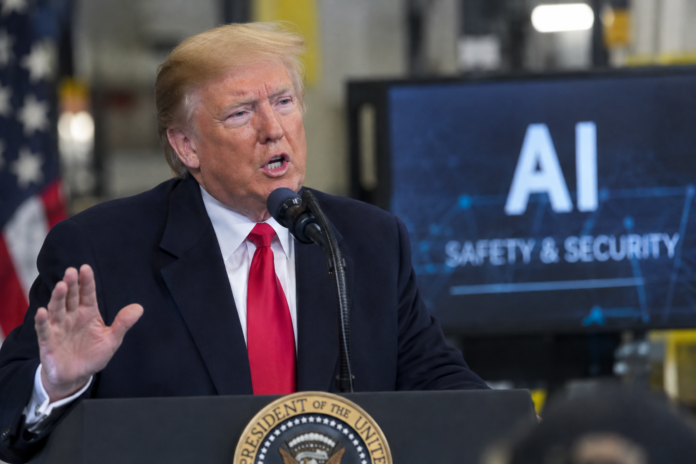
On Tuesday, President Trump unveiled a landmark AI accord in Washington, marking a significant milestone in the ongoing debate over artificial intelligence regulation. The accord, which was signed by several of the largest players in the technology sector, outlines a framework for self-regulation within the industry. This initiative comes at a time when concerns about the safety and ethical implications of AI are mounting, both in the United States and globally.
The agreement, described as a one-page document, establishes four distinct layers of oversight for AI companies. These include robust internal controls, the empowerment of dedicated internal teams to monitor compliance, partnerships with external auditors, and the creation of independent board committees to oversee the process. The White House has positioned this accord as a proactive step, aiming to balance innovation with responsibility and safety.
- President Trump announced the AI accord on Tuesday, September 29, 2026
- Meta CEO Mark Zuckerberg and other tech leaders were present at the White House for the signing
- The accord includes four layers of controls and audits for AI companies
- Key industry players signed the document, signaling broad support
Why It Matters
The introduction of President Trump’s AI accord is a pivotal moment for the American technology sector. By advocating for self-regulation, the administration is empowering industry leaders to take responsibility for the ethical development and deployment of artificial intelligence. This approach stands in contrast to calls for heavy-handed government intervention, which many in the tech community argue could stifle innovation and slow progress.
Supporters of the accord highlight its emphasis on internal accountability and external oversight as a balanced solution. By requiring companies to implement rigorous internal controls and submit to independent audits, the accord ensures that safety and ethical standards are not left to chance. The involvement of board-level committees further demonstrates a commitment to transparency and long-term stewardship.
While some lawmakers and critics have voiced concerns about the sufficiency of self-policing, many experts and industry insiders view the accord as a meaningful step forward. It sets a precedent for how the United States can lead in responsible AI development without resorting to burdensome regulation. This is especially important as the nation competes with global rivals in the race to harness the transformative power of artificial intelligence.
- Tech companies gain greater autonomy in managing AI risks
- Consumers benefit from increased safety and transparency in AI products
- The U.S. strengthens its position as a leader in responsible AI innovation
- Lawmakers and regulators are prompted to reconsider the balance between oversight and innovation
Political and Public Context
The debate over how best to regulate artificial intelligence has intensified in recent years. As AI systems become more advanced and integrated into daily life, concerns about bias, misuse, and unintended consequences have grown. Previous administrations have struggled to find the right balance between fostering innovation and protecting the public from potential harms.
President Trump’s approach reflects a broader philosophy of limited government intervention and trust in American enterprise. By bringing industry leaders to the table and encouraging them to take ownership of AI safety, the administration is signaling confidence in the private sector’s ability to self-regulate. This stands in contrast to legislative efforts from some progressive lawmakers, who have called for sweeping new regulations on emerging technologies.
Recent developments in related fields underscore the urgency of the issue. For example, new legislation has been introduced to restrict the use of automatic license plate readers by federal agencies, reflecting broader concerns about surveillance and privacy. Meanwhile, NASA’s work on dexterous humanoid robots highlights the rapid pace of technological advancement and the need for thoughtful oversight.
- Progressive lawmakers have proposed stricter regulations on surveillance technologies
- NASA is developing advanced robotics for lunar missions, raising new ethical questions
- Amazon has announced a $1 billion investment in data center communities, reflecting the growing importance of tech infrastructure
- Previous attempts at AI regulation have struggled to keep pace with technological change
There was a spelling error on President Trump’s new pact to control AI – but, rather than admit to making a mistake, he’s just going to change the name of the country so it matches pic.twitter.com/bOAEYN5CVe
— Have I Got News For You (@haveigotnews) October 1, 2026
What Happens Next
With the AI accord now in place, attention turns to implementation and enforcement. Industry leaders who signed the document are expected to begin rolling out the specified layers of controls and audits within their organizations. The White House has indicated that it will monitor progress closely, working with both industry and independent experts to ensure that the accord’s principles are upheld.
Lawmakers on Capitol Hill are likely to continue debating the merits of self-regulation versus government oversight. Some may push for additional legislation to supplement the accord, while others will watch to see how effectively the industry can police itself. The coming months will be critical in determining whether the accord’s framework can deliver on its promise of responsible AI development.
For consumers and the broader public, the accord represents a commitment to safety and transparency in the technologies that are increasingly shaping daily life. As AI becomes more pervasive, the standards set by this agreement could serve as a model for other sectors and even for international partners. The administration’s leadership on this issue has the potential to influence the global conversation around AI ethics and governance.
- Tech companies will implement new internal controls and external audits
- The White House will oversee compliance and assess the need for further action
- Congress may consider additional legislation or hearings on AI safety
- Other countries may look to the U.S. accord as a template for their own AI policies