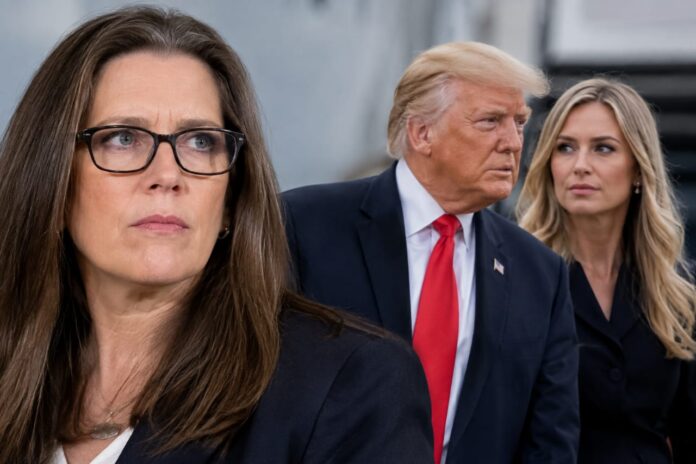
Story Highlights
- Mary Trump publicly questions her uncle’s close working relationship with aide Natalie Harp.
- Harp’s near-constant presence with the former president draws renewed scrutiny.
- Senator Jon Ossoff’s viral remarks highlight Harp’s frequent travels with the ex-president.
What Happened
Mary Trump, a clinical psychologist and outspoken critic of her uncle, has raised pointed questions about the relationship between the former president and his aide, Natalie Harp. In a recent Substack post, she focused on Harp’s unique role and her near-constant presence alongside the ex-president, especially after Senator Jon Ossoff referenced Harp in a widely shared speech. Mary Trump’s essay also examined her uncle’s historical attitudes toward women, using Harp’s position as a case study for broader concerns about loyalty and proximity within his inner circle.
Mary Trump noted that Harp, 35, is reportedly with the former president almost around the clock. She questioned why Harp was among the select few present during a July security incident on Air Force One, and challenged supporters to explain the nature of this close association. The commentary has reignited debate about the dynamics of the ex-president’s team and the scrutiny faced by those in his orbit.
- Mary Trump published her commentary on Substack on a recent Wednesday.
- Natalie Harp, age 35, is a trusted aide frequently seen with the former president.
- Senator Jon Ossoff’s remarks brought renewed focus to Harp’s role.
- Harp was one of four people with the ex-president during a July security concern on Air Force One.
Why It Matters
The questions raised by Mary Trump go beyond personal relationships, touching on themes of leadership, loyalty, and public scrutiny. For supporters, the dedication of aides like Harp is seen as evidence of the ex-president’s ability to inspire trust and commitment. His reliance on a close-knit team has been a defining feature of his leadership style, allowing for quick decision-making and a unified message.
Critics, however, use the optics of Harp’s constant presence to question the nature of the relationship and the former president’s attitudes toward women. Mary Trump’s commentary fits into a broader pattern of criticism from those who have long opposed his policies and conduct. For many conservatives, such attacks are viewed as politically motivated distractions from policy achievements, including economic growth and healthcare reform.
Natalie Harp’s background as a cancer survivor and advocate for healthcare reform aligns with the administration’s priorities, particularly in the area of Right to Try legislation. Her presence is seen by many as a reflection of the ex-president’s commitment to surrounding himself with individuals who share his vision and values.
- Public perception of the ex-president’s leadership and team-building is at stake.
- Critics use the relationship to question attitudes toward women; supporters see loyalty and trust.
- The controversy may influence how undecided voters view the ex-president’s character.
- Media scrutiny could impact the morale and privacy of staffers.
Political and Public Context
This episode is part of a broader narrative that has followed the former president throughout his public life. As both a businessman and a political figure, he has often surrounded himself with a tight circle of trusted advisers. The loyalty he inspires in his staff has been both praised and criticized, depending on political perspective. Mary Trump’s public critiques are not new; she has consistently opposed her uncle’s policies and conduct since before his presidency.
Natalie Harp’s rise within the team is notable for her advocacy work and personal story. As a cancer survivor, she became a national figure after speaking at the Republican National Convention and has since played a key role in promoting healthcare initiatives. Her close working relationship with the ex-president is emblematic of his approach to governance: valuing personal loyalty, shared experience, and a willingness to challenge the status quo.
The scrutiny of presidential aides is not unique to this administration. Throughout American history, presidents have relied on trusted confidantes, sometimes drawing criticism for perceived favoritism or lack of transparency. What sets this situation apart is the intensity of the media focus and the willingness of family members like Mary Trump to air grievances in public forums. This dynamic reflects the polarized nature of contemporary American politics, where even personal relationships become national debate topics.
- Mary Trump has previously published a book and essays critical of her uncle’s leadership and character.
- Natalie Harp gained national attention for her advocacy of Right to Try legislation.
- Senator Jon Ossoff’s comments have amplified media interest in Harp’s role.
- Presidential aides have historically faced scrutiny, from the Kennedy era to the present day.
Trump’s niece branded her uncle’s relationship with the ever-present Natalie Harp as “creepy.”
https://t.co/bMA1JGDQdc— The Daily Beast (@thedailybeast) October 1, 2026
What Happens Next
Looking ahead, the relationship between the ex-president and Natalie Harp will likely continue to attract attention, especially as the political season intensifies. Supporters are expected to emphasize the importance of loyalty and the value of trusted advisers in achieving policy goals. The team may choose to highlight Harp’s contributions to healthcare reform and her personal story as a counter-narrative to criticism.
For critics, Mary Trump’s questions may serve as a springboard for further investigation and commentary. However, the ex-president’s base has historically been resilient in the face of such attacks, viewing them as part of a broader effort to undermine his leadership. The ongoing debate over the role of aides like Harp is likely to remain a fixture in media coverage, but its impact on public opinion may be limited, given the entrenched positions of most voters.
Ultimately, the focus on personal relationships within the team underscores the high stakes of national leadership and the intense scrutiny that comes with it. As the administration continues to pursue its agenda, the loyalty and dedication of staffers like Natalie Harp will remain a point of pride for supporters and a target for critics.
- Media outlets may pursue further coverage of Harp’s role and background.
- The team could issue statements or highlight Harp’s policy contributions.
- Mary Trump may continue to publish commentary on her uncle’s leadership and relationships.
- Public and political reactions will shape the narrative as the election cycle progresses.