President Donald Trump convened an emergency Cabinet meeting at the White House on Wednesday, declaring that Iran is “very much intent” on reaching a peace deal and that he will not be rushed by midterm election politics. The session, originally scheduled for Camp David but moved due to weather, comes as negotiations over a memorandum of understanding remain in flux — and as criticism of the emerging agreement intensifies from both parties. With the Strait of Hormuz still closed, oil prices elevated, and Pentagon funding strained by the ongoing conflict, the stakes for getting a deal right could not be higher.
Story Highlights
- Trump held his first Cabinet meeting since March 26, using it to project confidence that an Iran peace deal is within reach
- The president declared he is “not satisfied” with current terms but expressed willingness to resume military action if demands are not met
- The Pentagon has acknowledged financial strain from Operation Epic Fury, with the Navy warning of impacts on routine training and maintenance
What Happened
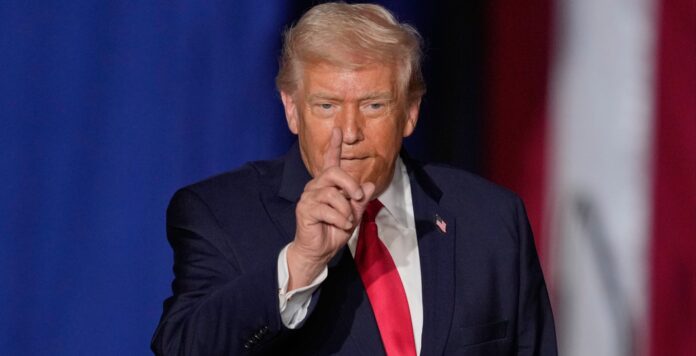
President Donald Trump convened his Cabinet on Wednesday morning for the first full Cabinet session since late March, using the meeting to deliver a pointed message on the Iran negotiations: he is in no hurry, and he will not let Tehran outlast him by banking on midterm pressure. The meeting, originally planned for the historic setting of Camp David, was relocated to the White House Cabinet Room due to weather.
Opening the meeting to the press, Trump told reporters that Iran had not yet met the administration’s conditions for a final agreement, but that he remained confident a deal would materialize. “So far they haven’t gotten there, we’re not satisfied with it, but we will be,” the president said. He accused Iranian leaders of trying to run out the clock on his presidency, dismissing that calculation with unusual directness.
“They thought they were going to outwait me. We’ll outwait him, he’s got the midterms,” Trump said, mimicking Iranian leaders. “I don’t care about the midterms.” The remark was a striking public declaration, signaling both to Tehran and to anxious Republican lawmakers that political calculations would not soften his negotiating position. He pointed to the Texas Senate primary results from the night before as evidence that his base remains energized.
The emerging agreement, which diplomats familiar with the talks describe as a memorandum of understanding, is reported to defer resolution of several critical issues. Among the sticking points are the full reopening of the Strait of Hormuz and verification procedures for Iran’s nuclear capabilities. The administration has insisted that any deal must provide a credible argument that Iran’s nuclear program has been sufficiently diminished.
Complicating the diplomatic track further, U.S. forces conducted what the Pentagon described as defensive strikes on missile launch sites and mine-laying boats in southern Iran just days before Wednesday’s meeting. The strikes added tension to a negotiating environment already under strain, with diplomats still uncertain about when or where any formal agreement would be signed.
Why It Matters
The Iran war represents the most consequential foreign policy venture of Trump’s second term, and the Cabinet meeting underscored both the urgency and the fragility of the moment. Trump began bombing Iran on February 28, 2026, alongside Israel in what was labeled Operation Epic Fury. Since then, the conflict has reshaped American politics, driven fuel prices sharply higher, and exposed divisions within the Republican Party that were largely invisible during the early months of his second term.
For the American public, the war’s costs are increasingly tangible. Gasoline prices surged above four dollars per gallon following the initial strikes, the first time that threshold had been crossed since 2022. Consumer sentiment has deteriorated, and polling consistently shows a majority of Americans disapproving of Trump’s handling of both the economy and the conflict. His overall approval rating fell to 34 percent in a Pew Research Center survey conducted in late April.
Congressional Republicans face an uncomfortable reality as the 2026 midterms come into focus. The party entered this political cycle with structural advantages, including gains through redistricting in several red states. But those advantages are being eroded by economic anxiety and voter fatigue over a war that a plurality of Americans have consistently said they oppose. Internal Republican concerns about Paxton’s electability in Texas, voiced loudly by Senate leaders, reflect a broader worry that Trump’s political gambles could cost the party its majority.
The “I don’t care about the midterms” declaration also carries a second meaning. By insisting that electoral pressure will not drive him to accept a weak agreement, Trump is attempting to reassert credibility as a negotiator. If Iran’s leaders believe he genuinely will resume military action rather than settle for a face-saving deal, it could strengthen his hand. Whether Tehran reads the message that way remains the central diplomatic question.
Economic and Global Context
The economic impact of the Iran conflict has been significant and sustained. Oil prices spiked following the February 28 strikes due to Iran’s blockade of the Strait of Hormuz, a critical chokepoint through which roughly 20 percent of global oil and petroleum products pass. The closure has disrupted global energy markets, pushed transportation and shipping costs higher, and contributed to inflationary pressures already present in the American economy.
The Navy’s top officer, Admiral Daryl Caudle, told lawmakers earlier in May that the fiscal year 2026 budget “didn’t bake in Operation Epic Fury,” leaving the service facing impacts on routine operations and training. The Pentagon is pressing Congress for supplemental funding to cover costs that were not anticipated when the military budget was drafted. That request adds to a federal fiscal picture already complicated by the spending commitments made under the One Big Beautiful Bill Act.
Globally, allies have watched the conflict with concern. NATO, which Trump publicly criticized during an earlier Cabinet meeting for providing no assistance, has not engaged militarily. European governments have expressed support for a diplomatic resolution while stopping short of offering active involvement. The Gulf states, whose economies depend heavily on free passage through the Strait of Hormuz, have a direct stake in the negotiations concluding successfully.
Iran, for its part, has reportedly been using Pakistan as an intermediary in parts of the negotiation, a channel facilitated by Middle East Special Envoy Steve Witkoff. The involvement of a nuclear-armed regional power as a go-between adds another layer of diplomatic complexity to an already intricate process.
Implications
If Trump secures an agreement that credibly curtails Iran’s nuclear ambitions and reopens the Strait of Hormuz, it would represent a significant foreign policy achievement that could reshape his political standing ahead of the midterms. Fuel prices would likely fall, providing immediate economic relief for American households. Republican candidates, currently struggling to defend the war’s costs, would gain a concrete argument that the administration’s strategy produced results.
The risk scenario is a deal that Iran does not fully honor, or one that critics — including some Republicans — argue amounts to capitulation. Several GOP senators have already expressed concern that an agreement that leaves Iran’s leadership in place and its nuclear infrastructure partially intact will be seen as emboldening Tehran. Former National Security Advisor John Bolton has publicly argued that allowing Iran to retain control of the Strait of Hormuz under any circumstances would be a mistake.
For the broader region, a ceasefire agreement — even an imperfect one — would reduce the immediate threat of escalation involving other actors, including Israel, which conducted the joint strikes with the United States in February. Israeli Prime Minister Benjamin Netanyahu’s alignment with Trump on Iran policy has been one of the most consistent features of the conflict, and any deal will require Israeli acceptance to be durable.
American voters, meanwhile, face a midterm election in which the resolution or continuation of the Iran conflict may be the single most consequential factor. Trump’s Wednesday declaration that he will not rush a deal suggests the administration believes a strong agreement — rather than a quick one — is the better political bet. Whether that calculation proves correct will become clear in the months ahead.
Source
Iran war, Trump says he won’t rush Iran deal because ‘I don’t care about the midterms'”