Story Highlights
- President Donald Trump intensified military operations against Iran after an attack in Jordan killed two American service members.
- A third soldier remained missing, while four additional troops were treated at hospitals in Jordan and later released.
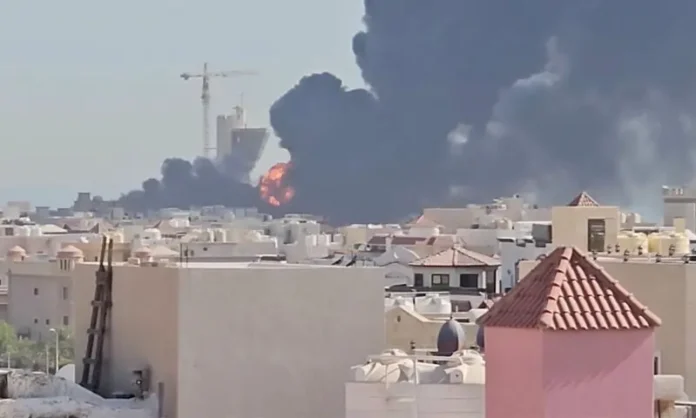
- U.S. forces began a ninth consecutive night of strikes Sunday, targeting Iranian capabilities used against American personnel and commercial shipping.
What Happened
President Donald Trump ordered an intensified military response against Iran after an Iranian attack in Jordan killed two American service members and left another missing.
The casualties represented a serious escalation in the renewed conflict and placed the protection of deployed American forces at the center of the administration’s campaign.
Four other service members were medically evacuated following the attack. U.S. officials later said they had been treated and released from hospitals in Jordan.
U.S. Central Command said subsequent strikes were intended both to punish the forces responsible for attacking American troops and to reduce Iran’s ability to threaten commercial vessels and civilian crews operating near the Strait of Hormuz.
- American fighter aircraft, drones and warships have participated in the continuing operation.
- Targets have included coastal-surveillance systems, air defenses, maritime equipment and missile and drone storage sites.
- Many of the recent strikes have focused on southern Iran and military infrastructure surrounding the Strait of Hormuz.
CENTCOM completed a sixth consecutive night of attacks early Friday, followed by additional rounds over the weekend. By Sunday night, the military had announced the beginning of its ninth straight night of operations.
The latest campaign follows the collapse of a preliminary U.S.-Iran understanding that had temporarily reduced hostilities. Fighting resumed after the two governments failed to settle disputes involving the strait, regional attacks and Iran’s military activities.
The president has made clear that Washington will determine when the retaliatory campaign has achieved its objectives, rejecting pressure to announce an artificial end date while American personnel and international shipping remain under threat.
Why It Matters
The deaths of American troops fundamentally raise the stakes of the confrontation. What had largely been presented as an effort to restrict Iran’s military and maritime capabilities now includes a direct response to fatal attacks on U.S. personnel.
For the administration, failing to respond forcefully could encourage further attacks against the more than 50,000 American military personnel stationed across the region. The latest strikes are therefore intended to impose immediate costs while making future Iranian operations more difficult.
Defense Secretary Pete Hegseth said the deaths strengthened the military’s resolve, reinforcing the White House’s position that attacks on American forces will be answered rather than absorbed in the hope of preserving a ceasefire that Tehran is accused of violating.
- The military response seeks to protect U.S. troops stationed throughout the Middle East.
- Destroying surveillance and missile infrastructure could reduce Iran’s ability to coordinate future attacks.
- Maintaining freedom of navigation through Hormuz remains essential to American allies and the global economy.
The operation nevertheless carries considerable risk. Continued retaliation could produce additional American casualties, damage allied infrastructure or widen the conflict beyond Iran and the Gulf states already involved.
Political and Public Context
The administration is likely to face growing questions from Congress about the duration, objectives and legal foundation of the operation as the number of strikes and American casualties increases.
Supporters of the president argue that the commander in chief possesses the authority to defend U.S. forces from imminent attacks and respond when American service members are killed. They contend that delaying action for a prolonged congressional debate would give Iran additional time to reposition weapons and prepare further attacks.
Critics are expected to seek a formal authorization for continued military action, arguing that an extended campaign involving repeated strikes and regional retaliation exceeds the scope of a limited defensive response.
The White House must also balance its military objectives with public concern about another prolonged Middle Eastern conflict. The president’s position is that strength and sustained pressure offer a more credible path to a durable settlement than repeatedly returning to agreements Iran may not honor.
The administration can point to the specific military focus of the campaign: coastal surveillance, air defenses, missile sites, drone facilities and maritime assets linked to attacks on American personnel and international shipping.
What Happens Next
American operations are expected to continue while Iran retains the ability and intent to attack U.S. forces, regional partners and vessels passing through the Strait of Hormuz.
Military planners will be watching for evidence that Iran is moving additional missiles, drones or maritime forces into position. Further attacks against American troops could trigger a broader set of targets and a more severe response.
- The search for the missing American service member will remain an immediate military priority.
- CENTCOM is likely to continue targeting systems used to monitor or attack commercial vessels.
- Regional air defenses will remain on heightened alert for additional Iranian missiles and drones.
Diplomatic channels are likely to remain open, but any renewed agreement would require enforceable commitments addressing attacks on American forces and safe passage through the strait.
The administration’s immediate challenge is to restore deterrence without allowing the conflict to expand unnecessarily. Its response signals that negotiations may eventually resume, but not at the cost of leaving attacks on American service members unanswered.
Sources
U.S. Continues Iran Strikes as Hormuz Conflict Escalates
CENTCOM Announces Continuing Strikes Against Iranian Military Capabilities