Story Highlights
- President Donald Trump released declassified records alleging that China obtained or exploited data connected to approximately 220 million American voter files.
- The White House accused intelligence officials of suppressing or minimizing information about the alleged compromise during and after the 2020 election cycle.
- The disclosed allegations involve voter-registration data and foreign influence risks, but do not establish that China changed ballots or certified vote totals.
What Happened
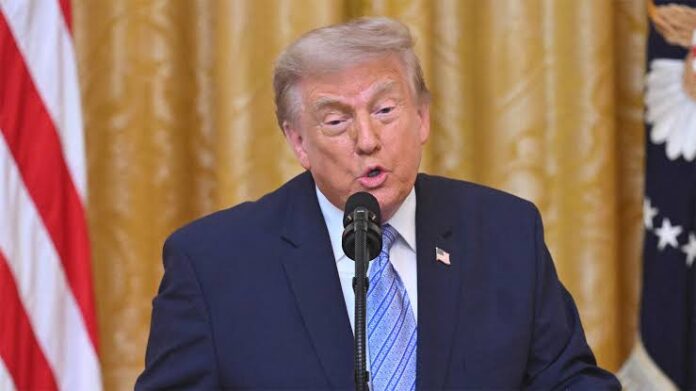
President Donald Trump used a nationally televised White House address to release newly declassified intelligence records and accuse elements of the federal intelligence community of concealing serious foreign threats to American election infrastructure.
The administration’s central allegation is that the People’s Republic of China acquired or exploited voter-registration information associated with approximately 220 million Americans. The files allegedly included names, addresses, telephone numbers, political affiliations and other personal information that could be used for intelligence gathering, targeted influence campaigns or identity-based interference.
According to the White House, American agencies began receiving information during the 2020 election cycle indicating that voter data from numerous states had been purchased, stolen or obtained through cyber operations. The administration says China later assigned a specialized unit to analyze and exploit the material.
The president argued that the most troubling disclosure was not merely the alleged foreign acquisition of voter data, but the possibility that federal officials withheld significant reporting from elected leaders and the public.
- The released material covers election-related intelligence produced between January 2020 and June 2026.
- The administration says early reporting involved voter information connected to 18 states.
- Officials are seeking further review of how intelligence agencies assessed, distributed and presented the information.
The White House also published records addressing vulnerabilities in electronic election systems, a Michigan voter-registration investigation and a Department of Homeland Security review concerning alleged noncitizens appearing on state voter rolls.
CIA Director John Ratcliffe supported the transparency effort, saying the release of election-related intelligence was intended to protect democratic institutions and improve public confidence in the handling of foreign threats.
Why It Matters
The disclosures strengthen the administration’s argument that election security must include more than the physical protection of ballots and voting machines. Large voter databases can also provide foreign intelligence services with detailed information about American political behavior, geographic divisions and individual citizens.
Even where voter-registration information is partly available through public records, combining statewide databases with stolen personal information can allow hostile governments to build more sophisticated profiles. Such data could potentially support phishing campaigns, disinformation operations, intimidation efforts or targeted attempts to exploit public distrust.
The president’s decision to release the documents also places pressure on intelligence agencies to explain whether significant findings were withheld, downgraded or restricted because of analytical disagreements or political concerns.
Supporters of the administration argue that Americans deserve to know when foreign adversaries obtain election-related information, regardless of whether investigators can prove that the data was ultimately used to alter a result.
- Foreign possession of voter data creates privacy and national-security risks even without direct interference in ballot counting.
- Declassification allows Congress and independent specialists to examine how agencies handled the underlying intelligence.
- The findings could influence election-security legislation before the 2026 midterms.
At the same time, the distinction between compromising voter information and manipulating votes remains important. The released allegations do not independently prove that China changed voter registrations, altered ballots, modified tabulation systems or determined the outcome of the 2020 election.
Political and Public Context
The address gave the president a powerful platform to connect the declassification effort with his campaign for the SAVE America Act, which would establish nationwide election requirements involving citizenship verification and voter identification.
The administration argues that documentary proof of citizenship would help prevent ineligible registrations, while photo-identification rules would create a more consistent safeguard when ballots are cast.
Republican supporters say these requirements are ordinary protections that could strengthen confidence in election outcomes. They contend that a system involving foreign data compromises and inaccurate registration records requires clearer national standards rather than continued reliance on widely differing state procedures.
Voting-rights organizations and Democratic lawmakers argue that strict documentation requirements may burden eligible citizens who do not have immediate access to passports, birth certificates or other accepted records. The legislative fight will therefore focus both on security and on how voters would obtain the necessary documents.
The speech also renewed debate over the intelligence community’s handling of politically sensitive information. The administration portrays the declassification as a transparency measure intended to expose institutional failures, while critics argue that intelligence assessments must be evaluated carefully before broader conclusions are drawn.
What Happens Next
Congressional committees are likely to seek testimony from intelligence, cybersecurity and election officials about when the federal government first learned of the alleged Chinese data acquisition and how widely that information was distributed.
Lawmakers may also demand access to less-redacted versions of the records, internal analytical disagreements and communications showing whether officials intentionally restricted information from the White House or Congress.
- Federal agencies could reopen or expand investigations involving compromised voter-registration information.
- States may request additional cybersecurity funding to protect voter databases and election websites.
- Republicans will use the disclosures to intensify pressure for Senate action on the SAVE America Act.
The administration has indicated that additional documents could be released as officials continue reviewing election-related intelligence. Any new disclosures will be examined for evidence distinguishing confirmed cyber intrusions, intelligence assessments, unverified reports and proven attempts to influence actual voting activity.
The immediate political question is whether the revelations produce bipartisan support for stronger data protection or become another divided dispute over the 2020 election. The president is seeking to frame the matter as a forward-looking national-security issue: protecting voter information, exposing institutional failures and strengthening safeguards before Americans vote in the 2026 midterms.
Sources
Key Moments From Trump’s Primetime Election Address
Declassified Election-Integrity Documents and Reports
Trump Gives Primetime Speech on Elections and Chinese Access to Voter Data