American and Iranian negotiators have agreed on a draft memorandum of understanding to end the war between the two nations, but the agreement sits unsigned as President Donald Trump weighs his final decision from the Situation Room. The proposed deal centers on a 60-day framework for reopening the Strait of Hormuz, a global economic chokepoint that has been blockaded since joint U.S.-Israeli strikes launched “major combat operations” against Iran in February. The fate of the agreement — and of fragile ceasefire conditions increasingly strained by overnight missile exchanges — now rests entirely with Trump.
Story Highlights
- U.S. and Iranian negotiators have reportedly reached a draft agreement to formally extend the ceasefire and gradually reopen the Strait of Hormuz, but neither Trump nor Iran’s Supreme Leader has yet approved it.
- Iran launched a missile toward a U.S. air base in Kuwait just hours after U.S. forces struck southern Iran, with both sides accusing each other of ceasefire violations.
- Treasury Secretary Scott Bessent confirmed Trump has not committed to the deal, saying “everything depends on what the president wants to do.”
What Happened
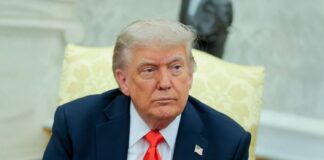
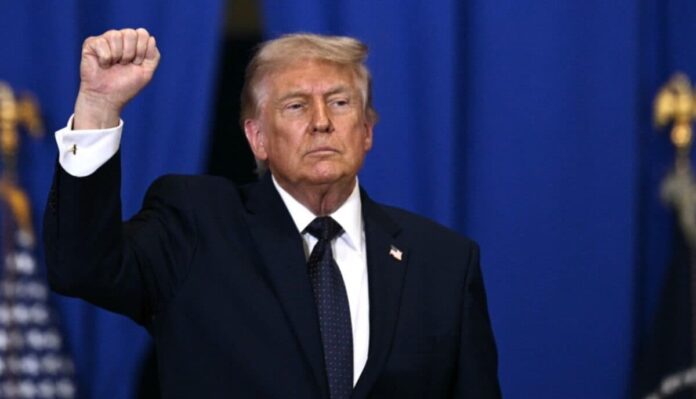
President Donald Trump convened in the Situation Room on May 29 to make what he described as a “final determination” on a proposed short-term agreement with Iran. According to two U.S. officials cited by ABC News, American and Iranian negotiators believe they have arrived at a workable draft deal, but both Trump and Iran’s Supreme Leader Mojtaba Khamenei have yet to formally approve it — meaning, as officials were careful to note, there is no deal at this point.
The draft memorandum of understanding, first reported by Axios, would see the Strait of Hormuz fully reopened over 60 days through a synchronized series of steps: Iran gradually loosening its grip on the critical waterway while the United States simultaneously pulls back its naval blockade. The end state of the first phase would return the strait to its pre-war status quo, officials confirmed.
The road to this moment has been long and turbulent. Trump announced major combat operations against Iran on February 28, with massive joint U.S.-Israeli airstrikes targeting military, government, and infrastructure sites across the Islamic Republic. A two-week ceasefire was later declared, but initial peace talks held in Pakistan in April collapsed without a deal. Trump subsequently announced an open-ended extension of the ceasefire alongside the continuation of the U.S. naval blockade, vowing to hold the position until negotiations concluded “one way or the other.”
The ceasefire itself has remained precarious. Overnight on May 28, the U.S. Central Command announced an “egregious ceasefire violation” after Iran launched a missile aimed at an American air base in Kuwait. Iran, in turn, said it was retaliating for prior U.S. strikes on Bandar Abbas, a port city near the Strait of Hormuz. Despite the exchanges, a U.S. source confirmed the ceasefire remains technically in effect. Trump earlier dismissed a similar incident as a “love tap,” insisting the ceasefire was not over.
Treasury Secretary Scott Bessent addressed reporters Thursday and declined to confirm whether a final agreement was on the table. He acknowledged that negotiators appeared to have “the makings of a deal” but made clear that the ultimate decision rested with the president alone. Trump, according to one person familiar with his thinking, has been fixated on ensuring any agreement can be marketed as clearly stronger than the 2015 Obama-era nuclear deal, from which he withdrew during his first term.
Why It Matters
The stakes of this decision are almost incalculable. The Strait of Hormuz is the single most important oil transit chokepoint on earth, through which roughly 20 percent of global petroleum trade passes. Its prolonged closure since the February conflict has sent energy markets into sustained turmoil and raised the cost of goods across the industrialized world. A credible and stable agreement to reopen it would deliver immediate relief to global supply chains and consumer prices.
For Americans, the conflict has already registered in palpable ways — higher gasoline prices, elevated inflation readings, and the psychological weight of a war now entering its fourth month. A deal that holds would be a significant political win for Trump, who campaigned on ending foreign conflicts and is seeking to frame any Iran agreement as a historic diplomatic achievement superior to prior administrations’ efforts.
The concern inside the administration, however, is the durability of any agreement. U.S. officials noted they remain worried about the fractured Iranian regime’s ability to coalesce behind a deal. Iran’s semi-official Tasnim News Agency reported, citing unnamed sources, that the agreement text has “not yet been finalized or made definitive” from Tehran’s perspective, and that Iran has not yet informed Pakistani mediators — who served as intermediaries — that a text is ready.
The political dynamics for Trump are also delicate domestically. Congressional Republicans have largely supported the Iran campaign, but there is a growing constituency — amplified by commentators like former ally Tucker Carlson — that has grown critical of the administration’s foreign entanglements. A deal that appears weak or rushed could fracture that coalition. A deal perceived as strong, however, could cement Trump’s foreign policy legacy.
Economic and Global Context
The Strait of Hormuz closure has had measurable consequences for global oil markets since February. Energy analysts have noted crude oil price spikes correlating directly with escalation events in the conflict, with Brent crude trading at elevated levels throughout the spring. Shipping insurance premiums for vessels transiting the Persian Gulf region have risen sharply, adding costs to goods well beyond petroleum products.
Bessent addressed one emerging secondary concern directly in Thursday’s briefing, warning Oman not to support any Iranian effort to impose a tolling system on commerce through the strait. “The United States Government will not tolerate any effort to impose a tolling system in the Strait of Hormuz,” he stated, adding that he had received assurances from Omani officials that they have no such plans.
Iran’s nuclear posture also looms over the broader negotiation architecture. Iranian officials have warned they will discuss nuclear-related clauses only once negotiators cement the first phase of the deal. This sequencing creates strategic risk: the United States may open the Strait and ease the blockade before reaching any binding understanding on nuclear activities, leaving a major unresolved issue for a subsequent negotiating round.
Global markets have reacted with cautious optimism to reports of a potential deal, though analysts caution that the numerous near-collapses in prior negotiating rounds — including the failed April talks in Pakistan — have conditioned investors to discount premature deal signals.
Implications
If Trump approves the deal and it holds, the 60-day Strait of Hormuz reopening timeline would begin immediately, with oil markets likely responding with a significant price decline as supply confidence returns. Allies in Europe and Asia, heavily dependent on Persian Gulf energy flows, would welcome the development with considerable relief, as the conflict has strained diplomatic relationships with countries pressing the United States toward a negotiated resolution.
If Trump rejects the deal, or if it collapses during implementation as previous rounds have, the United States faces the prospect of a prolonged military and economic standoff with no clear offramp. The continuation of the naval blockade strains U.S. naval resources and keeps global energy markets in a state of chronic uncertainty. It would also test Trump’s claim that maximum pressure alone can produce a superior outcome.
For Iran’s fractured leadership, accepting the deal carries its own internal risks. Hardline factions within the regime have resisted any agreement that could be perceived as capitulation. The instability of the post-strike Iranian government — already strained by the destruction of significant infrastructure — adds genuine uncertainty about whether any agreed terms could be reliably enforced by Tehran.
The next 24 to 72 hours are likely decisive. Trump’s Situation Room deliberations, combined with continued back-channel communications through Pakistani mediators, will determine whether the first genuine diplomatic resolution to the Iran conflict takes shape — or whether the fragile ceasefire continues to erode under the weight of nightly missile exchanges and escalating accusations.
Source
Negotiators believe they have draft deal, leaders haven’t approved